
Blue Ops secures FAU ocean test site for maritime drone work
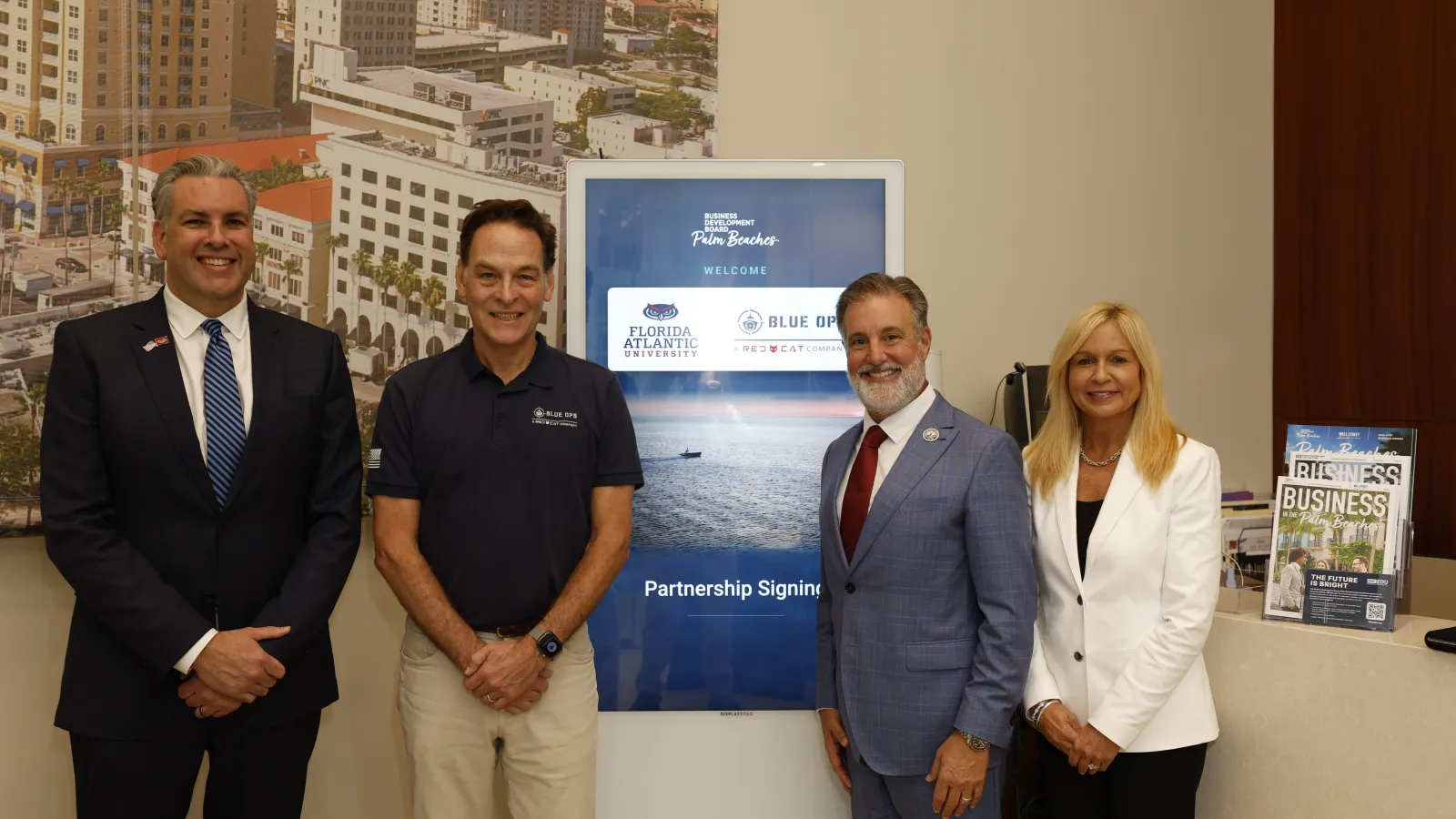
Red Cat Holdings' Blue Ops maritime division has formed a partnership with Florida Atlantic University that gives the unit access to FAU's Harbor Branch Oceanographic Institute in Fort Pierce, Florida. The agreement provides Blue Ops with a 144-acre deep-water facility, direct ocean access, waterfront infrastructure and marine engineering expertise, allowing the division to test and demonstrate uncrewed surface vessels (USVs) under operational conditions.
The move extends Blue Ops' existing Florida footprint. The division is already headquartered in West Palm Beach and operates a 155,000-square-foot manufacturing facility in Valdosta, Georgia. Adding Harbor Branch gives the team a dedicated on-water environment to close the loop between engineering, evaluation and platform iteration.
The partnership
Barry Hinckley, president of Blue Ops, framed the deal in terms of a broader industrial ambition. "Harbor Branch gives our team an environment where we can put systems on the water, integrate new capabilities and test them under the real-world conditions they were built for," he said. "We are building the capabilities needed to move faster from innovation to operational systems in the hands of the warfighter."
Jason Hallstrom, interim executive director of FAU Harbor Branch, said the institute was designed for precisely this kind of applied research collaboration and that the arrangement would give university researchers and students direct exposure to autonomous maritime technology with national defence applications.
Blue Ops' USV family is built around Modular Open Systems Architecture (MOSA) principles, enabling payloads, sensors, communications systems and autonomy stacks to be swapped or upgraded as requirements evolve. Stated mission sets include intelligence, surveillance and reconnaissance, force protection, harbour and coastal security, and contested logistics.
Market context
The autonomous maritime systems market is attracting sustained US defence investment as the Pentagon looks to expand its uncrewed surface and subsurface fleet. The US Navy's Ghost Fleet Overlord programme and DARPA's Sea Hunter project have demonstrated that long-endurance USVs can operate with minimal crew support, and a number of well-funded startups alongside established primes are competing for follow-on contracts.
Red Cat, listed on Nasdaq under the ticker RCAT, positions itself as a multi-domain uncrewed systems provider spanning air, land, sea and space. The Blue Ops division brings shipbuilding heritage into that portfolio, and the FAU Harbor Branch tie-up mirrors a broader trend of defence-technology companies embedding within university research infrastructure to accelerate development cycles while keeping sensitive test work inside a controlled environment.
The partnership also carries talent implications. University-based testing sites offer a pipeline of engineers and researchers familiar with maritime autonomy, which is relevant given that skilled labour in autonomous systems remains a recognised constraint for the sector.
Regulatory and standards context
MOSA compliance is increasingly a baseline requirement for US Department of Defense procurement, following mandates embedded in successive National Defence Authorisation Acts. Building to MOSA principles from the outset gives Blue Ops a cleaner path through acquisition gating than proprietary architectures, though the company will still need to demonstrate interoperability with Navy and allied command-and-control networks as it pursues programme-of-record opportunities. No specific contract awards or funded programmes were disclosed alongside this announcement.