
Damac's Sajwani claims billions in gains from Anthropic and AI bets
Hussain Sajwani, founder and chairman of Dubai-based Damac Group, told the Bloomberg Invest Dubai conference on Thursday that his stakes in artificial intelligence and technology firms are on track to deliver multi-billion-dollar returns. Speaking at the event, Sajwani said: "Between only three companies, OpenAI and SpaceX and Anthropic, we're making few billion dollars of profit."
The comments come as Anthropic's anticipated initial public offering is reported to be drawing demand well in excess of shares available, with Bloomberg News describing it earlier this month as potentially the largest first-time share sale on record. The Anthropic IPO, if it proceeds at the scale suggested by that reporting, would represent one of the most closely watched technology listings in years, given the company's position at the frontier of large-language-model development.
Damac's data-centre pivot
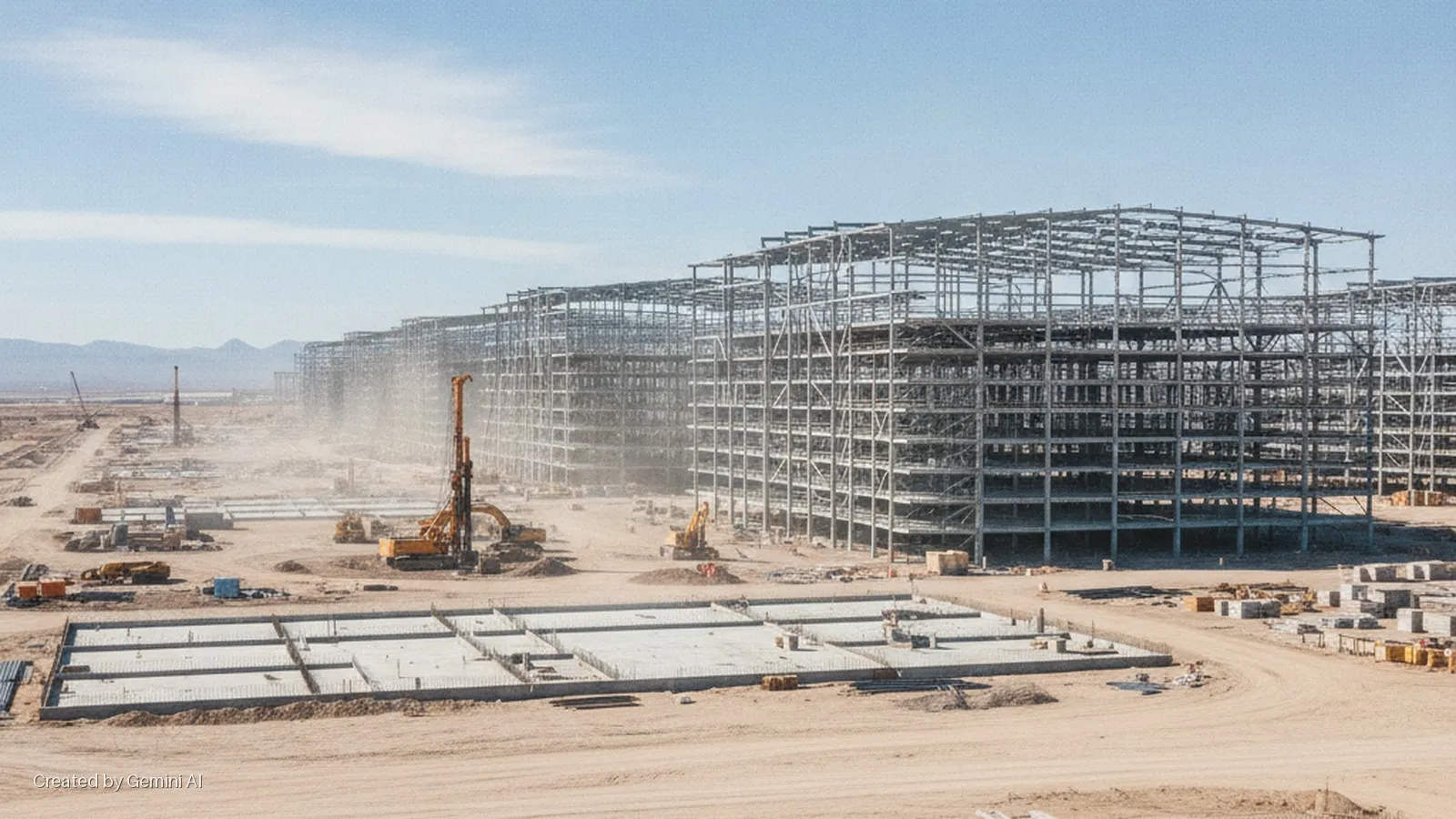
Damac Group began as a property developer and remains a major force in Dubai's residential market. Over the past several years, however, Sajwani has redirected a substantial portion of the group's capital toward technology infrastructure. In January 2025, he announced alongside then-incoming US President Donald Trump a commitment to invest $20 billion in American data centres. Sajwani confirmed on Thursday that roughly $9 billion of that figure has now been deployed.
The data-centre pivot reflects a broader pattern among Gulf sovereign and family-office capital, which has been moving aggressively into digital infrastructure as regional governments pursue national AI strategies. Saudi Arabia's Public Investment Fund, Abu Dhabi's G42 and a cluster of Qatari institutions have all made sizeable commitments to AI infrastructure over the same period, compressing deal pricing and raising questions about whether the capital deployment can be sustained at current rates.
Valuation concerns temper the optimism
Not every voice at Bloomberg Invest Dubai shared Sajwani's bullishness. Christian Stracke, managing director and president at Pacific Investment Management Co., offered a more cautious view, arguing that digital-infrastructure lending growth is likely to decelerate because the market cannot sustain the pace of doubling its investment requirements every year. Sajwani himself acknowledged the possibility of a correction in AI valuations, though he maintained that AI would continue to generate revenue through any downturn.
Blackstone's private wealth global chief operating officer Farhad Karim took a middle position, characterising the opportunity in digital infrastructure and logistics as "particularly strong" and describing regional commitment to AI infrastructure in the Gulf as "super compelling."
The divergence in tone among institutional investors reflects a maturing debate: early-stage AI positions taken in 2022 and 2023 are now sitting on substantial mark-to-market gains, but the entry price for new commitments is considerably higher, and the path to earnings for frontier AI labs remains heavily contingent on enterprise adoption curves and compute cost trajectories.
Regulatory and market backdrop
Anthropic operates under US export-control frameworks administered by the Bureau of Industry and Security, which limits how certain model capabilities can be shared across jurisdictions, including in the Gulf. Any IPO would also bring Securities and Exchange Commission scrutiny of forward-looking disclosures around revenue and model capability claims. For Gulf investors holding pre-IPO stock, the lockup period and secondary-market liquidity will be the near-term variables to watch.
Sajwani's net worth is estimated above $13 billion by the Bloomberg Billionaires Index, boosted by Dubai's extended property boom, though the release notes that residential demand in the city has softened recently amid regional geopolitical uncertainty.