
WISeSat and FOSSA Systems confirm October satellite launch for QSOC
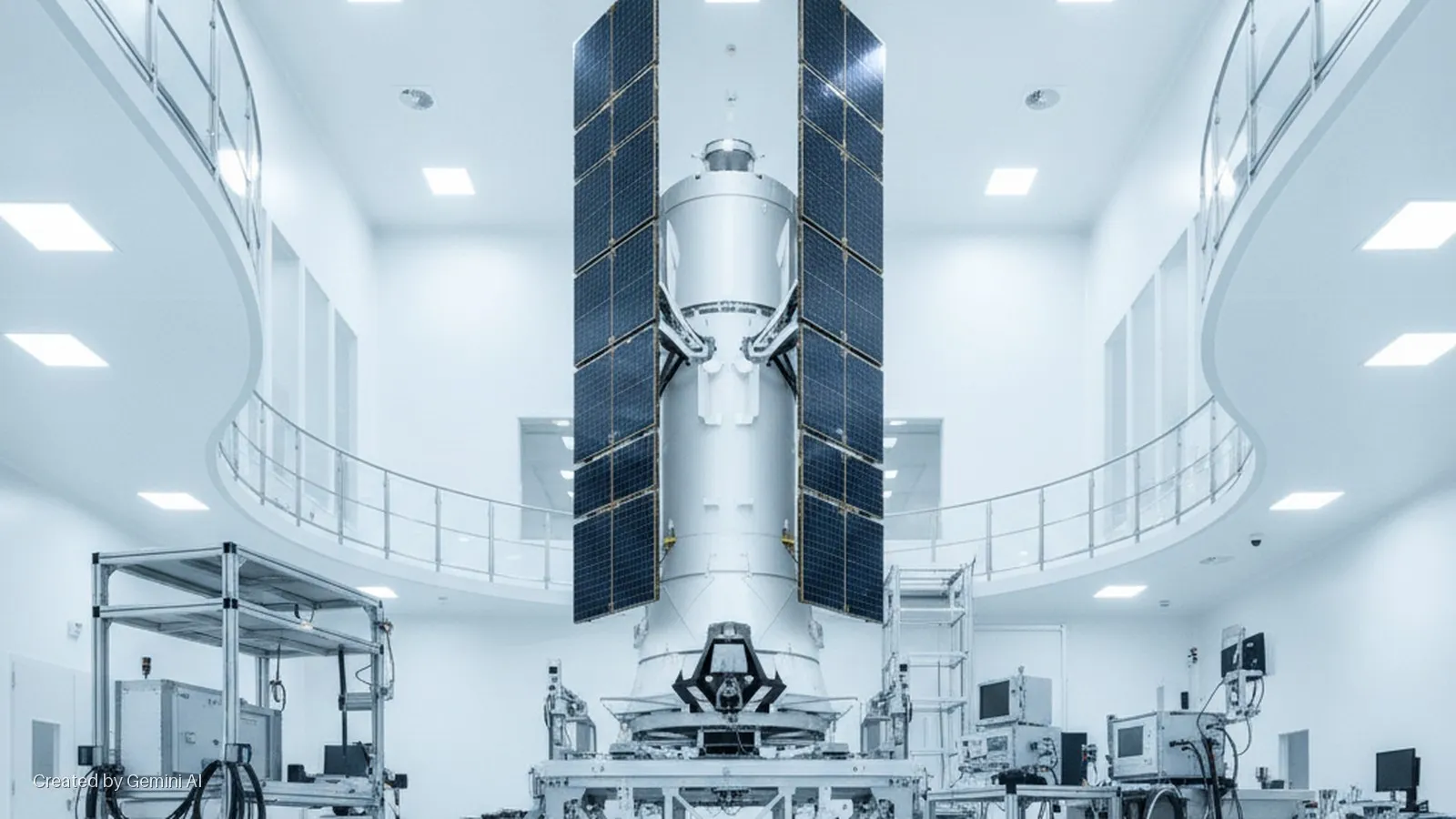
WISeSat.Space Holdings Corp. (NASDAQ: SAIQ) and Spain-based FOSSA Systems have confirmed a satellite launch scheduled for October 2026, marking the opening mission of a planned series supporting the Quantum Spatial Orbital Cloud, or QSOC. The companies describe QSOC as a decentralised, quantum-resilient space infrastructure framework designed to extend cryptographic trust from orbit to ground stations and connected endpoints.
The announcement follows four years of collaboration, during which WISeSat made a strategic investment in FOSSA Systems. Alongside the launch confirmation, the companies released the first images captured from orbit by a WISeSat spacecraft, including a frame taken over the company's Geneva headquarters.
What QSOC is designed to do
At its core, QSOC aims to bring satellite infrastructure inside a unified security perimeter. The architecture combines hardware roots of trust, authenticated digital identities for satellites and ground equipment, post-quantum cryptography for key establishment and digital signatures, and high-performance symmetric encryption for data in transit.
Hardware roots of trust are intended to protect cryptographic keys on-board and verify device and software integrity. Post-quantum cryptographic primitives are included to harden the system against the threat of future quantum computers capable of breaking current public-key schemes. The companies say these capabilities will be introduced progressively across successive missions rather than deployed all at once.
Carlos Moreira, founder and chief executive of WISeSat.Space, said: "The October launch marks the next step in our QSOC roadmap, progressively bringing post-quantum security, hardware roots of trust and digital identity into orbit."
The longer-term vision is a modular hybrid constellation combining dedicated WISeSat satellites, partner-operated assets and terrestrial networks within a shared trust framework. Target customers are described as governments, enterprises and critical infrastructure operators seeking greater control over digital identity, cryptographic key management and data governance.
Market and standards context
The push to harden satellite communications against quantum-computing threats sits within a broader industry-wide migration prompted by NIST's finalisation of its post-quantum cryptography standards in 2024. Those standards, which include ML-KEM and ML-DSA, are already informing procurement requirements across government and defence supply chains in the US and EU.
In the commercial small-satellite sector, a number of operators are integrating security-by-design principles at the hardware level, driven in part by growing regulatory scrutiny of space infrastructure. The UK's National Cyber Security Centre and the European Union Agency for Cybersecurity (ENISA) have both published guidance on space-system security, and the EU's NIS2 Directive extends critical-infrastructure obligations to operators of essential services that depend on satellite connectivity.
WISeSat's positioning as a sovereign-infrastructure provider resonates with the digital-sovereignty agenda gaining traction in Europe and among governments seeking alternatives to hyperscaler-owned connectivity. However, the release contains no named government or enterprise customers, no orbit details, no payload specifications and no commercial pricing, making independent assessment of the programme's maturity difficult at this stage.
What to watch
Near-term milestones that will signal programme credibility include the successful commissioning of the October launch vehicle, publication of on-orbit performance data, and announcement of a first paying customer or government pilot. The companies have not disclosed a target constellation size, orbital altitude or a timeline for moving from test missions to commercial service.
Investors will also note that the release carries standard US Private Securities Litigation Reform Act safe-harbour language, underscoring that QSOC's commercial trajectory remains speculative at this stage of the roadmap.