
Cypher Capital and Storm Group launch European land platform
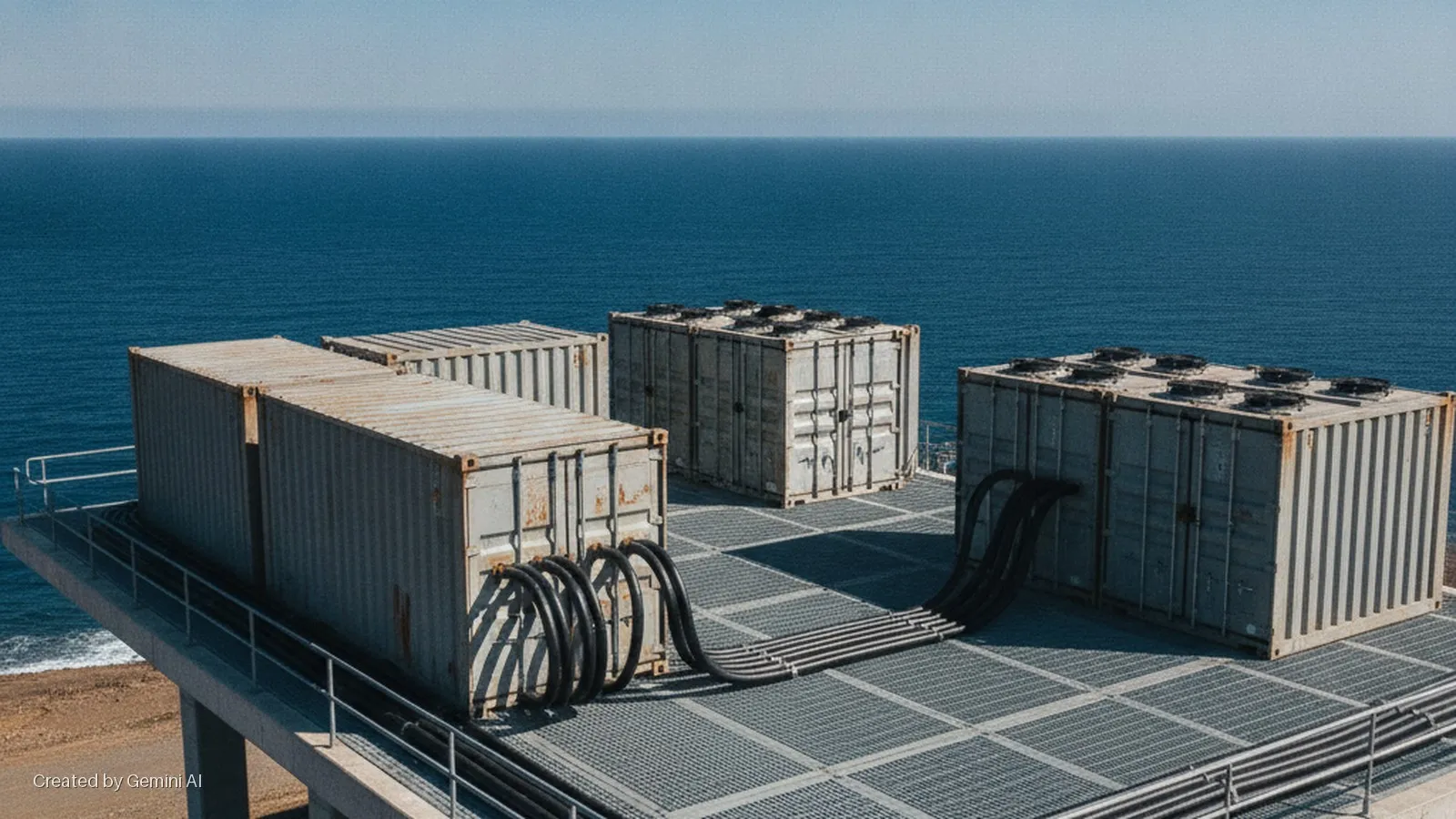
Cypher Capital and its affiliate Storm Group have announced a European platform to acquire land with grid access and carry sites through permitting, targeting data-centre operators locked out of capacity in Europe's saturated primary markets.
Under the structure, Storm Group originates sites in second-tier European markets, secures grid connections and manages permitting. Cypher Capital provides the investment wrapper and sources institutional capital. As a first step, Cypher has begun pre-marketing the proposed Cypher European Data Centre Opportunities Fund, a Luxembourg-domiciled vehicle for professional EU investors. The fund has not yet been formally established and its terms remain indicative.
The constraint the platform targets
The backdrop is well documented. In Europe's five primary colocation hubs, collectively known as FLAP-D (Frankfurt, London, Amsterdam, Paris and Dublin), vacancy has fallen to 6.4% and grid allocations in several of those markets are not expected to be released before 2030. That crunch is pushing hyperscalers, colocation operators and AI infrastructure builders toward less saturated markets, where land can be sourced but permitting and grid access remain complex and time-consuming.
Reza Nedjatian, chief executive of Storm Group, framed the proposition plainly: "Europe does not lack demand, and it does not lack money. It lacks sites that can actually be switched on, and that is the work we do."
Arash Saidi, chief executive of Cypher Capital, added that the durable asset in data-centre investment is not the silicon inside the building but the permitted, powered ground underneath it. "The chips will change every few years," Saidi said. "The permitted, powered site underneath them is a different kind of asset: every generation will need one."
Bijan Alizadeh, founder and chairman of both firms, drew on nearly a decade of operating compute-intensive facilities across three continents to make the same point more bluntly: "The chips arrive on schedule; the power rarely does."
Market context and competitive landscape
The FLAP-D power constraint has become a well-trodden theme in European infrastructure investment, and Cypher and Storm are entering a space that already attracts interest from specialist real-estate and infrastructure managers. Platforms backed by private equity and sovereign wealth funds have been accumulating land with grid connections in markets including Poland, Spain, the Nordic countries and the Iberian peninsula, where renewable-energy capacity and lower land costs offer a partial substitute for proximity to existing demand clusters.
The Cypher-Storm model, combining a developer affiliate with an institutional fund vehicle, mirrors structures used elsewhere in digital infrastructure, where the development risk and the stabilised-asset return are separated into distinct capital stacks. Institutional investors, particularly insurers and pension funds with long-duration liabilities, have shown appetite for the stabilised end of that stack; the pre-marketing of a Luxembourg fund suggests Cypher is positioning for that audience.
Regulatory headwinds are worth noting. EU member states have applied uneven permitting timelines to data-centre developments, and the European Commission's energy-efficiency rules under the Energy Efficiency Directive require large data centres to report power usage effectiveness and water consumption from 2024, with broader obligations coming into force progressively. Sites in second-tier markets may face less political resistance than FLAP-D additions, but local grid-reinforcement projects remain subject to national regulatory timetables that can extend well beyond initial estimates.
The next milestones to watch are formal fund close, the naming of seed sites, and grid-connection commitments from national transmission operators in the target markets.