
Tunley Environmental launches VerdaMetric sustainability data platform
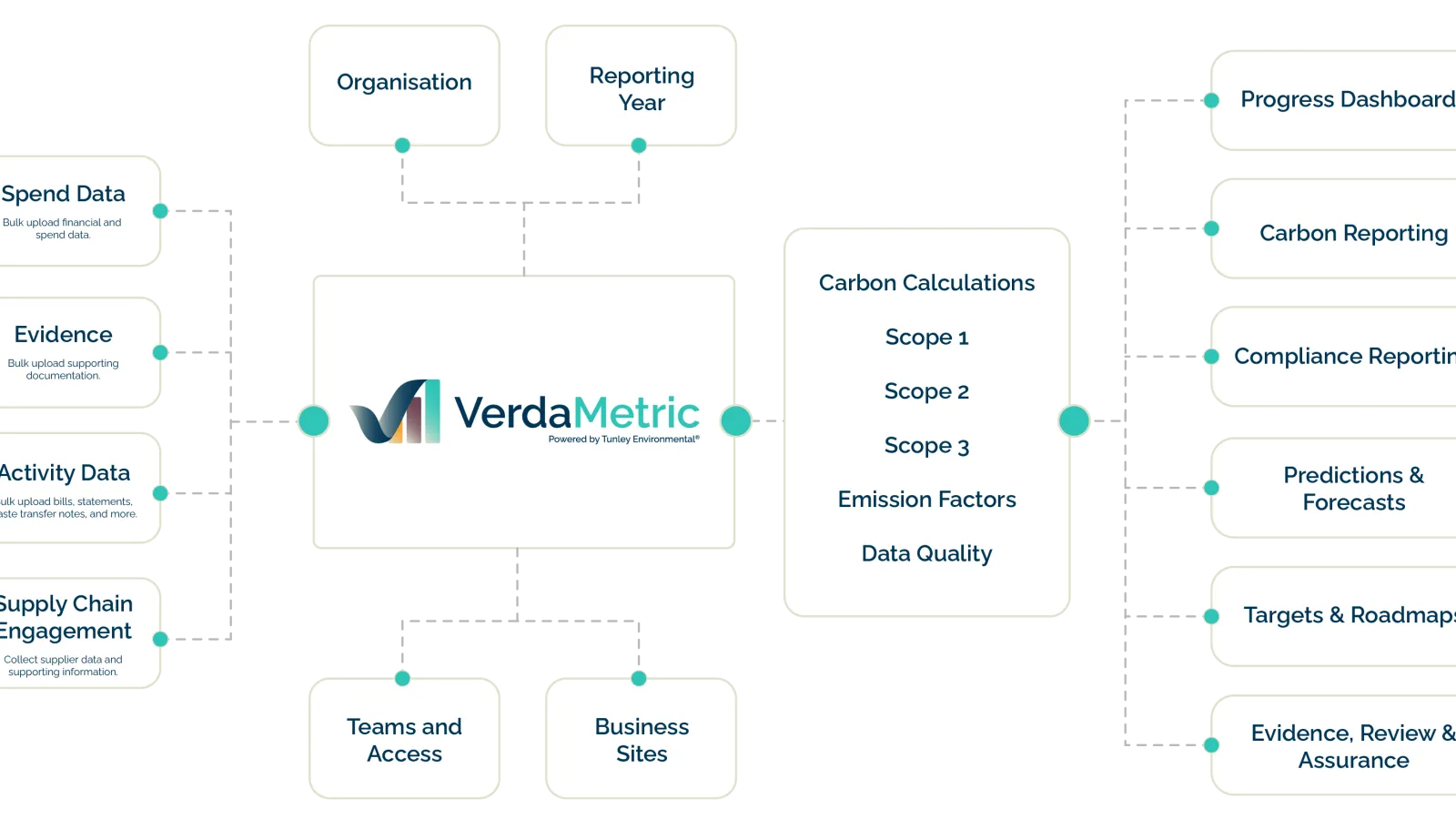
Tunley Environmental, a UK-based carbon accounting and environmental consultancy, has released VerdaMetric, a sustainability intelligence platform designed to consolidate fragmented emissions data into a single managed environment. The product launched on 30 September 2026 and is available to both existing Tunley clients and organisations with no prior relationship with the firm.
The platform addresses what the company describes as a persistent operational problem for sustainability teams: carbon and environmental data is typically scattered across spreadsheets, email inboxes, individual departments and multiple reporting periods. VerdaMetric allows teams to upload and organise that information, track Scope 1, 2 and 3 greenhouse gas emissions, monitor data completeness, and maintain audit trails that record how individual data points have been reviewed and amended over time.
Dr William Beer, founder and chief executive of Tunley Environmental, said the product grew directly out of recurring client frustrations. "For years, we've worked with organisations on carbon accounting, sustainability reporting and environmental strategy, and the one problem that comes up again and again is that the data is always very messy," he said. "We've used other sustainability platforms ourselves. Some were effective at certain things, some less so, but none really solved all of the real challenges we were seeing with our clients."
The platform includes bulk upload capability, data-completeness tracking, performance-over-time review, target-setting tools and financial insight modules intended to support forward planning rather than purely retrospective annual reporting. Tunley has not disclosed pricing or published benchmark data on the number of organisations piloting the software ahead of launch.
Market context
The sustainability software market has grown substantially as corporate reporting obligations tighten across multiple jurisdictions. In the UK, the Financial Conduct Authority's climate-related disclosure rules apply to listed companies and large asset managers, while the International Sustainability Standards Board's IFRS S1 and S2 standards are moving toward mandatory adoption in several markets. The EU's Corporate Sustainability Reporting Directive, which came into force progressively from 2024, is driving demand for auditable, structured emissions data from any company with significant European operations.
Established players in this space include Watershed, Persefoni, Sphera and SAP Sustainability Control Tower, alongside a growing number of mid-market and sector-specific tools. The category is currently crowded, with differentiation increasingly hinging on auditability, third-party verification support and the ability to handle Scope 3 supply-chain emissions at granular supplier level. Tunley's positioning as a consultancy building software around its own advisory practice mirrors strategies deployed by a small number of professional-services firms that have concluded that generic platforms do not map closely enough to real-world reporting workflows.
Regulatory read-across
VerdaMetric's audit-trail and data-completeness features are directly relevant to the assurance requirements embedded in CSRD and in the UK Sustainability Disclosure Standards, which are expected to align closely with IFRS S2. Organisations subject to mandatory third-party verification of their emissions disclosures will need software that can produce a clear chain of custody for each data point, from source collection through to the published figure. Whether VerdaMetric meets the evidentiary standards expected by accredited verifiers has not yet been confirmed by the company, and prospective enterprise buyers are likely to ask for that assurance before committing to the platform as their system of record.
Tunley has not named any launch customers or disclosed committed annual recurring revenue. The next material milestones for the product will be customer case studies that demonstrate accuracy at scale and any formal alignment with recognised reporting frameworks such as GHG Protocol or CDP submission templates.