
Karman unlocks 60% more compute for NexGen Cloud via power orchestration
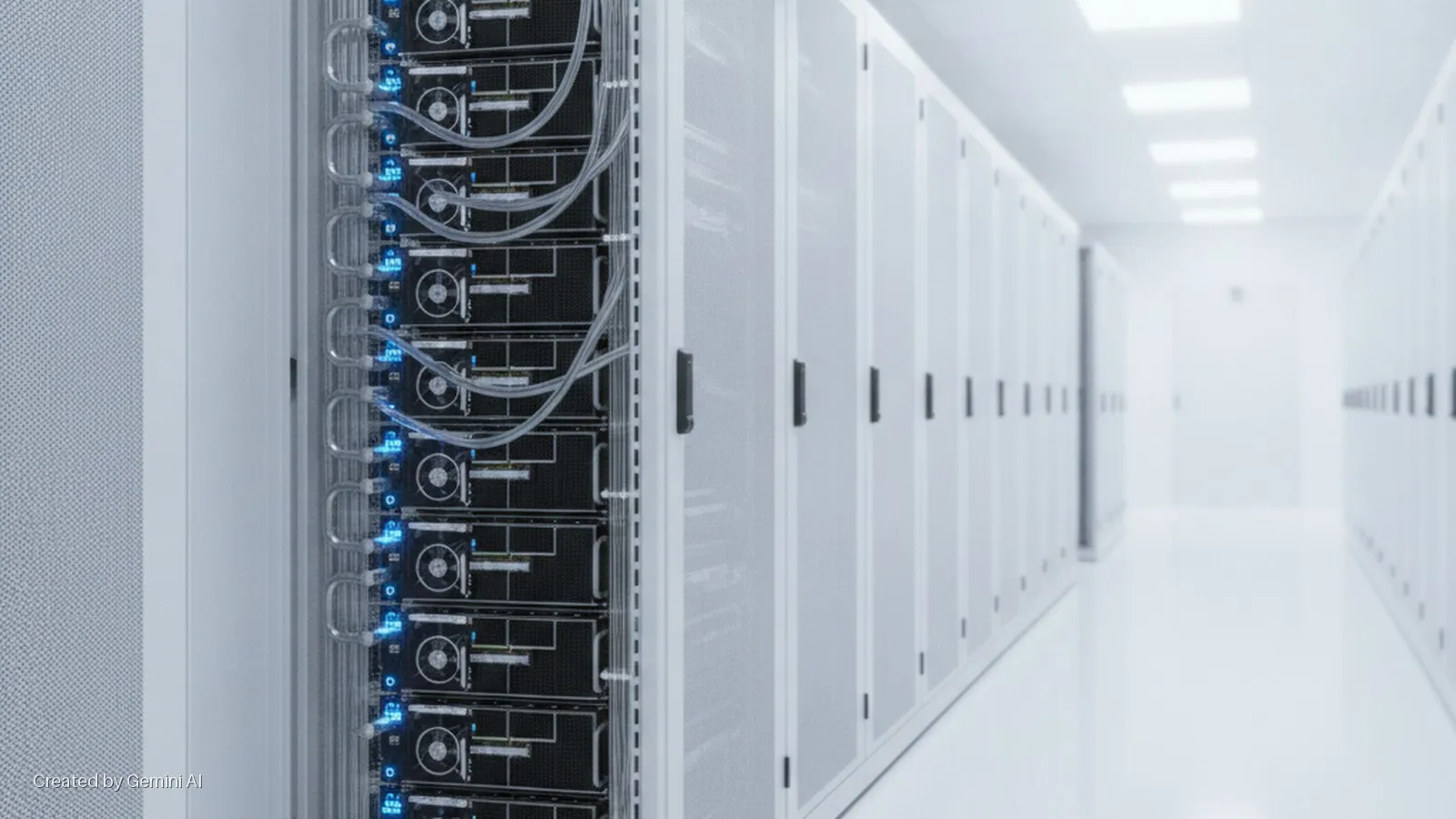
Karman, the Ann Arbor-based power orchestration company formerly known as Utilidata, has published results from a live deployment at NexGen Cloud's Montreal data-centre cluster showing a 60% uplift in AI compute capacity without increasing the provisioned power budget. Following the successful trial, the two companies have extended their commercial partnership for a broader rollout across NexGen Cloud's European operations.
The deployment ran 16 NVIDIA B300 servers within the power allocation originally provisioned for 10, delivering a matching 60% increase in token throughput while maintaining inference quality and latency across a range of workloads. Karman tested performance under both moderate, sustained loads typical of conversational LLM tasks and heavier summarisation workloads. The company says no measurable degradation in token latency was observed in conversational scenarios.
How the platform works
The Karman platform is built on a custom NVIDIA Jetson Orin Nano module embedded into rack-level power distribution equipment. Software-defined controls respond within 20 milliseconds to continuously balance power allocation, and can act within 2 milliseconds to cap consumption if demand threatens to breach the budget. The approach targets what Karman calls "stranded" power: capacity that operators hold in reserve for worst-case demand events that rarely occur in practice. By redistributing that headroom dynamically, the system allows more compute nodes to run concurrently within a fixed grid allocation.
Chief executive Josh Brumberger framed the commercial proposition directly: "Data centers hold power in reserve for worst-case scenarios that rarely happen. Karman turns that stranded capacity into usable compute."
Chris Starkey, CEO of NexGen Cloud, said the results open a path to faster deployment without waiting for additional power provisioning. "Efficiency is becoming just as important as capacity," he said. "This creates a compelling opportunity to improve infrastructure utilisation, accelerate deployment and ultimately deliver greater value to our customers."
Market context
Power availability has become the primary constraint on AI data-centre expansion in Europe and North America. Grid connection queues in key markets run to several years, and the capital cost of new electrical infrastructure is substantial. That bottleneck has opened a market for software-defined power management tools that extract more utilisation from existing allocations.
Karman is not alone in this space. A number of well-funded startups and established power-management vendors are pursuing rack-level and facility-level optimisation software, while hyperscalers are building proprietary systems to manage GPU power envelopes more aggressively. The differentiation Karman is claiming is millisecond-level control embedded directly into power distribution hardware rather than applied at the server or cluster software layer, which the company says allows tighter and faster responses than host-based approaches.
NexGen Cloud positions itself as a sovereign-by-design AI cloud provider, hosting managed infrastructure in Tier 3 data centres across Europe and North America and operating as an NVIDIA Cloud Partner. Expanding the Karman deployment across its European facilities would be subject to the differing grid-capacity conditions of each host country, and in some jurisdictions to emerging regulatory obligations on data-centre energy efficiency under the EU's Energy Efficiency Directive, which sets reporting and performance thresholds for large facilities.
The Montreal results are based on a single commercial cluster. Investors and customers will look for independently verified benchmark data and evidence that the 60% capacity gain holds across larger, more diverse deployments before treating the figure as a baseline for European rollout planning.