
Kodiak AI signs deal to deploy 75 driverless trucks with DTL Transport
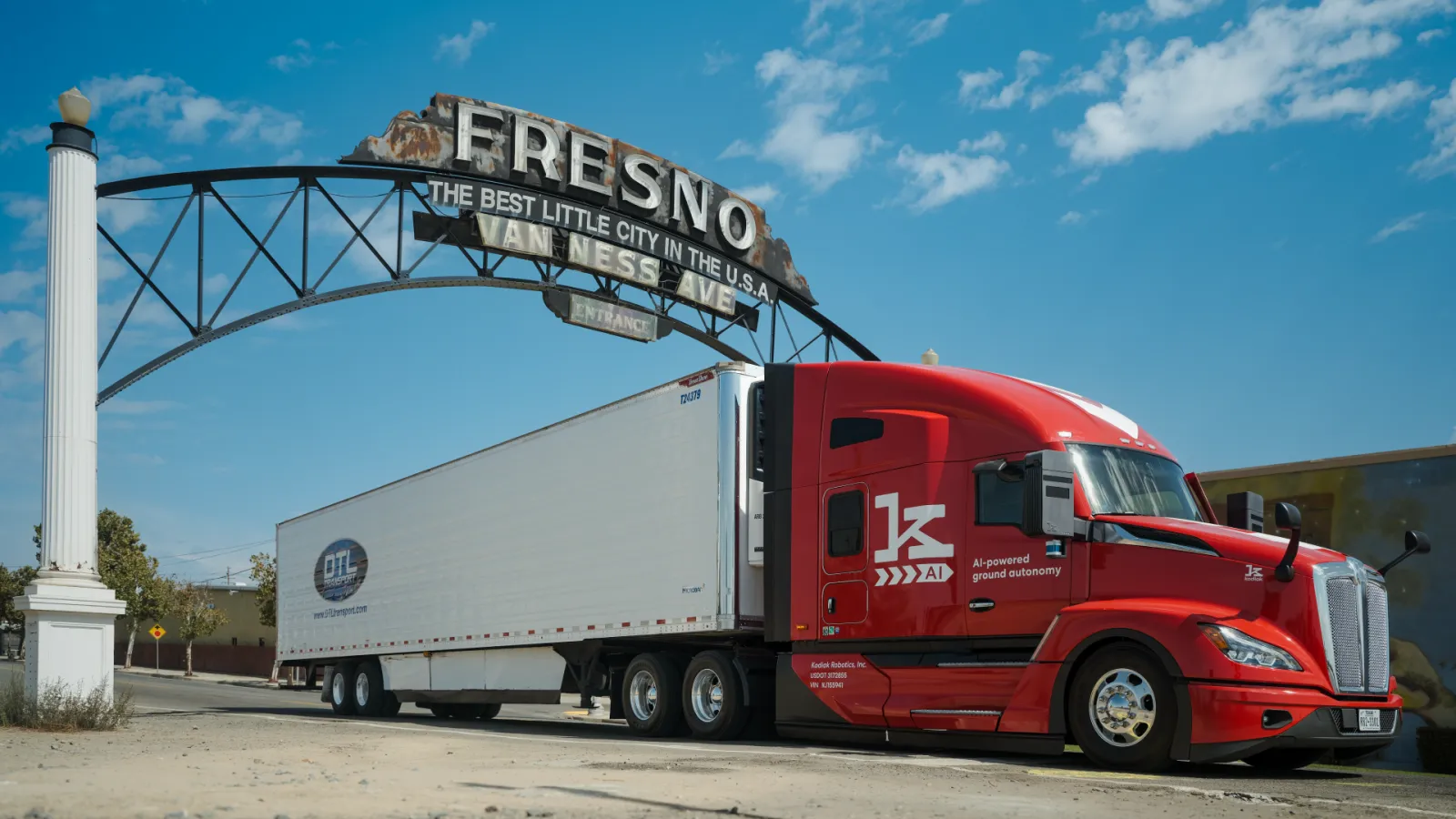
Kodiak AI (Nasdaq: KDK) has signed a binding commercial agreement with California-based freight carrier DTL Transport to deploy its Kodiak Driver autonomous driving system across 75 driverless trucks owned and operated by DTL. The deal is structured as a per-mile Driver-as-a-Service (DaaS) arrangement, with driverless operations beginning on two Sun Belt interstate corridors already tested by Kodiak: Interstate 10 between Dallas and El Paso, and Interstate 20 between Dallas and Atlanta.
The announcement follows a California pilot completed in September 2026 in which the Kodiak Driver autonomously hauled perishable goods 225 miles along the I-5 and CA-99 corridors between Fresno and Los Angeles. Kodiak said those were the first commercial goods ever transported autonomously by a Class 8 truck in the state, conducted under a heavy-duty Autonomous Vehicle Testing permit issued by the California DMV earlier that summer.
The deal
DTL, which specialises in refrigerated and dry full-truckload runs for major grocery chains and produce shippers, will pay Kodiak a per-mile fee rather than purchasing the autonomous stack outright. The release does not disclose the per-mile rate, minimum volume commitments, or the total contract value, and Kodiak says additional routes will be added over time.
Don Burnette, founder and chief executive of Kodiak, said the agreement "reinforces what I have said from the beginning: the Driver-as-a-Service business model is tailor-made for commercial trucking." Lucky Dosanjh, president and CEO of DTL, said integrating the technology would help the carrier expand capacity and improve safety alongside its existing workforce.
The Sun Belt routes offer DTL a specific operational advantage: long interstate segments that allow driverless trucks to run beyond current Hours of Service limitations that govern human drivers, effectively enabling around-the-clock freight movement without the cost or regulatory burden of team driving.
Market context
Autonomous long-haul trucking is one of the most closely watched segments of the Physical AI market, attracting sustained investment despite a broader shakeout in the autonomous-vehicle sector that saw several earlier entrants scale back or exit. The DaaS model, in which the technology vendor charges per mile rather than selling hardware, has emerged as the dominant commercial structure for fleet operators unwilling to carry large capital expenditure for unproven equipment.
Kodiak's existing commercial deployments provide relevant context for assessing the DTL agreement. As of 30 June 2026, the Kodiak Driver was already integrated on 35 driverless trucks operated by Atlas Energy Solutions in an industrial setting, with a commitment to grow that fleet to 100 trucks by mid-2027. Kodiak also expects to begin carrying goods for IKEA on Interstate 45 between Dallas and Houston before the end of 2026, adding a well-known retail brand to its customer reference list alongside Atlas Energy, Bridgestone, Werner Enterprises and C.R. England.
The competitive landscape in commercial autonomous trucking has narrowed considerably. Aurora Innovation and Torc Robotics (a Daimler Truck subsidiary) remain the most directly comparable players pursuing driverless Class 8 operations on US highways, with each targeting similar Sun Belt corridors and per-mile commercial structures.
Regulatory and standards outlook
Driverless Class 8 operations on Texas interstates currently require no state-level AV-specific permit, which is part of why Texas has become the primary proving ground for commercial autonomous trucking. California's requirements are stricter, and the September pilot operated under a DMV testing permit rather than a fully commercial authorisation. Kodiak has not disclosed the precise regulatory pathway for expanding beyond Texas.
Federal oversight of autonomous commercial vehicles remains fragmented. The National Highway Traffic Safety Administration has proposed updated AV safety reporting rules, and Congressional efforts to pass comprehensive federal AV legislation have stalled repeatedly. For fleet operators and insurers, the absence of a unified federal framework means liability questions and safety-case standards vary by state, a material risk for a carrier deploying 75 driverless assets across multiple jurisdictions.