
NUS Business School: leadership skills key to Vietnam's AI gains
Vietnam's drive to become a high-income economy by 2045 is placing growing pressure on businesses to move beyond AI experimentation and capture real productivity gains. Yet new data suggest most Vietnamese organisations have yet to make that transition, and researchers at the National University of Singapore (NUS) Business School argue the missing ingredient is management capability, not technology access.
A 2026 study commissioned by Amazon Web Services found that 26 per cent of Vietnamese businesses have now adopted AI, up from 18 per cent a year earlier. The same study found that 61 per cent of adopters remain at the experimentation stage, and 87 per cent of surveyed employers consider reskilling existing employees important to their AI strategies.
The leadership gap
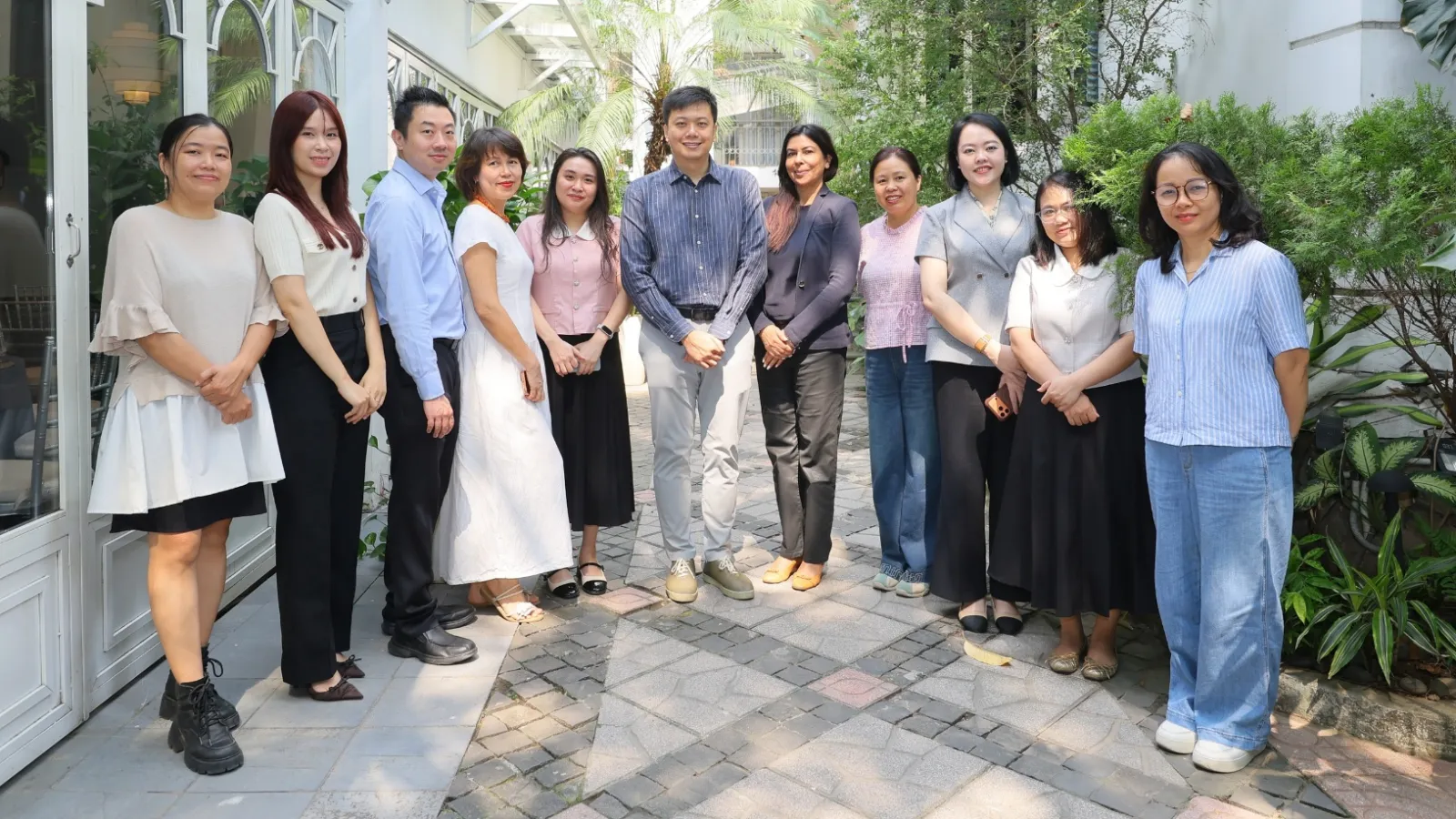
Speaking at a media engagement session in Hanoi, Dr Tan Hong Ming, Assistant Dean (Digital Operations) at NUS Business School, argued that technical training alone is insufficient. "A company can train every employee to use AI tools and still see little improvement in productivity if its processes and management practices remain unchanged. This is why leadership capability matters just as much as technical skills," he said.
Dr Tan also raised a less commonly discussed risk: that AI tools, by supplying answers almost instantly, may erode the problem-solving experiences through which employees develop expertise and judgement. Organisations, he said, need to rethink how staff build those capabilities in an AI-enabled workplace, rather than assuming that access to better tools automatically produces better workers.
NUS Business School is piloting one response to that challenge. Working with the NUS AI Centre for Educational Technologies, the school has adapted a generative AI platform called ScholAIstic into a business simulation for MBA and Executive MBA students. The system creates AI-simulated executives whom students interview before making business recommendations, putting critical thinking and independent judgement at the centre of the exercise rather than information retrieval.
Market and policy context
Vietnam's government approved a national AI human resources development programme in August 2026, which includes a target to equip around 10 million workers with basic AI skills by 2030, alongside plans to develop specialised AI talent and strengthen AI education across the country.
That policy context matters for international education providers and enterprise software vendors alike. A workforce-development agenda at this scale represents a significant addressable market for executive education, learning-management platforms and AI-readiness consulting. Several global business schools and edtech players are already active in Southeast Asia, and Vietnam's combination of a young demographic profile and explicit government backing makes it a priority market.
The challenge of converting AI adoption into measurable productivity is not unique to Vietnam. Research across developed and emerging markets consistently shows that organisational redesign and change management are the primary bottlenecks, not model capability or hardware availability. The pattern suggests that vendors positioning AI tools as self-evidently productivity-enhancing face increasing scrutiny from enterprise buyers who have already run pilots without transformative results.
Professor Teo Chung Piaw, Dean of NUS Business School, framed the challenge for business education directly: "We cannot simply introduce new technology into existing teaching methods and assume that learning will improve. Business schools need to examine what students should learn, how they acquire that knowledge and how their ability to apply it is assessed."
For Vietnam, Dr Tan said the country's demographic profile provides a foundation but not a guarantee. Combining human capital with effective AI adoption, he argued, is what would turn the country's young population into a genuinely productive workforce by the time Vision 2045 matures.