
SciTec hits FORGE milestone with Wide Field of View GEO integration
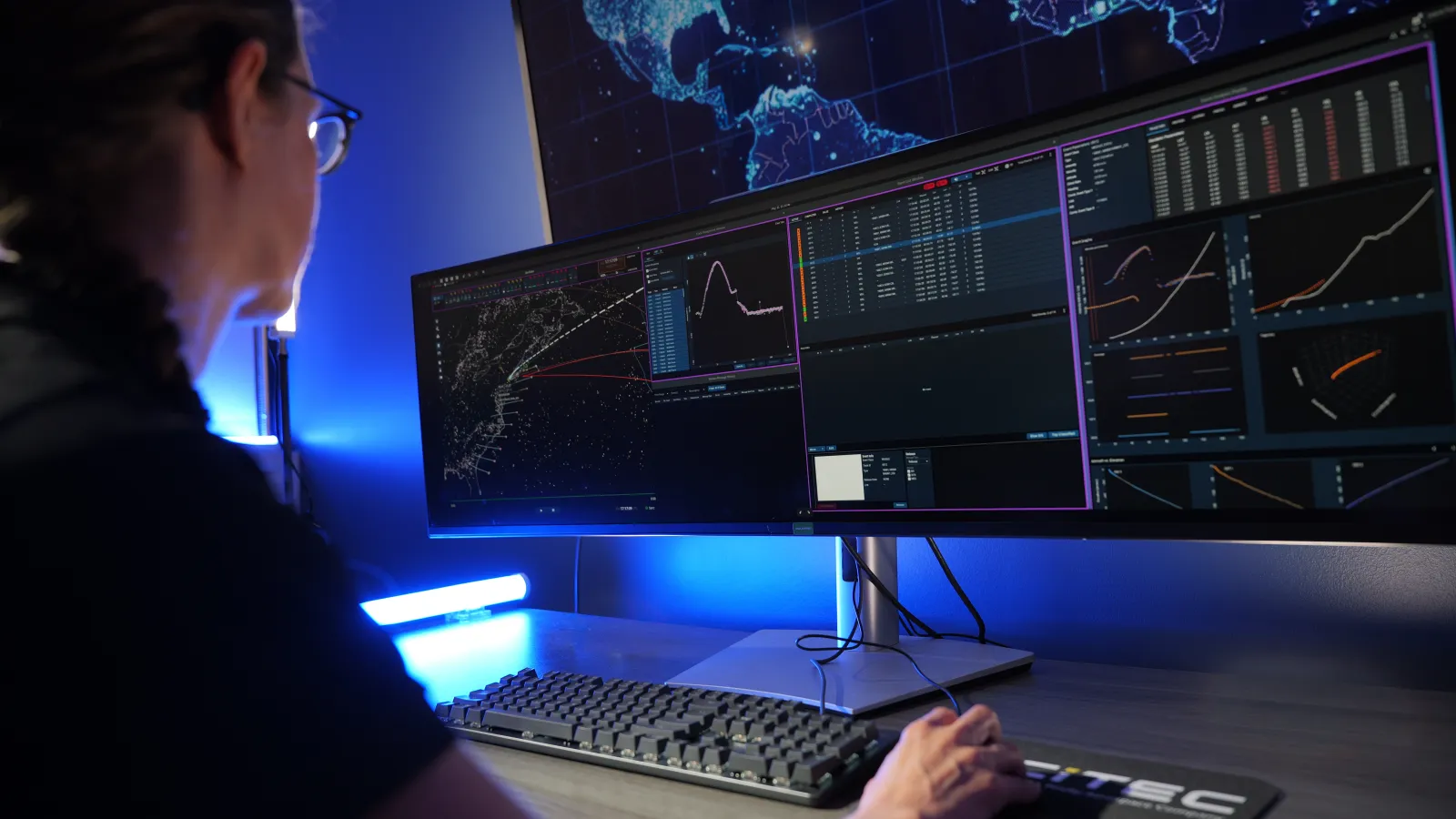
SciTec, the defence software subsidiary of Firefly Aerospace, has announced a new operational milestone for the U.S. Space Force's FORGE system, integrating data from the Space Systems Command's Wide Field of View space vehicle in geostationary Earth orbit. The move extends FORGE's persistent infrared coverage and is described by the company as a further advance of its $259 million FORGE Enterprise OPIR Solution contract.
FORGE, short for Future Operationally Resilient Ground Evolution, is the Space Force's ground-processing framework for overhead persistent infrared data. It aggregates feeds from multiple missile-warning and tracking satellites, transforming raw sensor data into actionable situational awareness for Space Force Guardians. The latest integration adds wide-area coverage from a GEO asset, complementing data the system already processes from satellites in other orbital regimes.
David Simenc, president of SciTec, said the system uses AI and machine learning to ingest and process "massive streams of data across all orbits in real time," and that the new GEO feed further widens the operational field of view for threat detection and tracking.
Contract and programme background
The milestone advances SciTec's work under the FORGE EOS contract, which was awarded at a value of $259 million and tasks the company with delivering advanced mission software that converts raw OPIR sensor data into usable intelligence products. SciTec says FORGE's open architecture allows new data streams to be absorbed without requiring infrastructure changes, a design principle the company treats as central to the system's scalability.
The current milestone builds on an earlier acceptance event in September 2025, when FORGE completed its second operational acceptance and fully transitioned mission data processing and framework services. SciTec characterises the progression from that baseline to today's GEO integration as evidence of the system's capacity to scale incrementally.
SciTec is headquartered in Princeton, New Jersey, and is a wholly owned subsidiary of Firefly Aerospace. The company claims more than four decades of experience in defence software, spanning missile warning, space domain awareness, intelligence and reconnaissance, and autonomous command and control.
Market and competitive context
Ground-based processing for overhead persistent infrared data sits at the intersection of space domain awareness and missile defence, a segment that has attracted sustained U.S. government investment as adversary satellite-interference and hypersonic-glide capabilities have grown. Raytheon Intelligence and Space, Leidos and Northrop Grumman are among the established primes with significant OPIR software footprints; SciTec competes by emphasising open-architecture integration and AI-accelerated data fusion rather than proprietary sensor-to-shooter chains.
The Space Force's broader FORGE programme is part of a wider push to modernise legacy ground systems inherited from the Air Force. Modernisation efforts are increasingly favouring software-defined, cloud-native architectures that can ingest data from a growing constellation of commercial and government sensors. SciTec's claim that FORGE can absorb new data streams without infrastructure changes is relevant here: as the Space Force's sensor mix diversifies, integration agility becomes a procurement differentiator.
Regulatory and policy backdrop
U.S. defence software contracts of this type are subject to CMMC (Cybersecurity Maturity Model Certification) requirements, which mandate specific cyber hygiene standards for contractors handling controlled unclassified and classified information. The FORGE programme's reliance on cloud-based, on-premise, and edge processing across multiple classification levels places it squarely within that regulatory perimeter.
The next near-term milestone for observers will be further expansion of FORGE's sensor coverage, particularly integration with next-generation OPIR satellites under the Space Force's resilient missile-warning architecture. SciTec has not disclosed a timeline for additional sensor integrations beyond the current GEO capability.