
Kratos wins $33.6m NASA contract for SR-1 Freedom nuclear spacecraft
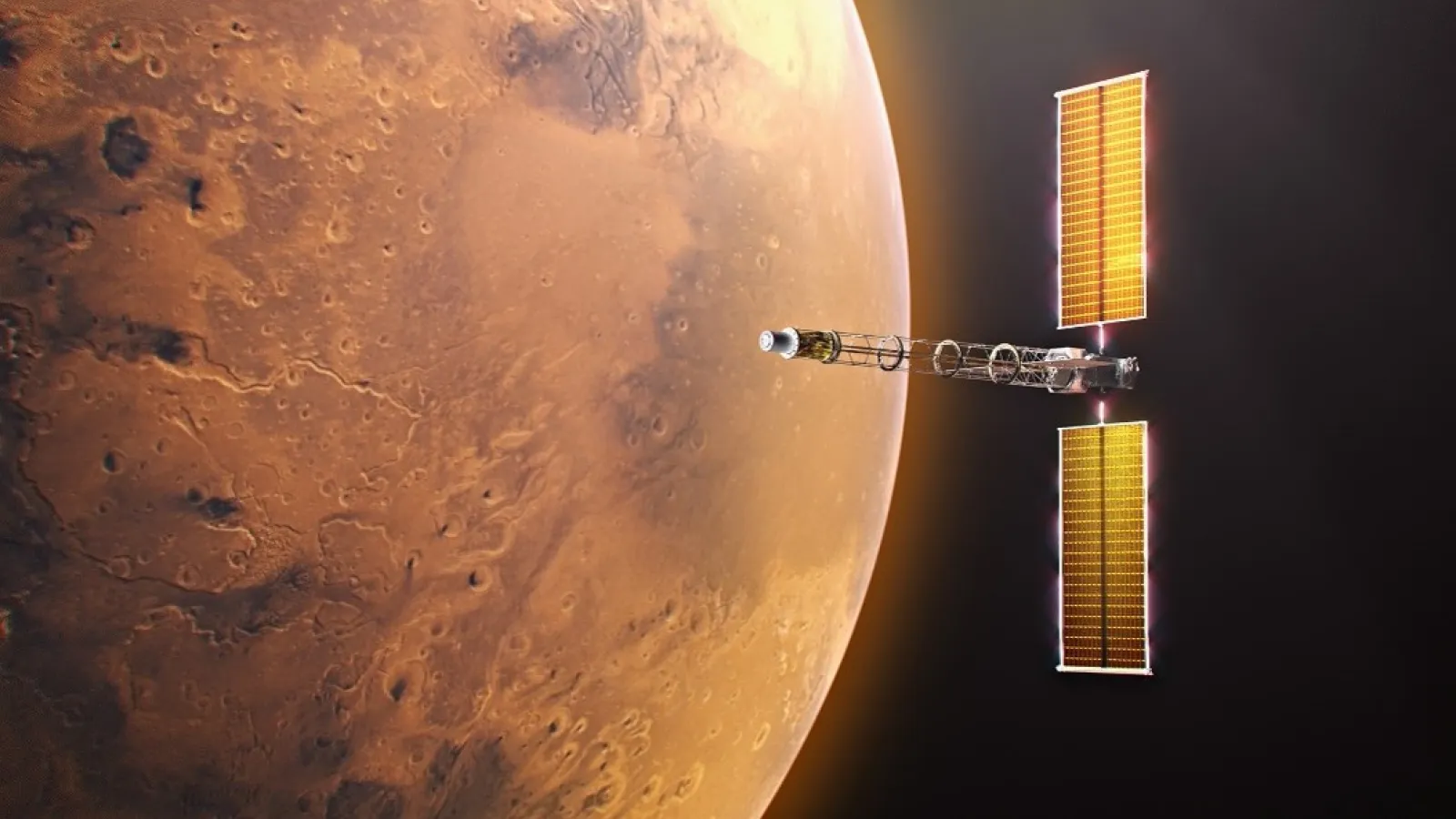
Kratos Defense & Security Solutions has been awarded a $33.6 million subcontract to design, build and deliver the power conversion system for NASA's Space Reactor-1 Freedom, the agency's first nuclear fission-powered spacecraft. Kratos is acting as a subcontractor to Sierra Lobo, Inc., under Sierra Lobo's NASA SpaceDOC III contract. SR-1 Freedom is targeted for launch in 2028 and is designed to travel to Mars, demonstrate nuclear electric propulsion, and deploy a science payload called SkyFall.
The specific component Kratos will provide is a closed Brayton cycle power conversion unit: a space-qualified mechanical system that converts reactor-generated thermal energy into electrical power for the spacecraft's propulsion thrusters and onboard systems. The Brayton cycle approach uses a turbine-generator driven by hot gas from the reactor, and is considered well-suited to space nuclear applications because of its efficiency and relative compactness compared with alternative thermodynamic cycles.
How nuclear electric propulsion works
Nuclear electric propulsion differs from conventional chemical rockets in that it uses reactor-generated electricity to power ion thrusters, which accelerate charged particles to produce thrust. The thrust is far lower in magnitude than a chemical engine, but can be sustained continuously for months or years. That continuous operation allows a spacecraft to build substantial velocity over time while consuming significantly less propellant mass. The trade-off is a longer transit time in early mission profiles; the benefit is a much larger mass budget for instruments, cargo or, in future crewed missions, life-support equipment.
SR-1 Freedom would be the first US spacecraft to operate a fission reactor in space since the SNAP-10A mission in 1965, making it a significant inflection point in American space-nuclear capability. NASA has stated that the mission is intended to validate the industrial and technical base for follow-on programmes, including a Lunar Reactor-1 concept envisaged as a power source for future Moon-base operations.
Stacey Rock, president of Kratos Turbine Technologies Division, said SR-1 "is the spacecraft that turns space nuclear propulsion from concept into reality" and argued that the programme would determine whether the US leads what she described as "the third space race."
Market and competitive context
The award reflects a broader revival of interest in space nuclear power among both government agencies and allied nations. The US Defence Advanced Research Projects Agency ran a separate nuclear thermal propulsion demonstration programme, DRACO, in the same period, and the UK Space Agency has funded feasibility studies into nuclear propulsion for deep-space missions. Russia and China have each announced their own space reactor programmes, adding a national-security dimension that is explicit in Kratos's framing of the contract.
For Kratos, the contract extends a growing portfolio in advanced propulsion, hypersonics and satellite ground systems. The company has historically pursued a strategy of internally funded development to reduce programme risk before competing for government contracts, and SR-1 represents a high-profile validation of that approach in the space-nuclear segment. Investors will watch whether the programme stays on its 2028 schedule and whether SR-1's success translates into follow-on orders for the Lunar Reactor-1 programme or other deep-space applications.
The $33.6 million subcontract value covers design, build and delivery; no in-service or sustainment value was disclosed in the release.