
Canada commits C$75m to pre-seed and seed stage VC strategy
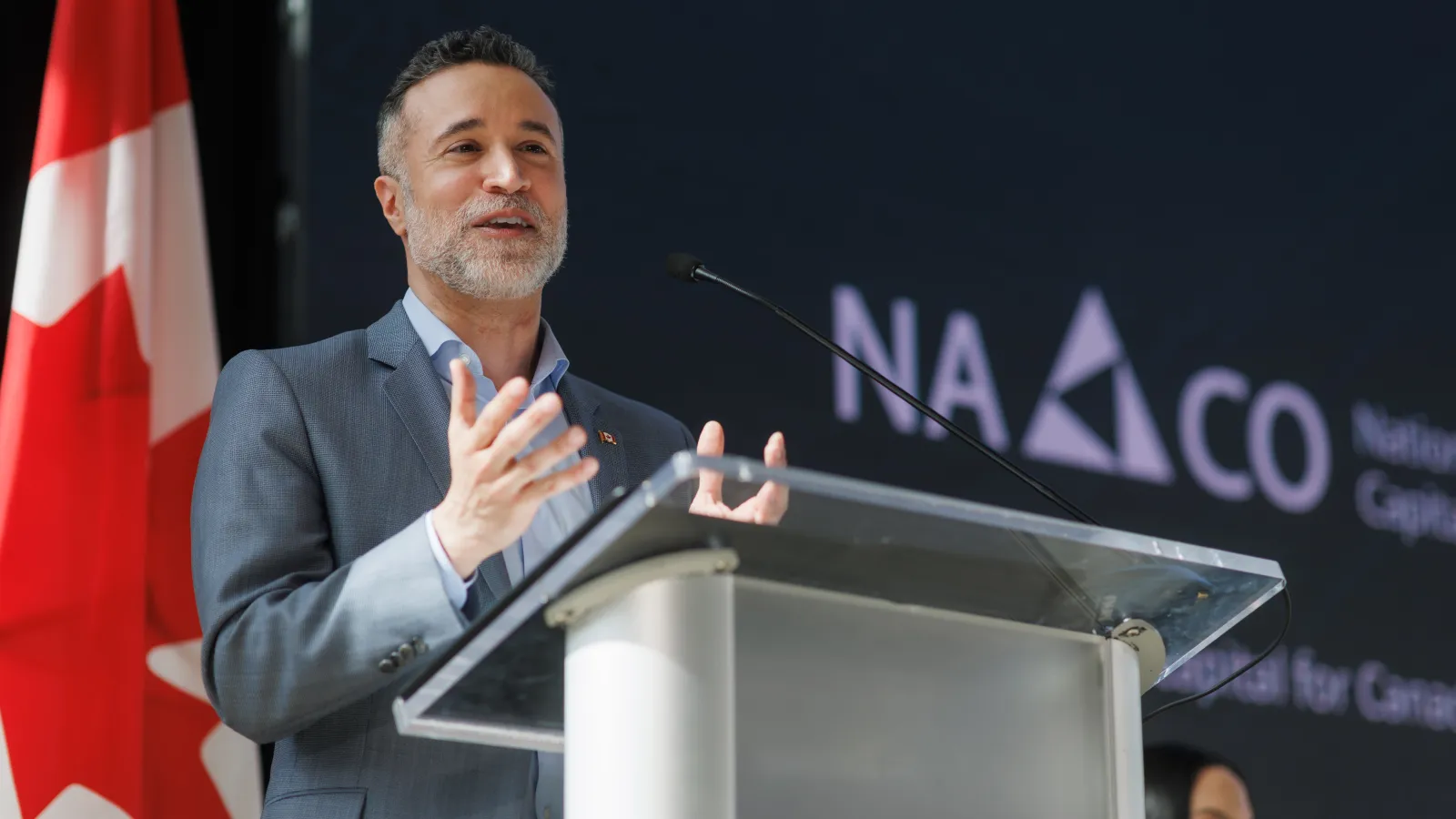
The Government of Canada has announced C$75 million in dedicated funding for pre-seed and seed stage companies under its new Early and Growth Stage Investment Strategy, marking what officials describe as the first time federal venture capital policy has explicitly targeted the earliest funding stages. Industry Minister Mélanie Joly made the announcement at Waabi, the Toronto-based autonomous trucking AI company, on 22 October.
The National Angel Capital Organization (NACO), Canada's largest angel network with more than 4,000 members and over 100 affiliated networks, welcomed the move as a direct response to years of advocacy. NACO chief executive Claudio Rojas said the first cheque a founder receives often determines where a company builds its long-term future, and that until now Canadian federal support had not reached companies early enough to shape that decision.
The retention problem
The policy responds to a measurable deterioration in Canada's ability to retain high-growth companies. According to data cited by NACO from research by Leaders Fund, seven in ten Canadian-founded startups that raised US$1 million or more were still based in Canada in 2015. By 2024, that figure had fallen to one in three. The implication is that foreign capital, often American, was writing the first cheques and anchoring companies in the United States before Canadian institutional investors had the opportunity to participate.
Rojas cited Verafin, a fraud detection and anti-money laundering software developer founded in St. John's, Newfoundland, as the model the strategy is designed to replicate nationally. Verafin was backed by local angel investors in its early years and eventually sold for US$2.75 billion. "St. John's shows what happens when local angels write the first cheque," Rojas said. NACO noted that Verafin alumni have since backed a new generation of Atlantic Canadian startups, including engineering design software firm CoLab and AI legal tools company Spellbook.
Market context
Canada's pre-seed and seed gap sits within a broader pattern of early-stage underfunding common to innovation economies outside the United States. The UK, Australia and several EU member states have introduced co-investment or matching-fund mechanisms to mobilise private angel capital alongside public money, and NACO's own advocacy drew on that international precedent. The organisation's Seeding Growth white paper, produced after consultation with more than 250 ecosystem leaders, recommended a matching-funds structure; whether the C$75 million will operate on that basis has not yet been confirmed by the government.
The announcement is framed as a starting point rather than a complete solution. Federal venture capital support has expanded in successive waves since the Venture Capital Action Plan of 2013, and NACO is positioning the pre-seed envelope as the next logical increment in that progression. Rojas said NACO will convene angel networks and early-stage investment organisations in the coming weeks to help shape how the capital is deployed, suggesting that the programme design is not yet finalised.
Regulatory and competitive read-across
Canada's competitiveness for early-stage technology talent sits within a more complex environment than funding policy alone can address. US immigration rules and compensation expectations have continued to draw senior engineers southward, and a weaker Canadian dollar makes US offers more difficult to match in real terms. The AI sector in particular faces intensifying competition: the announcement at Waabi, a company operating at the frontier of autonomous systems, underlines that Canada has internationally competitive deep-tech founders, but converting that talent into domestically anchored companies at scale remains the central policy challenge.
NACO's timeline of advocacy, from its 2025 pre-budget submission through the 2026 Startup Genome funding-gaps report, suggests the organisation has been unusually disciplined in building the evidence base for this intervention. Whether the C$75 million translates into measurable retention improvements will depend heavily on how co-investment terms are structured and how quickly capital can reach founders in regions outside the main tech corridors.