
Firefly Aerospace posts 259% revenue surge with $1.7bn record backlog
Firefly Aerospace (Nasdaq: FLY) posted third-quarter 2026 revenue of $110.7 million, a 259% increase on the same period a year earlier, as the Cedar Park, Texas-based company converted a growing pipeline of defence, lunar and commercial launch contracts into reported income. The company's backlog reached a record $1.7 billion at quarter end, up from $1.5 billion at the close of Q2.
Despite the revenue growth, Firefly recorded a GAAP net loss of $94.2 million for the quarter and an adjusted EBITDA loss of $69.5 million. Cash and equivalents stood at $409.3 million at 30 September, down from $793 million at the end of 2025, reflecting continued investment in R&D, cleanroom infrastructure and engine development. The company guides full-year 2026 revenue of between $440 million and $450 million.
Deal flow and programme milestones
The quarter was notable for contract breadth. Firefly signed deals valued at more than $1.3 billion with satellite connectivity firm AST SpaceMobile, covering licensed intellectual property, engine delivery and engineering support. The company also secured a $94 million Space Force contract for the Ground-Based Radar Digitisation programme, was onboarded to a $981 million Space Force IDIQ contract under the NITE-STAR initiative, and received a third hypersonic task order from a confidential customer.
On the lunar side, Firefly completed expansion of its spacecraft cleanroom in Texas, funded by a non-dilutive Texas Space Commission grant, enabling simultaneous assembly of up to 12 landers and orbital vehicles. The company was awarded a $13 million NASA JPL subcontract to manufacture the aeroshell for the SkyFall Mars mission, targeting a late 2028 launch. It also signed its first European launch contracts, with Swedish launch provider SSC Space booking two commercial Alpha flights from Esrange Space Centre, and extended Lockheed Martin's multi-launch agreement to cover up to 25 Alpha Block II launches through 2031.
Chief executive Jason Kim said the quarter reflected "the power of our diversified and vertically-integrated business," citing five parallel Moon missions, the Alpha Block II ramp, national security execution and the AST SpaceMobile partnership as evidence of pipeline conversion.
Market context and competitive positioning
Firefly operates in a small-to-medium launch market that has seen significant consolidation and attrition since 2020. Rocket Lab remains the most direct listed comparator on small-launch cadence, while SpaceX's Falcon 9 dominates medium-lift. Firefly's differentiation rests on vertical integration across launch, landers, orbital services and defence software through its SciTec subsidiary, a combination that few pure-play launch providers can match.
The lunar market is entering an early commercial phase through NASA's Commercial Lunar Payload Services (CLPS) initiative, and Firefly's onboarding to the follow-on CLPS 2 programme for large cargo landers positions it for heavier infrastructure deliveries later in the decade. Competition in the CLPS ecosystem includes Intuitive Machines and Astrobotic, though the latter experienced a mission failure in 2024 that underscored the technical difficulty of the category.
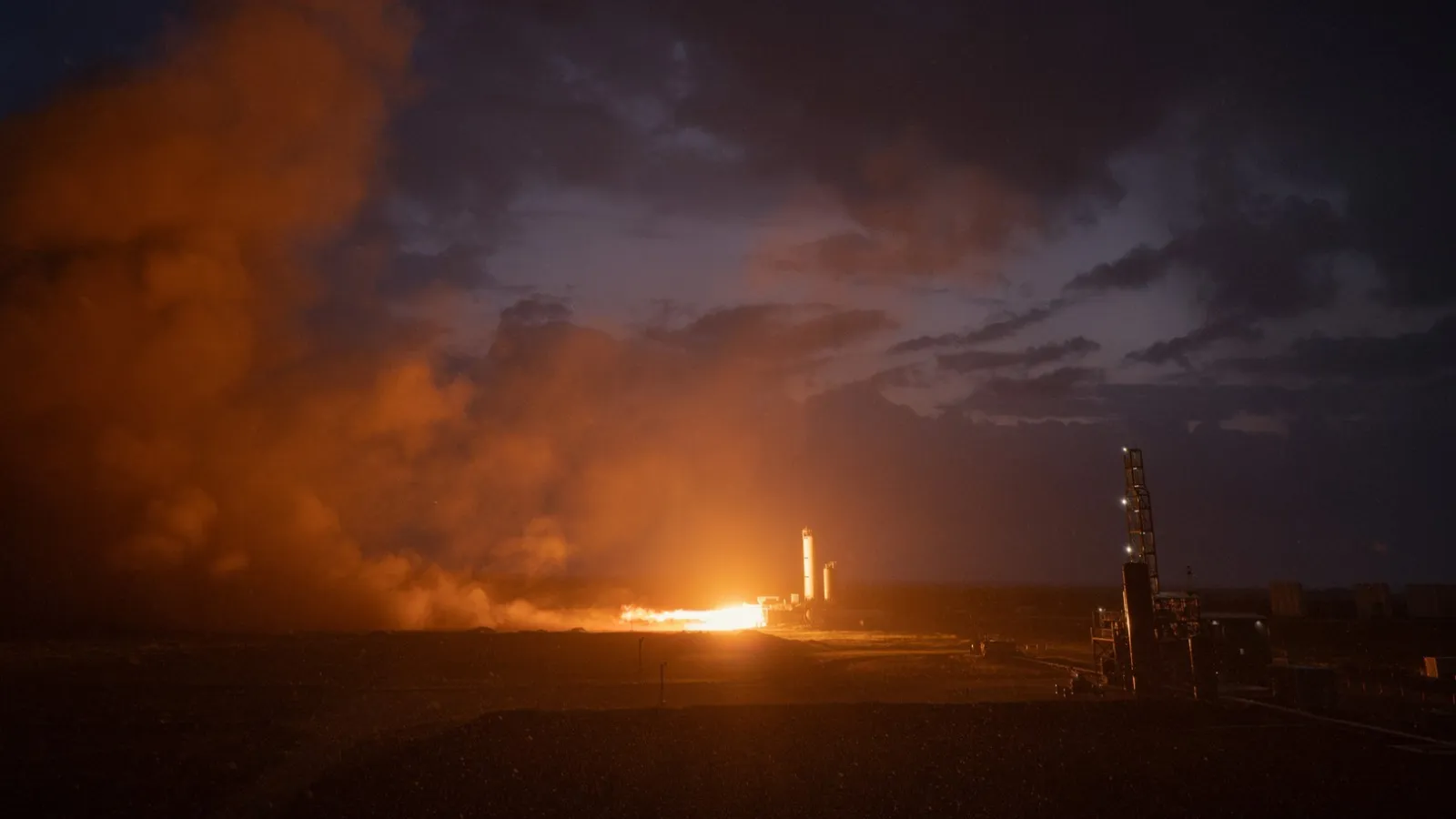
The AST SpaceMobile engine and IP deal is strategically significant beyond its headline value. It suggests Firefly's Miranda engine programme, currently in qualification with more than 170 hot fire tests completed, is being viewed as credible propulsion infrastructure by well-funded satellite operators. Miranda is the engine intended for Firefly's Eclipse launch vehicle; successful qualification would open a substantially larger payload class than the current Alpha rocket.
The company's accumulated deficit now stands at $1.3 billion, and cash consumption remains material. Investors will focus on whether the backlog converts at sufficient pace to narrow operating losses before the current cash position requires additional equity or debt financing.