
GridAI to acquire Wyoming gas producer Pronghorn in all-stock deal
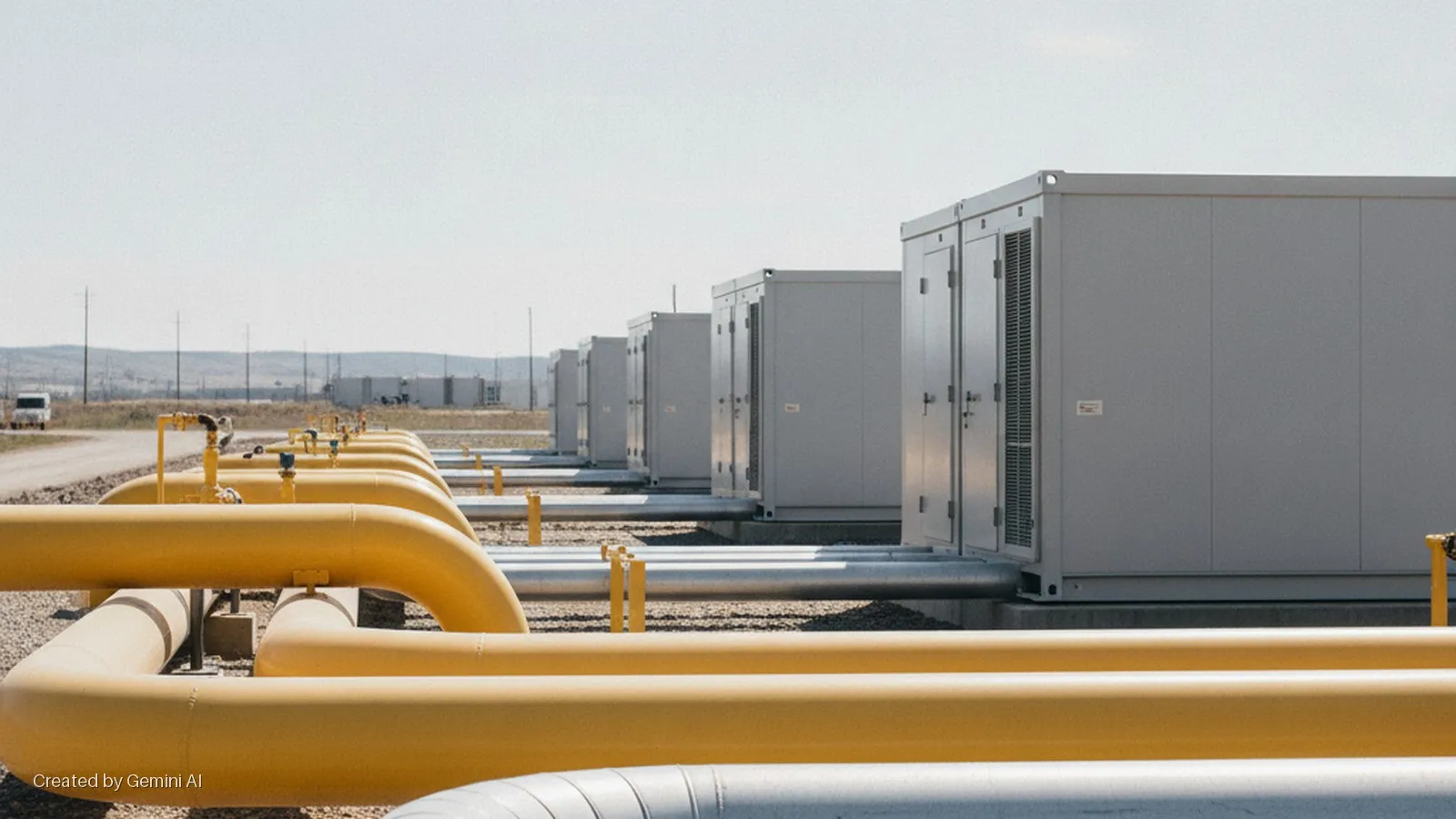
GridAI Technologies Corp. (Nasdaq: GRDX) has signed a definitive share exchange agreement to acquire Pronghorn Resources LLC, a producing natural gas and energy infrastructure business in Wyoming's Powder River Basin. The deal is structured as an all-stock transaction and is expected to close by 22 November 2026, subject to Nasdaq approval and shareholder consent.
Pronghorn brings approximately 100 million cubic feet per day of gross natural gas production, nearly two trillion cubic feet of estimated 3P reserves, more than 450 miles of owned pipeline infrastructure, around 1,000,000 acres of mineral and leasehold interests, and roughly 14 million gallons of daily water output. Historical capital expenditure on the asset base totals approximately $1.7 billion, with the company citing a replacement value exceeding $3.2 billion. GridAI says the existing gas volumes could fuel up to 600 MW of gas-fired generation, depending on plant efficiency, though that figure represents a fuel-to-power calculation rather than installed capacity.
The deal
Under the exchange agreement, Pronghorn's members will receive 1,247,887 shares of GridAI common stock and up to 129,504 shares of newly designated Series I Convertible Preferred Stock, with a portion held in escrow pending indemnification obligations and a workover milestone. As a separate consideration, Sigma9 Capital Ltd will receive 794,109 common shares and 82,411 preferred shares in exchange for the assignment of exclusive FANCO Wyoming development rights. All issued shares are subject to 30-month lock-up agreements, and Pronghorn members gain the right to appoint one director to GridAI's board at closing.
The FANCO rights centre on a 240 MWe small modular reactor platform called EAGL-1, together with a bridge power concept intended to deliver dispatchable generation ahead of eventual SMR deployment. GridAI is explicit that advanced nuclear remains a longer-term opportunity; its near-term focus is commercially available gas-fired generation, with 300 MW of initial power delivery targeted for 2027.
Chief executive Jason Sawyer framed the rationale in direct terms: "Reliable power is the critical constraint on AI infrastructure growth. Pronghorn gives us the fuel, infrastructure, and operating foundation to address that need at scale in Wyoming."
Market context
GridAI is entering a space that has attracted significant corporate and policy attention in a short period. Google announced a $17 billion Wyoming data centre investment on 5 November 2026, citing natural gas generation and established energy partnerships, a move GridAI references explicitly as market validation. Wyoming Governor Mark Gordon has issued an executive order setting out a statewide data centre development framework, and Governor-elect Eric Barlow has signalled continued support, with caveats around water rights and energy self-sufficiency.
The broader US picture is more complicated. According to the company's own release, voters in 40 of 41 local ballot contests nationwide in November 2026 favoured limiting or opposing large-scale data centre development, suggesting that community and planning resistance is becoming a material factor in site selection. Wyoming's combination of cheap land, industrial zoning and abundant domestic gas is therefore a genuinely differentiated pitch.
GridAI's model of behind-the-meter, dedicated gas generation is increasingly common among AI infrastructure developers seeking to bypass lengthy utility interconnection queues. It sits alongside similar approaches being pursued by a number of well-capitalised energy and data centre developers across Texas, the Appalachian Basin, and the Midwest. The differentiating factor GridAI is emphasising is vertical integration: owning the fuel, the pipes, the land, and the water, rather than contracting for each separately.
The company also flagged potential for carbon capture and geological sequestration in the Powder River Basin, referencing US Department of Energy estimates of up to 14 billion metric tons of CO2 storage capacity in the region's coal seams. GridAI was careful to note that basin-wide estimates do not establish capacity attributable to Pronghorn's specific acreage, and any sequestration activity remains subject to permitting and feasibility work.
No hyperscale customers or power offtake agreements have been named. Investors and prospective tenants will be watching for signed heads of terms as GridAI moves towards its 2027 delivery target.