
MaiaEdge PBC 100 Series brings private Ethernet to off-net sites
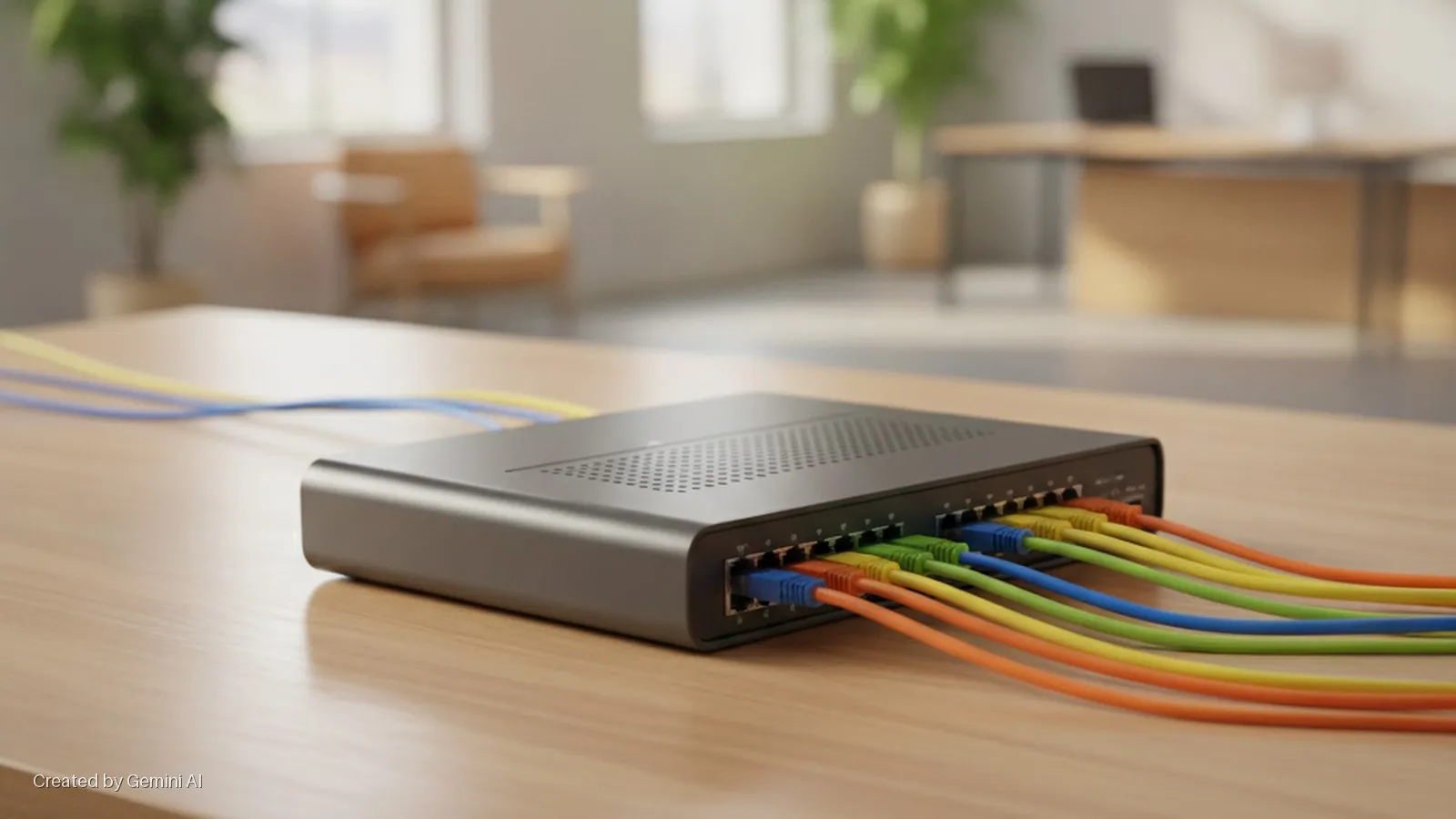
MaiaEdge has launched the PBC 100 Series, a compact customer premises equipment (CPE) device designed to let fibre operators and service providers extend private Ethernet connectivity beyond the edge of their owned fibre networks. The first device in the range, the PBC 124-C, is available now.
The PBC 100 Series pairs with MaiaEdge's existing PBC 2000, which sits at an operator's point of presence, Metro Ethernet edge, or data centre. Together the two devices use the company's SD-Ethernet architecture to automatically provision Layer 2 connections to customer sites over whatever transport is available: dedicated fibre, dedicated internet access, satellite, or general IP transit. The company says this removes the need for manual network-to-network interface (NNI) negotiations or costly new physical infrastructure before a provider can begin serving a customer site.
CEO and co-founder Abilash Menon framed the product as a structural shift in how operators think about addressable market. "For decades, where your fiber ended, your service opportunity ended with it," he said. "The PBC 100 Series breaks that link. Providers can reach off-net customers without building fiber or negotiating a new NNI, then turn that connection into private connectivity, cloud access, AI infrastructure, and more."
Beyond the initial Ethernet path, MaiaEdge says the CPE can serve as a platform for additional services delivered either by the operator or through MaiaEdge-enabled partners, including cloud on-ramps and what the company describes as distributed AI access. The release also highlights a data-centre use case, where the same automated provisioning model could accelerate tenant onboarding by reducing manual configuration steps.
Victor Rodriguez, CTO at customer HDCO Group, said the platform makes Layer 2 delivery practical at sites previously too difficult to reach. He claimed it was "five times easier to operate" than prior networking approaches, though MaiaEdge did not publish an independent benchmark or methodology to support that figure.
Market context
The off-net connectivity problem is well understood in the carrier and managed-service-provider space, and MaiaEdge is entering a market where established players already offer solutions. Vendors including Cisco, Nokia, Juniper Networks and a range of SD-WAN specialists address last-mile reach through a combination of hardware CPE, virtual network functions and wholesale NNI agreements. What MaiaEdge claims to differentiate is the degree of automation: automated path provisioning over heterogeneous transport without operator-by-operator NNI negotiation.
The company's founding team carries relevant pedigree. The core engineers previously built Session Border Controllers at Acme Packet, which Oracle acquired, and Session Smart routing at 128 Technology, which Juniper Networks acquired. That track record will carry weight with service-provider procurement teams familiar with those platforms.
Regulatory and standards read-across
Private Ethernet services operating over third-party transport face compliance considerations that vary by region and vertical. In financial services and critical national infrastructure, regulators increasingly scrutinise the resilience and geographic routing of private connectivity, particularly where satellite or public internet transport is used as a fallback. NIS2 in the EU and the UK's equivalent network and information security obligations require operators to demonstrate that third-party transport links do not introduce unacceptable risk into critical services.
MaiaEdge notes that connections are encrypted, but did not specify the encryption standard, key management approach, or certification status (for example, FIPS 140-3) in its launch release. Enterprise buyers in regulated sectors are likely to request that detail before committing to the platform.
The CPE market is also subject to supply-chain scrutiny following export-control actions against certain hardware vendors. MaiaEdge has not disclosed its chip or component sourcing, which may become a procurement question for US federal or allied-government customers.