
ESET links Turla APT to Exchange espionage tool targeting EU and NATO
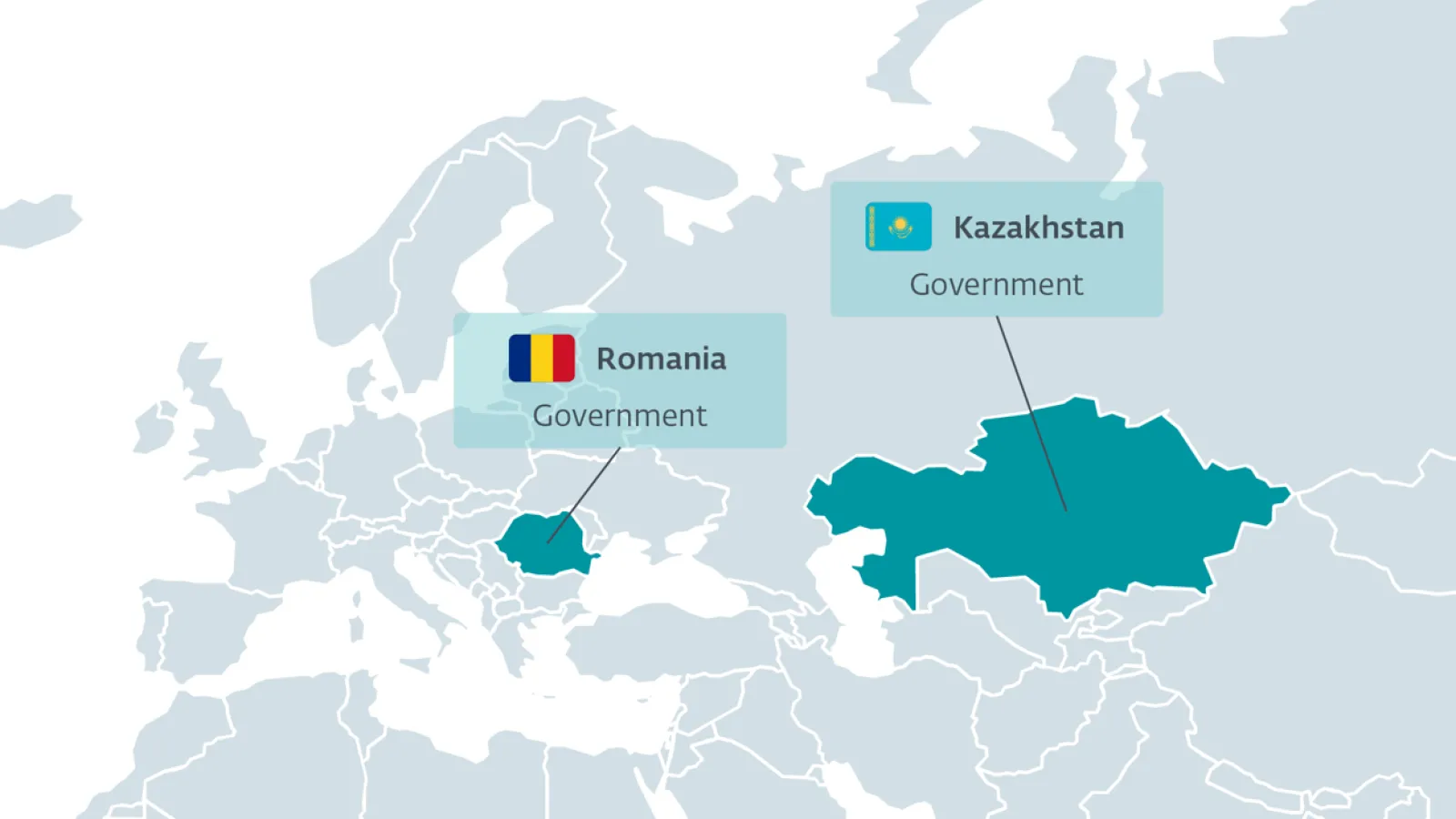
ESET Research has disclosed the discovery of a previously unknown cyberespionage toolset, named Cereal, deployed on Microsoft Exchange servers at two national government organisations: one in Kazakhstan and one in Romania. The Bratislava-based security firm attributes the toolset, with high confidence, to Turla, a threat actor widely assessed to operate as part of Russia's Federal Security Service (FSB). ESET identified both victims late in 2025, though the full research was published on 10 November 2026.
Cereal is described as a modular, tightly integrated toolkit engineered specifically for long-term, low-visibility collection of email traffic. Its most notable characteristic is an absence of external command-and-control infrastructure: rather than phoning home to attacker-controlled servers, the malware co-opts the victim's own Exchange server to relay commands and exfiltrate data. This design significantly reduces the network-level indicators that defensive tools typically use to detect and block intrusions.
How Cereal works
The toolset injects an automated email-collection module directly into legitimate Microsoft Exchange processes, giving it access to the message transport pipeline before emails leave the organisation. A passive backdoor component provides persistent access to the internal network without establishing outbound connections. Commands arrive as separate .NET assemblies; payloads are kept encrypted and executed in memory wherever possible, minimising forensic artefacts on disk.
ESET researcher Matías Porolli, who discovered the toolset, described the operational concept plainly: "Before the email leaves the building, a piece of code quietly examines it, decides that it is interesting, and sets aside a copy to be forwarded to prying eyes, while the original email continues on its way." Porolli noted that the toolset is technically sophisticated relative to most recent APT cases the firm has researched, citing the abuse of .NET unmanaged entry points and the .NET native image cache as distinctive techniques that require deep knowledge of Exchange internals.
In the Romanian compromise, the CerealBox component was configured to flag and collect messages sent to or received from NATO and EU institutional addresses. ESET links the targeting pattern to long-standing Russian intelligence collection priorities and notes the broader geopolitical context: Romania has reported multiple incidents involving Russian drones entering or crashing near its territory since early 2025, heightening tensions and prompting calls for a NATO naval mission in the Black Sea.
Threat landscape and defensive implications
Turla, also tracked under the aliases Snake and Uroburos, has been active since at least 2004 and represents one of the most technically capable and persistent threat actors in the state-sponsored espionage ecosystem. ESET's telemetry indicates that roughly 70% of countries targeted by Turla since 2022 have been former Soviet republics or Eastern European states with historical alignment to Moscow. That pattern places both Romania and Kazakhstan squarely within the group's established targeting envelope.
The technique of weaponising on-premises Exchange servers as covert C&C infrastructure is not entirely new, but combining it with in-memory execution, serialisation-based delivery and deep Exchange API abuse represents a meaningful evolution in operational tradecraft. Defenders running on-premises Exchange deployments, particularly in government and critical-infrastructure contexts, should treat Exchange server processes as a priority target for endpoint detection and response coverage, and audit .NET assembly loading and serialisation activity.
From a standards and policy perspective, the disclosure carries direct relevance for EU member states subject to the NIS2 Directive, which came into force in October 2024 and obliges essential-entity operators, including public administrations, to adopt appropriate technical and organisational measures against precisely this class of threat. Romania, as an EU member state and NATO ally, will face scrutiny over whether the compromise falls within NIS2's incident-reporting obligations.
ESET has published a full technical white paper alongside the disclosure. Security teams should consult the indicators of compromise and YARA rules released with the report and prioritise patching and telemetry review on any internet-exposed Exchange infrastructure.