
UAE AI infrastructure needs unified power, security and architecture
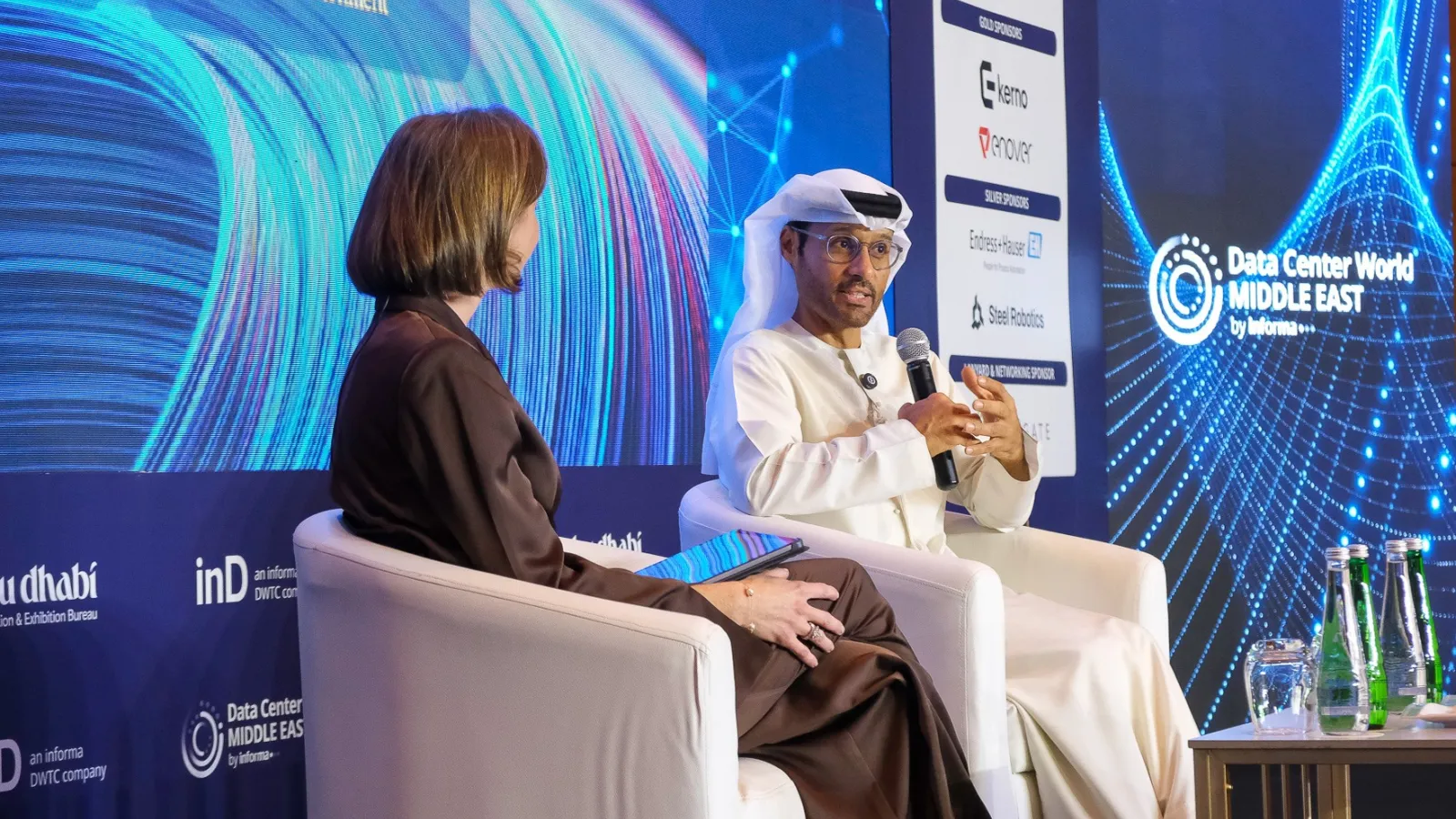
The UAE's ambition to become a leading global AI hub will stand or fall on how well power supply, cybersecurity and system architecture are co-ordinated from the earliest stages of infrastructure design, according to government and technology leaders who addressed the inaugural Data Center World Middle East in Abu Dhabi on 17 November 2026.
The two-day event, organised by inD (an Informa/DWTC partnership) and held at the Dusit Thani Abu Dhabi, marks the regional debut of Data Center World, a conference series that has run for more than four decades. Participants included the UAE Ministry of Investment, hyperscalers AWS, Google, Microsoft and Oracle, and local infrastructure names including Khazna Data Centers, Core42, district-cooling specialist Tabreed and cloud operator Kerno.
Sovereignty and security from the first design drawing
His Excellency Dr Mohamed Al Kuwaiti, Head of Cyber Security for the UAE Government and leader of the UAE Cyber Security Council, opened proceedings with a call to treat data centres as sovereign national assets rather than commercial facilities that security is retrofitted into. "Protection has to reach past the data hall to the substations, cable routes and subsea links that keep a facility running, and to every vendor with remote access to its systems," he said.
Dr Al Kuwaiti framed security as a prerequisite for the UAE's broader digital-economy ambitions, stating that the country "aims to be the world's most trusted digital hub" and that the trust required must be earned through close collaboration between operators, technology providers and government.
The opening panel examined grid readiness and sovereign capacity planning under the banner of the Gulf's widely cited 3GW data-centre target. Executives from Core42, Tabreed and Kerno addressed the operational realities of building at that scale in a region where ambient temperatures routinely exceed 45°C, adding complexity to cooling and power-delivery engineering.
Architecture over raw compute
The AWS keynote, delivered by Dr Shivagami Gugan, Chief Technologist, Worldwide, AWS, turned from capacity to value. "Record investment in GPUs has yet to turn into value for many enterprise AI projects," she said. "The ones that stall run into limits on integration, data, cost and trust. As compute becomes easier to secure, the advantage moves to architecture: AI agents that work together on open standards, draw on trusted data, are governed by design and are built to control cost and fail safely."
The argument that architectural discipline now matters more than raw GPU procurement is a recurring theme across the enterprise AI market globally, as organisations find that model access is no longer the binding constraint. For Gulf economies investing heavily in sovereign AI capacity, the implication is that early-stage infrastructure choices, particularly around data governance frameworks and interoperability standards, will have outsized long-term consequences.
Market context and regulatory outlook
The UAE sits within a broader Gulf Co-operation Council buildout that also includes Saudi Arabia's NEOM and Vision 2030 data-infrastructure programmes and Qatar's sovereign cloud initiatives. Hyperscaler commitments to the region have accelerated since 2024, with Microsoft, Google and AWS all announcing dedicated UAE cloud regions. The convergence of sovereign AI policy and large commercial cloud deals makes the Gulf one of the fastest-growing data-centre markets by planned megawatt capacity.
Regulatory dynamics are evolving in parallel. The UAE's Personal Data Protection Law, which came into force in 2022, and the UAE Cyber Security Council's national framework both impose obligations on operators of critical digital infrastructure. As AI workloads scale, regulators across the region are likely to tighten data-residency and incident-reporting requirements, bringing Gulf frameworks closer to alignment with the EU's NIS2 Directive and DORA.
Day two of the event is scheduled to cover the Middle East data-centre market outlook to 2030, sovereign cloud infrastructure, net-zero design and water and cooling engineering for extreme-heat environments, areas that will define whether the Gulf's capacity ambitions translate into sustainable, bankable infrastructure.