
Data Center World Middle East opens in Abu Dhabi on AI power challenge
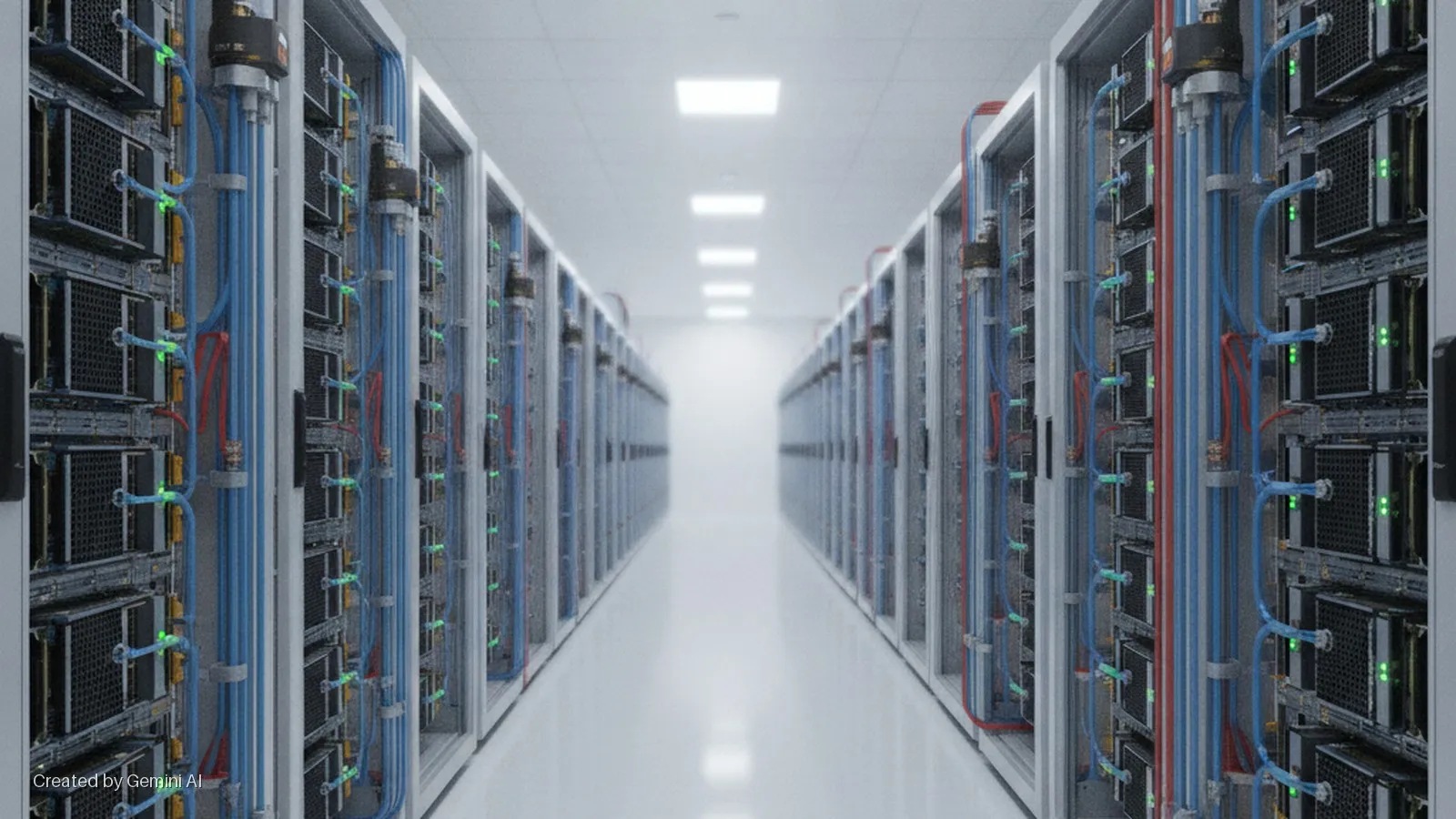
Data Center World Middle East will hold its first regional edition in Abu Dhabi on 17 and 18 November 2026, bringing together hyperscaler executives, government ministers and data-centre operators to address the energy, skills and standards challenges underpinning the emirate's AI infrastructure ambitions. The event is organised by inD, a joint venture between Informa Group and the Dubai World Trade Centre.
Abu Dhabi is currently the largest data-centre market in the Middle East by installed capacity, with 374 MW of technical power, according to a mid-2026 EMEA data-centre report by JLL. Abu Dhabi's Department of Energy projects that AI infrastructure will require approximately 2 GW of power in an initial phase, potentially rising to 5 GW, and has committed AED 250 billion to energy and water infrastructure development between 2025 and 2035.
The coordination challenge
A central theme of the conference is the transition from individual facility builds to a co-ordinated, ecosystem-wide approach. Mehdi Paryavi, chairman and CEO of the International Data Center Authority, speaking in the opening session, said the Gulf's biggest gap in AI-readiness is the absence of a unified scaling strategy. "The region needs adaptive standards, qualified workforces, long-term regional planning, reliable power at AI-load scale, and stability," he said. "Developers must look beyond individual facilities and collaborate with governments, utilities and sector partners to build an ecosystem capable of supporting sustainable, large-scale AI infrastructure."
Khazna Data Centers, described in the release as one of the fastest-growing hyperscale data-centre platforms globally with 30 operational facilities totalling 673 MW of capacity, is among the operators represented. Morten Tiedemann, senior director of operations at Khazna, noted that high-density AI workloads are forcing operators to rethink cooling strategies, maintenance systems and emergency procedures well before new capacity goes live. His session will focus on supply-chain readiness as demand for dense GPU racks accelerates.
Technical sessions will cover liquid cooling at its upper limits, mixed-density halls running servers from 10 kW to beyond 100 kW per rack, and district-cooling integration. Tabreed, the National Central Cooling Company, which operates connected district-cooling networks with 1.58 million refrigeration tonnes of capacity, will be represented at chief executive level.
Market and regulatory context
Abu Dhabi's push sits within a broader Gulf-wide acceleration of data-centre investment, driven in part by sovereign AI strategies across the UAE and Saudi Arabia. Hyperscalers including AWS, Google, Microsoft and Oracle are all committing capacity in the region, creating competitive pressure on local operators to deliver power-dense, thermally managed facilities at speed.
Operating in ambient temperatures that regularly exceed 50 degrees Celsius presents engineering constraints that European and North American data-centre playbooks do not fully address, making the region a forcing function for liquid-cooling and water-efficiency innovation. Regulatory oversight is developing in parallel: the UAE Cybersecurity Council is a conference supporter, and sessions will include representatives from the UAE Ministries of Energy and Infrastructure and Investment, suggesting that standards and compliance frameworks for AI infrastructure are being shaped alongside physical build-out.
For operators and cloud architects evaluating Middle East deployment, the near-term milestones to watch are Abu Dhabi's first published AI-load power allocation plan, progress on the AED 250 billion grid investment programme, and the emergence of any formal data-residency or sovereignty requirements that could affect hyperscaler architecture decisions in the region.