
Polar and Crusoe expand Norway AI campus with 40MW liquid-cooled phase
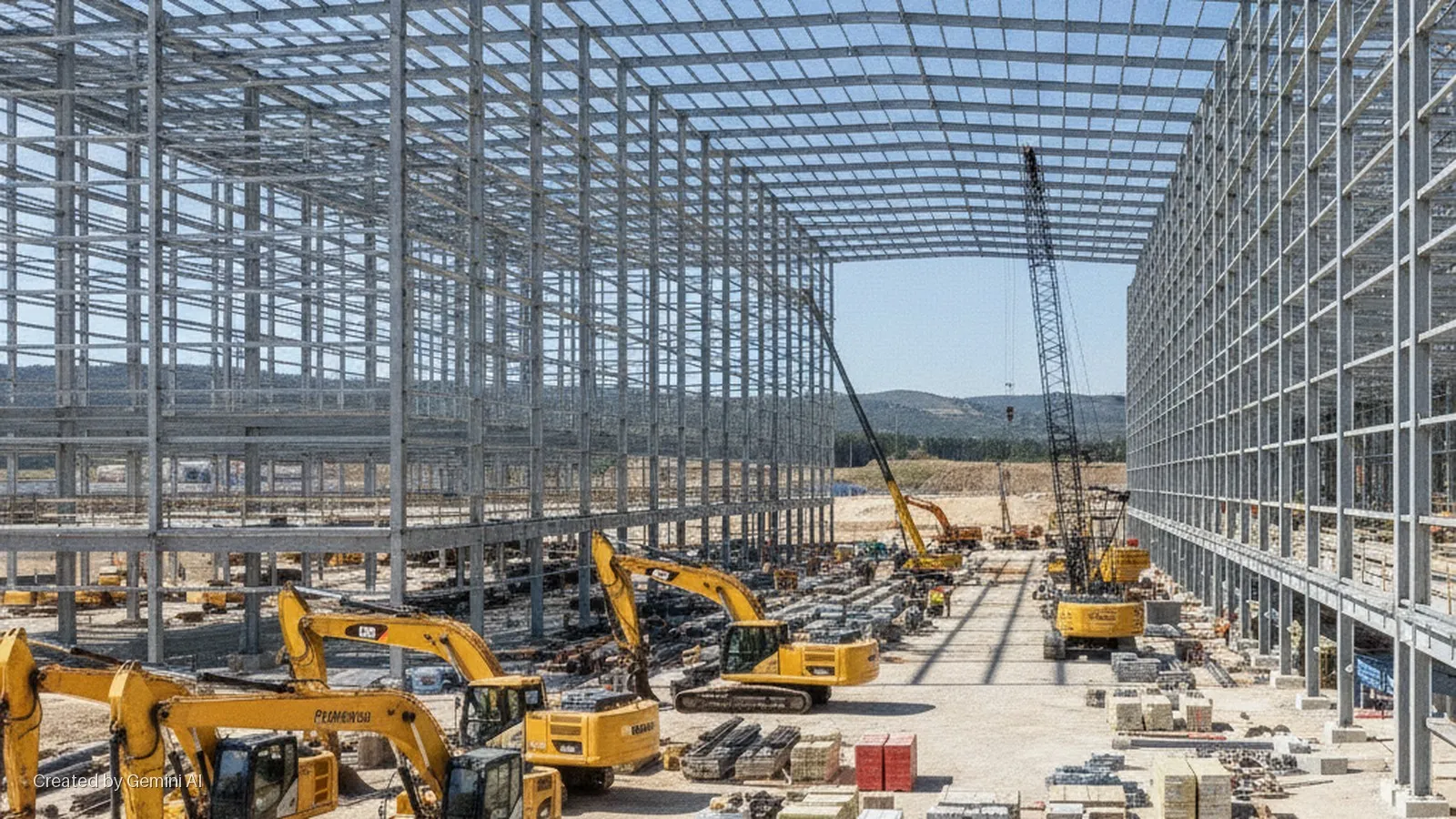
Polar Data Centers has announced an expansion of its partnership with Crusoe, the US AI cloud and infrastructure company, committing to a second facility on its Tørdal campus in Norway. The new data centre, designated DRA02, is expected to go live in late 2027 and will deliver 40MW of liquid-cooled IT capacity, running entirely on hydroelectric power. Crusoe plans to deploy NVIDIA's Vera Rubin NVL72 GPU system at the site to support the next stage of its European AI cloud expansion.
The announcement builds on the operational launch of DRA01, the first phase of the Tørdal campus, which delivers 12MW of IT capacity and is already live with Crusoe's workloads. DRA01 was recognised as "Most Successfully Delivered Data Centre" at the Data Centre World Awards 2026. Polar and Crusoe first disclosed their partnership around DRA01 in June 2025, making this expansion roughly 16 months in the making.
The deal
Cully Cavness, Crusoe's co-founder, president and chief strategy officer, said the Tørdal site's renewable power supply was a key differentiator: "What makes Tørdal stand out is that it runs on 100% renewable hydroelectric power, the kind of innovative energy source that aligns with our value of bending the arc of energy towards sustainability."
Polar chief executive Andy Hayes framed the expansion as evidence of a delivery-first partnership model, noting that DRA02 follows directly from a reliable operational track record at DRA01. Neither company disclosed the financial terms of the arrangement, contracted revenue, or the power-purchase agreement underpinning the hydroelectric supply. Crusoe's planned use of the Vera Rubin NVL72, NVIDIA's next-generation rack-scale GPU platform, signals that DRA02 is being designed for the highest-density AI training and inference workloads commercially available.
Market context
The announcement sits within a broader European race to secure low-carbon, high-density compute capacity ahead of projected demand growth for AI training infrastructure. Norway has emerged as a favoured location for data centre developers because of its abundant and inexpensive hydroelectric power, cool ambient temperatures that reduce mechanical cooling loads, and political stability. Operators including Green Mountain and Lefdal Mine Datacenter have been running hyperscale and colocation facilities in Norway for several years, giving international cloud customers an established ecosystem to draw on.
Crusoe occupies a distinct position in the market, pitching itself as an energy-first AI cloud provider rather than a general-purpose hyperscaler. The company has previously been associated with stranded-gas mitigation projects in North America; the Norwegian expansion represents a continuation of its strategy to align compute with surplus or renewable energy sources, but at larger scale and with a conventional colocation partner rather than a bespoke power arrangement.
The choice of NVIDIA's Vera Rubin NVL72 is notable. The platform, announced by NVIDIA as its successor to the Blackwell architecture, is designed for rack-level liquid cooling and very high aggregate compute density. Operators committing to it now are effectively pre-positioning for the next GPU generation, which carries both supply-chain risk and a premium on facilities engineering. Liquid cooling at 40MW scale demands tight integration between the mechanical plant and the IT layer, a challenge that Polar's modular design approach is intended to address.
Regulatory and sustainability read-across
European data centre operators are increasingly subject to the EU Energy Efficiency Directive, which from 2024 requires larger facilities to report power usage effectiveness and water usage effectiveness metrics and to meet minimum renewable energy thresholds. Running on 100% hydroelectric power positions the Tørdal campus favourably against those requirements. The EU AI Act's obligations on general-purpose AI systems, which apply to cloud providers serving European customers, are also relevant context for Crusoe as it scales its European footprint: compliance obligations around transparency and technical documentation will apply to AI services delivered from DRA02 once the facility is live.
With DRA01 operational and DRA02 contracted, Polar now has a committed European pipeline exceeding 50MW across its Tørdal campus. The next milestones to watch are confirmation of the Vera Rubin NVL72 delivery schedule, named customer announcements from Crusoe Cloud's European roster, and any further campus phases at Tørdal or additional Norwegian sites.