
ASM posts record Q3 revenue, raises 2027 outlook to €5.7bn
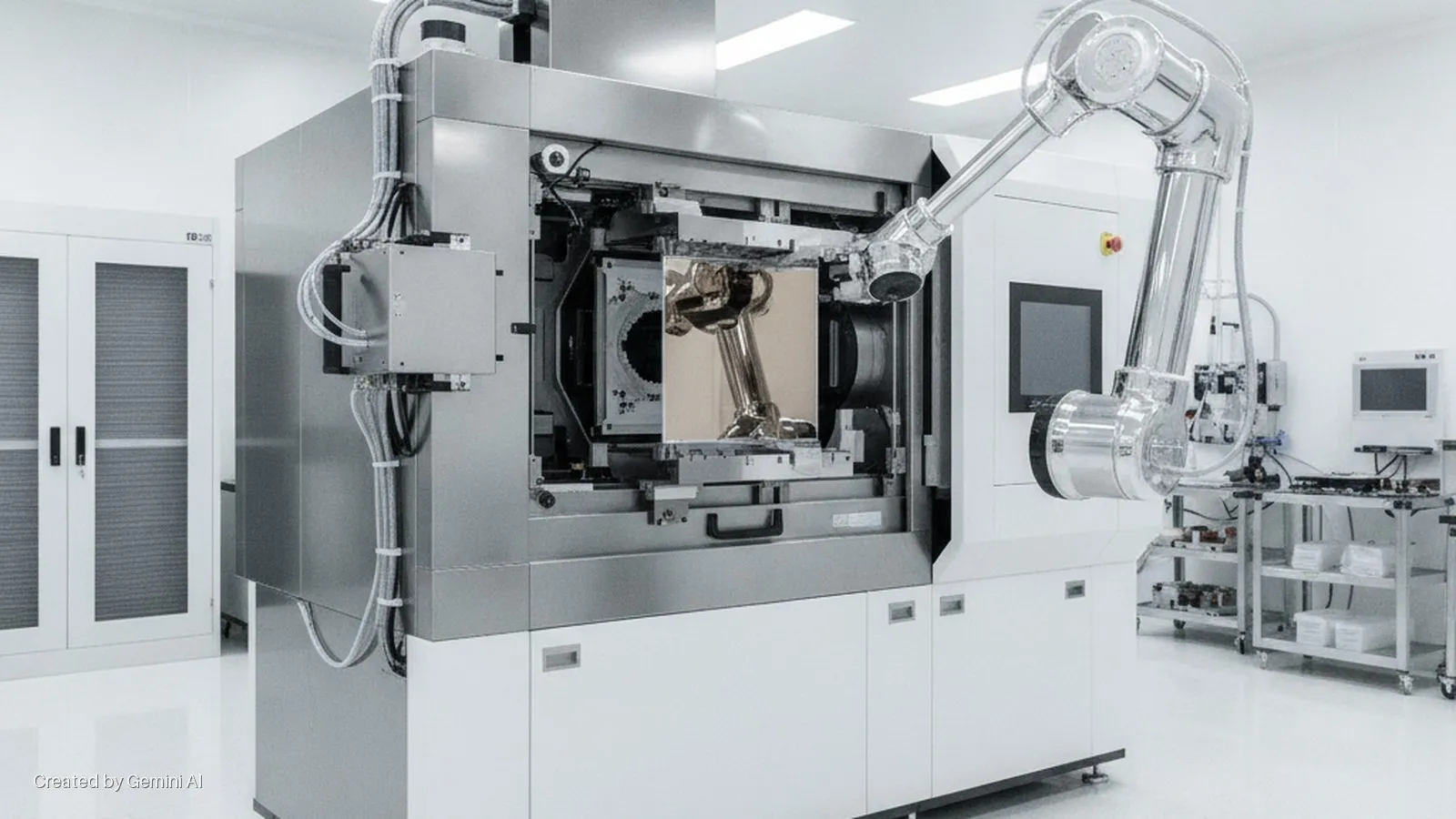
ASM International reported record quarterly revenue of €1,159 million for the third quarter of 2026, a 44% year-on-year increase at constant currencies, as surging demand for AI infrastructure hardware drove accelerated investment across advanced logic, foundry and memory segments. The Euronext Amsterdam-listed semiconductor equipment maker said the result came in at the upper end of its guided range.
Adjusted net earnings rose €109 million year-on-year to €315 million, while gross margin held steady at 52.0% and adjusted operating margin reached 33.4%. The company attributed stable margins to disciplined execution despite what chief executive Hichem M'Saad described as "stretched supply chains."
Behind the numbers
Advanced logic and foundry was the primary revenue driver in Q3, underpinned by sustained 2nm investment, growing 3nm-to-5nm activity, and the first material revenue contribution from 1.4nm node equipment. Memory sales also grew strongly, with high-bandwidth memory (HBM)-related DRAM emerging as a notable sub-segment as AI accelerator vendors continue to expand memory bandwidth capacity. Mature logic and foundry sales, led by China-based customers, held up robustly.
ASM also used the results announcement to highlight the commercial launch of its XP8 Vertos Flowable Carbon technology, described by the company as the first PECVD flowable carbon film product to reach high-volume semiconductor manufacturing. The tool addresses patterning complexity in advanced 3D logic and memory structures, extending ASM's materials portfolio beyond its established atomic layer deposition and epitaxy lines.
For Q4 2026, the company guided revenue of €1,230 million, plus or minus 5%, at constant currencies, implying full-year 2026 equipment revenue growth of more than 40%. More significantly, ASM projected 2027 revenue above €5.7 billion, a target that was originally set at the company's 2025 Investor Day as a 2030 milestone. The board also authorised a new €300 million share buyback programme following the completion of a prior €150 million buyback in September.
Market context
ASM operates in the front-end wafer processing equipment market alongside ASML, Applied Materials, Lam Research and Tokyo Electron. The segment is experiencing one of its strongest demand cycles, driven by the capital expenditure requirements of leading-edge logic foundries and hyperscaler-aligned memory producers investing to support AI workloads. Supply chain constraints are a recurring theme across all major equipment vendors, with long lead times for critical sub-components limiting the speed at which manufacturers can respond to customer ramp requests.
The regulatory caveat in ASM's 2027 outlook is worth noting. The company's mature logic business is heavily exposed to China, and its forward guidance explicitly assumes no material change in export control conditions. US Bureau of Industry and Security restrictions on advanced semiconductor equipment exports have tightened progressively since 2022, and further restrictions on sub-14nm tooling remain a live policy risk. The Dutch government has also maintained its own export licensing regime for ASML's extreme ultraviolet lithography systems, and pressure from Washington to extend those controls to adjacent equipment categories has not abated. ASM's stable mature-segment guidance could be disrupted if new restrictions are introduced before year-end or in early 2027.