
Minerva Humanoids raises $10m to deploy robots in hazardous roles
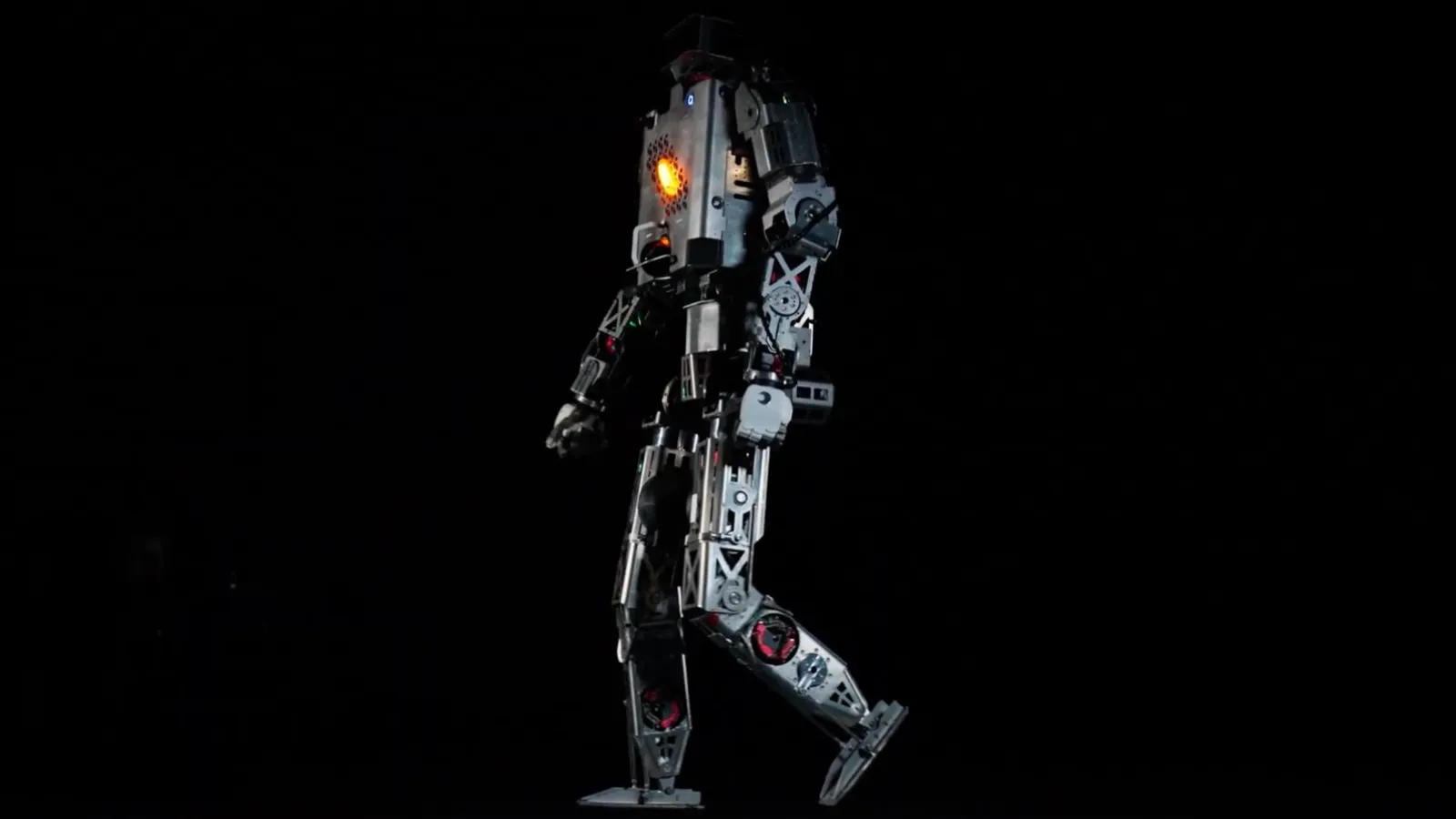
Minerva Humanoids has emerged from stealth with approximately $10 million in pre-seed funding, led by General Catalyst with Long Journey Ventures and Credo Ventures as co-leads. A wide syndicate of smaller backers participated, including MVP Ventures, Hugging Face and RunwayVC. The San Francisco-based company is using the capital to launch paid pilots of Roger, its purpose-built semi-autonomous humanoid robot, in onshore and offshore energy operations and explosive ordnance disposal (EOD).
Roger is operated remotely via a VR headset. A trained specialist sees through the robot's sensors and controls fine manipulation in real time, while the robot's onboard AI layer, called Minerva Intelligence, handles balance, fall recovery and navigation autonomously. The company says operators can achieve full-body control within minutes of training.
The robot and its founders
CEO Sandor Felber previously worked on MIT CSAIL's humanoid robotics research programme and contributed to Tesla's Optimus project. CTO Maurice Rahme spent six years at Boston Dynamics, leading technical development of the Stretch robot from prototype to commercial deployment. The two co-founders say Roger went from concept to a fully functional walking prototype in five months, including bespoke design, manufacturing and assembly.
"People are dying every day doing jobs the rest of the world takes for granted," said Felber. "We set out to build a robot that lets them do the job efficiently from the comfort of their office or home, without asking them to risk their lives for our safety or our energy."
Minerva has already staged a keynote demonstration at the NATO Explosive Ordnance Disposal Centre of Excellence in Slovakia, completed on-site testing at two airports ranked among the world's ten busiest, and established research partnerships with the Mohamed bin Zayed University of Artificial Intelligence and the University of Waterloo, the latter focused on humanoid perception in smoke, darkness and sensor-degraded environments.
Market context and competitive landscape
The humanoid robotics sector has attracted significant venture and corporate capital over the past two years, with Figure AI, Apptronik, Agility Robotics and 1X Technologies all pursuing general-purpose platforms. Minerva is carving a narrower vertical: teleoperated robots for high-consequence, low-throughput missions rather than warehouse or logistics automation. That positioning sidesteps some of the full-autonomy challenges that continue to constrain general-purpose deployments, but it also limits the addressable market compared with competitors chasing manufacturing and fulfilment at scale.
The energy and defence verticals bring their own commercial dynamics. Long procurement cycles, certification requirements and budget constraints in government EOD programmes mean that early paid pilots, while strategically valuable, do not translate quickly into recurring revenue. The company's decision to manufacture in Germany and the United States, explicitly avoiding single-source Chinese components, is a deliberate play for defence and critical-infrastructure procurement, where supply-chain provenance is increasingly a gating criterion under US and European policy. That positioning may also accelerate access to NATO member procurement channels, given the Slovakia demonstration.
Minerva cites an ILO-derived estimate of roughly 7,000 annual fatalities in the global energy workforce as the scale of the problem it is addressing. That figure is the company's own extrapolation and carries the usual caveats of sector-level modelling. Investors will want to see named paying customers and fidelity benchmarks for Roger's manipulation tasks before the company moves toward a seed or Series A raise, which, given the pace of hardware funding in 2026, could come within twelve months if pilots convert.