
Valkryn raises $17m to test drones and autonomous weapons independently
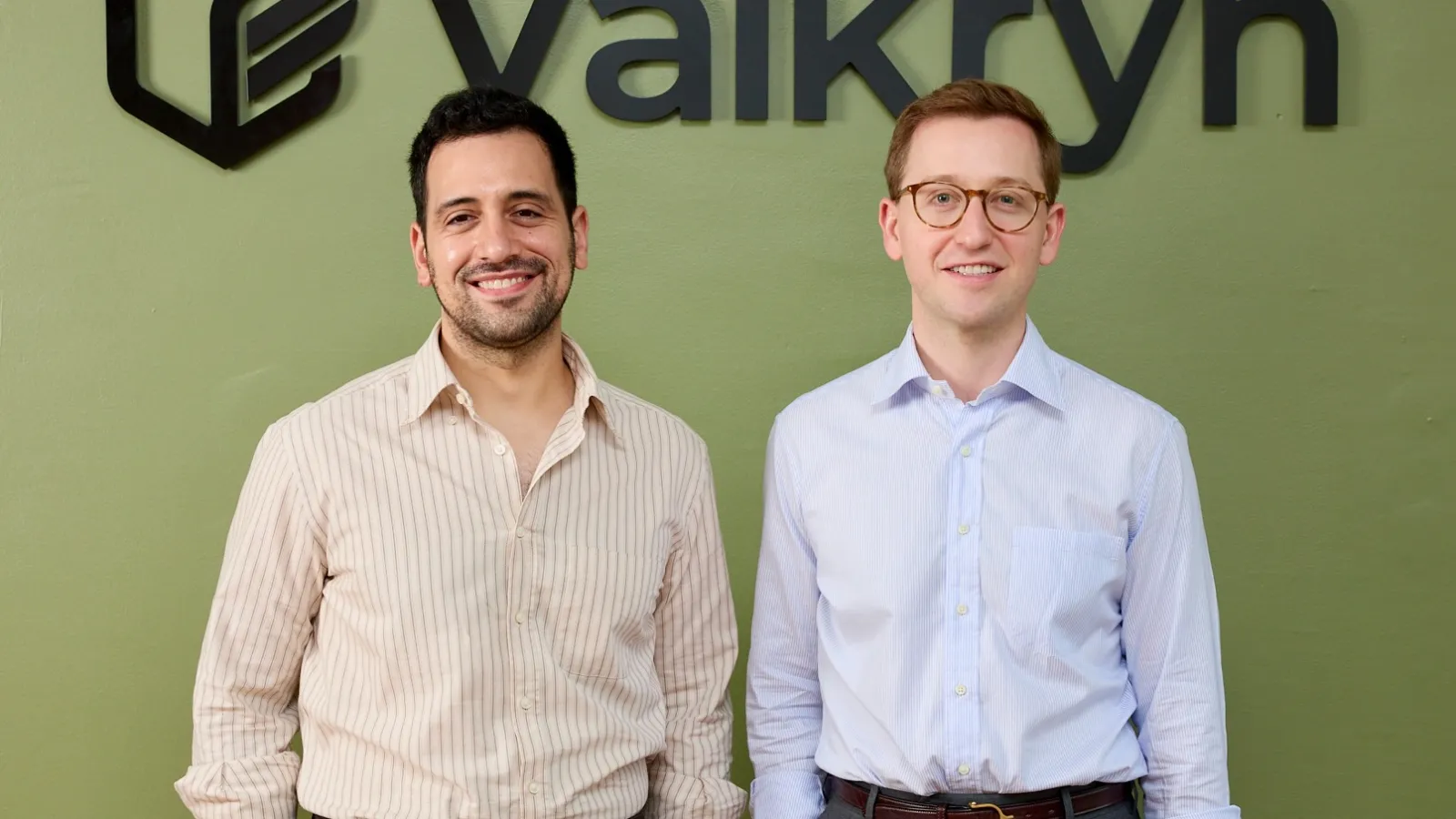
Valkryn, a Washington DC-based startup building testing infrastructure for robotic and autonomous military systems, has emerged from stealth with $17 million in total funding. The raise comprises a $15 million seed round led by Andreessen Horowitz's American Dynamism fund, with Cantos Ventures, Ambition Capital and Caffeinated Capital participating. The company said it secured multiple funded contracts with Department of War test organisations within twelve months of founding, including a deployment with US military forces in the Middle East within three weeks of its first technology demonstration.
The company's core product, which it calls Battle Lab technology, instruments physical test environments to replicate combat conditions. Its proprietary software records every sensor feed, operator decision and system action during a test event and automatically scores outcomes against government-defined criteria. Because results are captured in a standardised, auditable format, performance data from different programmes, test sites and exercises can be compared directly, a capability the company positions as a significant departure from the handwritten logs and PowerPoint summaries that it says currently underpin many procurement decisions worth billions of dollars.
The testing gap
Valkryn's founders argue that evaluation infrastructure has been chronically underfunded relative to the systems it is meant to scrutinise. Pentagon budget requests for fiscal year 2027 include $53.6 billion for autonomy and drone platforms and a further $21 billion for counter-drone systems, up from $13.4 billion and $3.1 billion respectively in the prior year. Meanwhile, the organisations responsible for independent testing have not seen commensurate investment in tooling or methodology.
Hugh Zabriskie, co-founder and CEO, said the gap was structural: "Software-defined systems and threats now change faster than today's test enterprise can keep up. Leading software and robotics companies solved this long ago by investing in rapid, realistic evaluation as a core advantage, and we founded Valkryn to bring that advantage to the military."
Valkryn does not design or sell the weapons systems it evaluates, positioning itself as a structurally neutral third party. That role has historically been filled by federally funded research centres and university laboratories, which the company says are not geared toward building and scaling commercial software. Its founding team draws on experience from Palantir, Anduril, SpaceX and Applied Intuition.
Policy tailwinds
The launch coincides with a notable shift in Pentagon posture on autonomous systems evaluation. A memo issued by Secretary of War Pete Hegseth on 30 September, known as Project Agincourt, establishes an Autonomous Warfare Command with an explicit mandate to test equipment and force designs under realistic conditions and to field only what demonstrably works. The directive creates a natural institutional customer for independent, data-driven evaluation platforms of the kind Valkryn is building.
There is a broader policy analogy in the commercial AI sector, where pressure is growing, from the EU AI Act's conformity-assessment requirements to US executive-branch guidance, for independent pre-deployment evaluation of frontier models. Valkryn's founders explicitly reference that parallel, suggesting the military testing market may follow a similar trajectory toward mandatory third-party assurance.
Venture investment in defence technology reached a reported $35.4 billion in the first half of 2026, with autonomous systems accounting for 42 per cent of second-quarter deal flow. That capital concentration has drawn in a cohort of well-funded startups pursuing adjacent opportunities in drone manufacturing, autonomy software and battlefield communications. Valkryn's structural decision to sit outside the weapons supply chain, rather than compete within it, is an unusual positioning choice in that landscape and one it will need to defend as evaluation budgets become an increasingly contested line item.
The company plans to use the seed funding to scale its technology platform and expand headcount across its Washington DC, New York City and Los Angeles offices.