
MaiaEdge PBC 100 Series extends private Ethernet to off-net sites
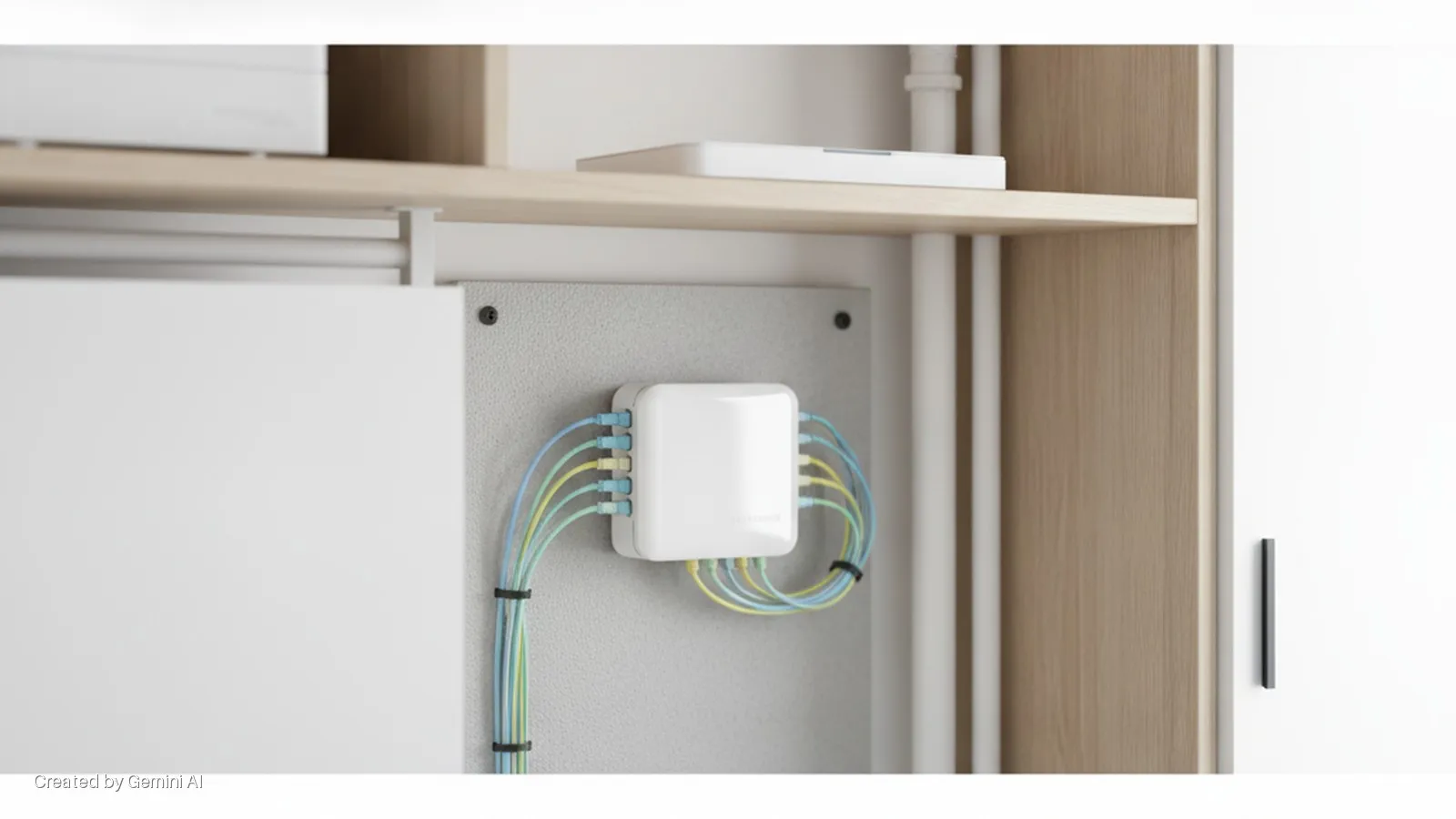
MaiaEdge has launched the PBC 100 Series, a line of compact customer premises equipment (CPE) designed to help fibre operators and service providers extend private Ethernet connectivity to sites that sit outside their owned fibre footprint. The first device in the series, the PBC 124-C, is available immediately.
The product works alongside the company's existing PBC 2000, which typically sits at an operator's point of presence, Metro Ethernet edge or data centre. Where the PBC 2000 handles path management at the network core, the PBC 100 Series brings the same SD-Ethernet provisioning logic to the customer site, using whatever transport is available: fibre, dedicated internet access or satellite. A single management interface abstracts the underlying routing complexity, giving operators end-to-end visibility without manually negotiating network-to-network interfaces or waiting on new physical infrastructure builds.
Chief executive Abilash Menon, who co-founded MaiaEdge with a team drawn from Acme Packet (later acquired by Oracle) and 128 Technology (later acquired by Juniper Networks), described the product as removing a longstanding commercial ceiling. "For decades, where your fiber ended, your service opportunity ended with it," he said. "The PBC 100 Series breaks that link. Providers can reach off-net customers without building fiber or negotiating a new NNI, then turn that connection into private connectivity, cloud access, AI infrastructure, and more."
Victor Rodriguez, CTO at HDCO Group, is cited as a customer reference. He described the product as "five times easier to operate" than prior networking approaches, noting that it opens service opportunities the company could not previously pursue. MaiaEdge did not disclose deal terms, pricing or the number of customers currently trialling the platform.
Market context
The ability to serve off-net customers without new fibre builds has become a priority for mid-tier and regional service providers facing aggressive expansion from hyperscaler-backed networks and national carriers. SD-WAN and managed Ethernet overlay approaches have existed for some years, but operators have historically faced a sharp cost curve when attempting to deliver carrier-grade Layer 2 services, rather than best-effort internet access, over third-party transport.
MaiaEdge's SD-Ethernet framing positions the PBC 100 Series against both traditional CPE vendors, including Cisco, Nokia and Adtran, and a newer cohort of software-defined networking specialists. The company's stated differentiator is automated path provisioning across heterogeneous transport, which reduces manual integration work per customer site. Whether that translates into meaningful reduction in churn and cost-to-connect remains to be demonstrated at scale.
Data centre and AI infrastructure angle
MaiaEdge also points to a secondary use case: accelerating tenant onboarding at data centres and AI infrastructure facilities, where manual network configuration is a known friction point. As colocation and AI-compute operators compete on time-to-connect, tools that reduce provisioning cycles from weeks to hours carry real commercial weight. The PBC 100 Series' ability to abstract transport from service delivery could appeal to operators running mixed fibre and internet-access environments across distributed sites.
The company is privately held and did not disclose funding status, headcount or revenue in the release. With the pedigree of its founding team and the growing appetite for automated edge networking, MaiaEdge is likely to face scrutiny from potential acquirers and investors looking for differentiated CPE plays as the market consolidates around software-defined access.