
ASUS ProArt P16 and P14 go on sale in US with NVIDIA RTX Spark
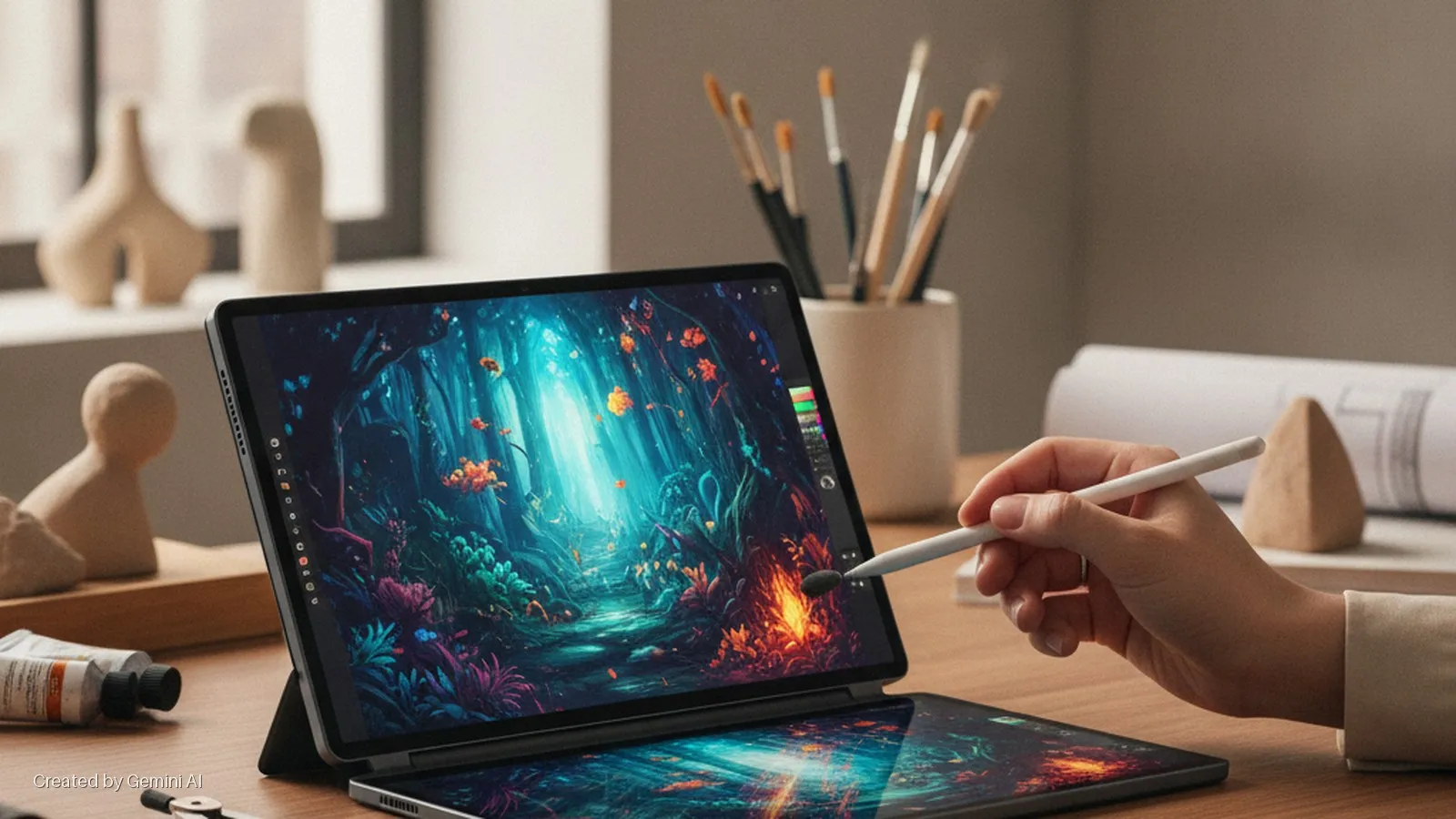
ASUS has put its ProArt P16 and ProArt P14 laptops on sale in the United States, with both machines built around NVIDIA's RTX Spark Superchip. The devices are available now through the ASUS online store and Best Buy, with in-store stocking at Best Buy and Micro Center expected in early Q4 2026. Starting prices are $2,599.99 for the P14 and $2,799.99 for the P16.
The RTX Spark Superchip combines a Blackwell RTX GPU with up to 6,144 cores and a 20-core Grace CPU, connected via NVIDIA's NVLink-C2C interconnect. ASUS configures both models with up to 128GB of unified LPDDR5X memory and quotes peak AI throughput of 1 petaflop, which it says is sufficient to run large language models, vision-language models, image and video generation pipelines, and LoRA fine-tuning locally, without routing data to a cloud provider.
What the ecosystem includes
ASUS is bundling several software partnerships alongside the hardware. Nous Research's Hermes agent, an open-source autonomous assistant with persistent memory and sandboxed execution, is pre-integrated and connects to ASUS's own MuseTree image and video generation application, which supports the FLUX and WAN models. The ComfyUI open-source workflow platform, widely used in the generative-image community, is also validated for the ProArt platform. Buyers receive three months of Google AI Pro at no additional cost, which adds access to Gemini models and 5TB of cloud storage via the MyASUS app.
ASUS frames on-device execution partly as a cost argument. The release includes a footnote modelling a total cost of ownership scenario in which a user running the top-end P16 128GB configuration, priced at $6,000 for that SKU, could exceed cloud token costs within five to ten months under certain usage assumptions. The methodology depends heavily on model choice, utilisation rate, and cache-hit ratios, and the release acknowledges that actual results will vary.
Market context and competitive positioning
The ProArt P16 and P14 sit at the premium end of a fast-moving category often described as the AI PC segment. Intel's Core Ultra platform and Qualcomm's Snapdragon X series have dominated entry-to-mid-range AI PC launches over the past 18 months, largely through NPU-based acceleration measured in TOPS ratings. NVIDIA's RTX Spark represents a different architectural bet: a full discrete-class GPU integrated with a high-core-count CPU into a single package, targeting workloads that outgrow NPU headroom, particularly generative image and video pipelines and multi-step agentic tasks.
Comparable positioning comes from Apple's M-series MacBook Pro range, which also uses unified memory architecture and is the incumbent choice for many creative professionals running local diffusion models. ASUS's pricing of $2,599 to upwards of $6,000 puts the ProArt range squarely against the MacBook Pro 14 and 16 in terms of price bracket, though the Windows platform and CUDA ecosystem give it access to a different set of developer tooling.
Regulatory and standards read-across
On-device AI processing has gained traction partly as a response to enterprise data governance concerns. Organisations operating under GDPR, or handling sensitive intellectual property, have an incentive to keep model inference local rather than transmitting prompts and outputs to third-party cloud APIs. The EU AI Act's provisions on general-purpose AI systems and transparency obligations apply primarily to model providers rather than hardware vendors, but enterprise buyers in regulated sectors will weigh the ProArt's privacy-first positioning as a genuine procurement consideration rather than a marketing point.
ASUS has not disclosed which enterprise certifications, if any, the ProArt P16 and P14 will carry for regulated-industry deployments. Broad retail availability through Best Buy suggests the initial go-to-market is consumer and prosumer rather than enterprise channel, though the 128GB memory configurations and agentic workflow tooling indicate the company is also watching the professional-developer audience closely.