
Firefly Aerospace signs Starcloud for lunar-orbit AI compute demo
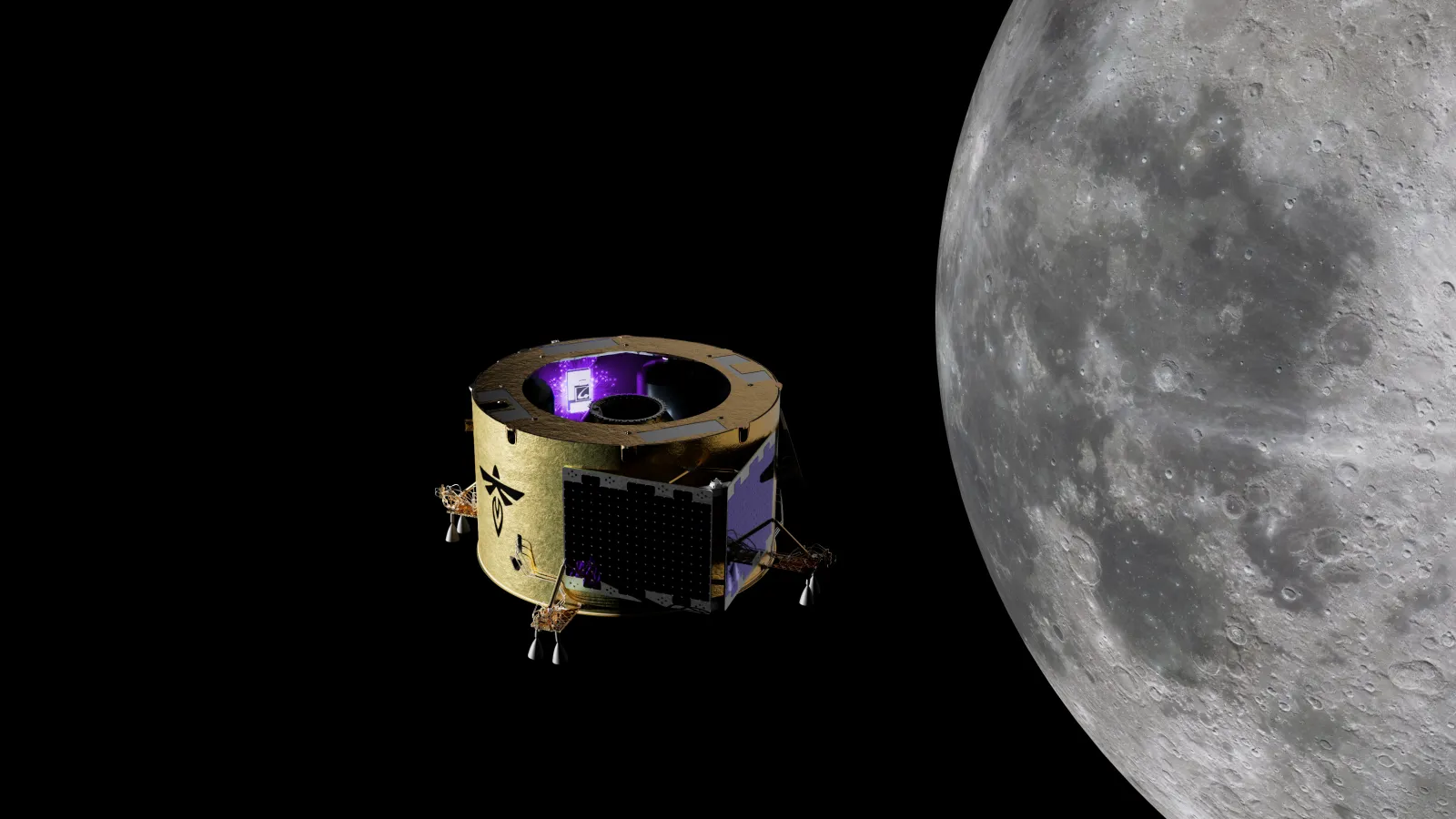
Firefly Aerospace has signed a commercial payload agreement with Starcloud to demonstrate AI computing capabilities in lunar orbit. Starcloud's SC-1L processor will fly aboard Firefly's Elytra orbital vehicle, where it will ingest data from Firefly's onboard Solux vision system, run AI workloads, and transmit processed results back to Earth. The mission is slated to launch no earlier than 2028, as part of Firefly's third lunar mission.
The Elytra vehicle will first act as a transfer vehicle and communications relay for Firefly's Blue Ghost lander, which will touch down on the Moon's Gruithuisen Domes as part of NASA's Commercial Lunar Payload Services (CLPS) initiative. Once that lander mission concludes, Elytra will remain in lunar orbit for up to five years, during which Starcloud's demonstration will take place alongside Firefly's Ocula lunar imaging service.
The technology stack
Starcloud's SC-1L payload builds on what the company describes as a validated low Earth orbit demonstration of enterprise-grade GPU inference and model training. In lunar orbit, the hardware will face significantly higher latency to ground stations and harsher radiation conditions than in LEO, making the demonstration a meaningful step up in operational complexity.
Firefly separately announced a collaboration with NVIDIA to process Ocula imaging data on orbit using the NVIDIA Jetson module, with Firefly's AI software stack managed through its SciTec subsidiary. That arrangement is designed to reduce downlink pressure from the Moon by pre-processing raw imagery before transmission, converting it into what Firefly describes as real-time, actionable intelligence. The Solux vision system, formerly known as Sol3, also handles autonomous navigation and attitude tracking in environments where GPS and GNSS are unavailable, a capability that will be essential as lunar traffic increases.
Ezra Feilden, co-founder and CTO at Starcloud, said: "We successfully validated our ability to run and train AI models on enterprise grade GPUs in low Earth orbit, and now we're taking this proven technology to lunar orbit."
Market context
The concept of orbital and cislunar data processing is attracting growing commercial interest as the economics of lunar operations come into focus. Bandwidth from the Moon to Earth is constrained, making on-orbit compute a practical necessity rather than an engineering novelty. Several space-sector companies and government programmes are exploring edge computing nodes in orbit, though most activity remains in LEO. Firefly's approach, positioning a long-duration orbiter as a platform for multiple hosted payloads over a five-year window, offers commercial customers a relatively low-cost path to cislunar demonstration without procuring a dedicated mission.
The CLPS programme, under which Blue Ghost Mission 3 will operate, has been one of NASA's primary levers for stimulating a commercial lunar economy. It funds lander delivery services from private vendors, with Firefly and Intuitive Machines among the most active participants. Starcloud's inclusion as a hosted payload on a CLPS-adjacent mission illustrates how the programme's commercial halo is extending beyond surface payloads into orbital infrastructure.
No contract value was disclosed for the Starcloud agreement, and the release carries forward-looking statement caveats covering launch dates, payload performance, and AI capabilities. Both the 2028 target and the five-year orbital operating life are projections subject to launch and mission risk.