
Robinson Unmanned integrates Lyntris autonomy into SPARTAN UAS for Navy
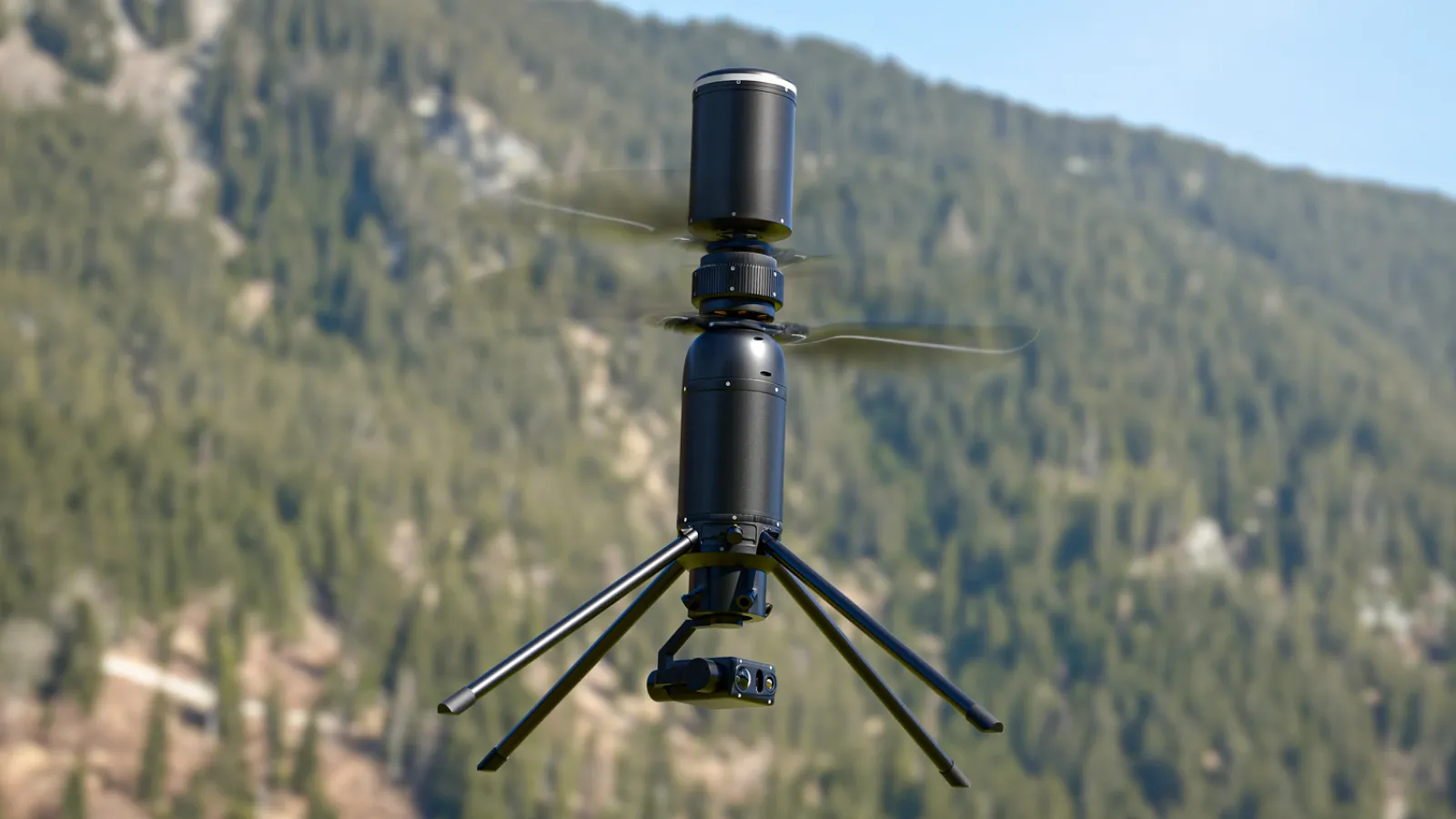
Robinson Unmanned, the uncrewed systems division of Robinson Helicopter Company, has announced a technology integration with Lyntris, a defence technology firm focused on sense-to-act connectivity. The two companies will combine Lyntris' Dragonflight distributed autonomy software with Robinson's SPARTAN Group 2 vertical take-off and landing (VTOL) platform, in direct support of a $6.48 million contract expansion Lyntris holds under the U.S. Navy's Maritime Tactical Command and Control programme.
The SPARTAN platform is described as an all-weather, aviation-grade aircraft built to NDAA-compliance standards and designed around modular open system architectures. Robinson says those design choices allow new autonomy, sensor and communications payloads to be swapped in as operational requirements change, rather than requiring a new airframe for each mission profile.
The integration
Lyntris' Dragonflight technology is aimed at enabling coordinated, distributed autonomous operations across multiple aircraft simultaneously. Jack Zaientz, Lyntris VP of C4I and Autonomy, said the pairing was deliberate: "Robinson's SPARTAN gives us a nimble, open platform for integrating our autonomy technology. By pairing their aircraft expertise with Lyntris' Dragonflight autonomy software, we're working to expand what operators can accomplish with a team of autonomous aircraft."
Paul Fermo, President of Robinson Unmanned, argued that the partnership reflects a broader industry direction. "The future of unmanned aviation isn't going to be built around closed aircraft with fixed capability," he said. "Operators need reliable platforms that can integrate the best technology available today and continue adapting as autonomy, sensors, communications and mission requirements evolve."
Robinson says SPARTAN is now being evaluated by multiple partners for autonomy, sensing, effects delivery and integration into larger systems-of-systems architectures, spanning aircraft Groups 1 to 4 across its wider portfolio.
Market context
The U.S. defence market for small and medium uncrewed aerial systems is expanding rapidly, driven by lessons drawn from recent conflicts that have demonstrated the operational value of low-cost, networked drone swarms in contested environments. The Pentagon's Replicator initiative, which targets fielding thousands of attritable autonomous systems, has sharpened demand for open-architecture platforms that can be upgraded without lengthy qualification cycles.
Robinson Unmanned competes in this space alongside a range of established primes and a growing cohort of venture-backed startups, several of which are pursuing similar modular, software-defined airframe strategies. NDAA compliance, which restricts components from certain foreign suppliers, has become a significant differentiator in defence procurement, narrowing the field for vendors that can certify a fully domestic or allied-nation supply chain.
The Lyntris deal also highlights a broader trend: specialist autonomy and mission-software firms increasingly rely on hardware partners rather than developing their own airframes, creating an ecosystem dynamic that benefits open-platform aircraft manufacturers. For Robinson Unmanned, each additional software integration strengthens its position as a preferred hardware layer in that stack.
Regulatory and standards read-across
Group 2 UAS operating in maritime and littoral environments fall under Federal Aviation Administration airspace rules as well as Department of Defence acquisition frameworks, including the Open Systems Architecture mandates that have been progressively tightened in recent years. Robinson's explicit emphasis on MOSA-aligned design is therefore commercially strategic as well as operationally motivated: platforms that can demonstrate compliance with open-architecture requirements face shorter integration timelines and lower re-qualification costs when new payloads are added.
The Navy's Maritime Tactical Command and Control programme is a live procurement vehicle, meaning further task orders could follow if the Dragonflight integration meets operational performance thresholds during fielding. Robinson Unmanned has not disclosed a timeline for initial operational capability or named any additional programme partners at this stage.