
Phonak Roger On Sphere adds AI speech separation to remote mics
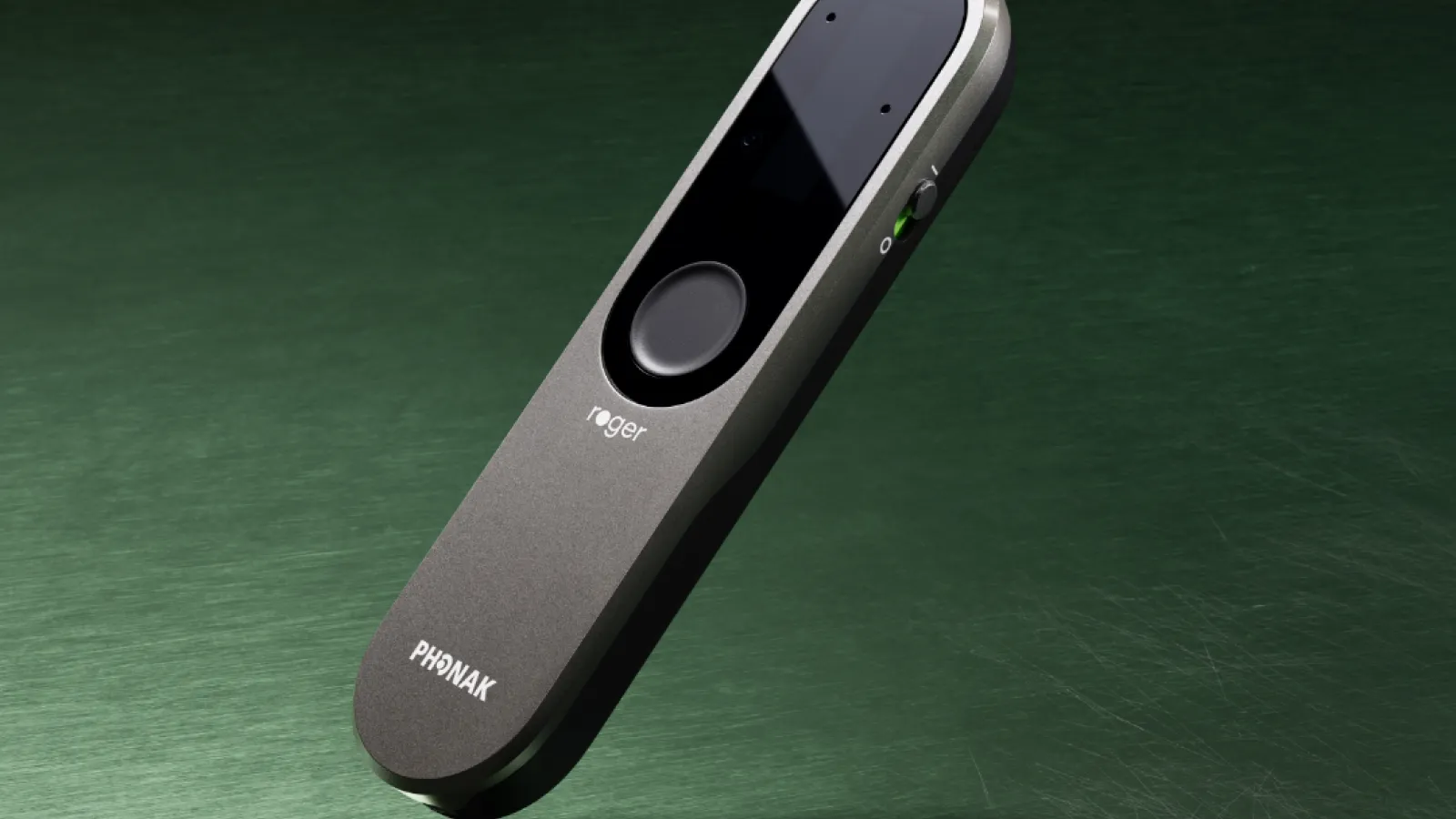
Phonak has launched Roger On Sphere, a remote microphone that uses an on-device deep neural network (DNN) to separate speech from background noise in real time. The device, built on the company's Sphere technology platform and the established Roger wireless protocol, is designed for people with hearing loss who struggle to follow conversations in loud or complex acoustic environments. It becomes available in most markets from mid-November 2026.
The core processing engine, branded RogerSense OS, continuously analyses the acoustic scene and applies speech-from-noise separation across all microphone modes and noise levels automatically. Phonak says the device delivers a 3 dB signal-to-noise ratio improvement over its predecessor, which the company equates to roughly half the noise power and the ability to function in environments with twice the ambient noise level. That figure is drawn from internal research published in Phonak Insight in 2026 by Roh, Gigandet and Sans.
What it does
The device switches microphone modes automatically to suit different settings, including meetings, lectures, online calls, restaurants and car journeys, without requiring manual adjustment from the user. It is compatible with a range of hearing aids and cochlear implants, including Phonak's own Naída and Virto hearing aid lines and Advanced Bionics cochlear implant systems, covering much of the Sonova group portfolio.
Alain Kertész, Senior Director Roger at Phonak, said the product "brings AI-driven speech separation to a remote microphone, giving users greater clarity and confidence in situations that were previously difficult to manage." The company encourages hearing care professionals to demonstrate the device in clinic before purchase.
Market context
Remote microphone accessories occupy a niche but growing segment within the broader assistive hearing market. They address a limitation of standard hearing aids: directional microphones on the ear perform poorly in reverberant or high-noise environments at distance, a well-documented challenge in audiology. Competitors in the remote microphone category include Oticon's EduMic and Roger's own earlier generations, but on-device DNN-based speech separation at this form factor is not widely established in the category, making Phonak's positioning notable if the benchmark claims hold in independent testing.
The parent group, Sonova, reported CHF 3.6 billion in sales and CHF 546 million net profit in its 2025/26 financial year, giving it the balance sheet to sustain R&D in AI-augmented hearing hardware. Sonova also ranked twelfth among Europe's most innovative companies in 2025 in Fortune magazine's assessment, reflecting a broader push to embed machine learning into its product lines across Phonak, Unitron and Advanced Bionics.
Regulatory and standards read-across
Medical-grade hearing devices, including remote microphone accessories used alongside hearing aids, are subject to regulatory oversight in the EU under the Medical Device Regulation and in the US under FDA Class II device frameworks. Embedding AI inference directly in an accessory rather than in the hearing aid itself may affect how regulators classify software as a medical device under evolving EU MDR guidance and the FDA's Software as a Medical Device framework. Phonak has not disclosed whether RogerSense OS has been reviewed under any of these frameworks specifically, which is worth clarifying before the November launch date. Independently verified performance data would also strengthen the clinical case for hearing care professionals recommending the device to patients.