
Pythag Tech raises $4.25m seed to apply AI to cultivated meat
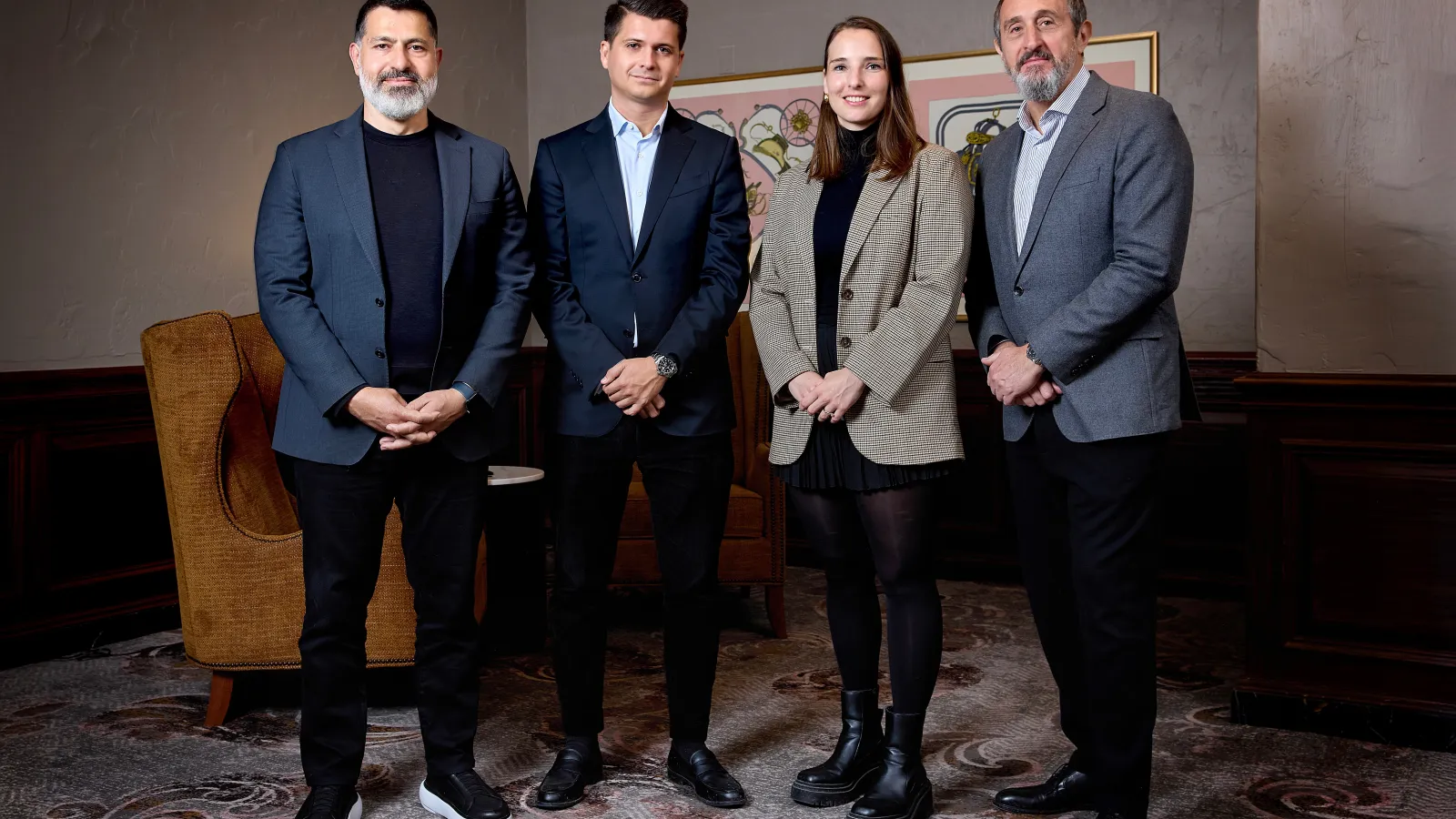
Pythag Tech has closed a $4.25 million seed round led by Azolla Ventures, with participation from Endurance28 and other undisclosed institutional investors. The New York-based company applies machine learning to the production science of cultivated meat, with the aim of licensing its optimisation platform to food manufacturers rather than producing meat itself.
The funding will be used to extend Pythag's proprietary biological dataset and to continue running large-scale laboratory experiments across what it identifies as the three primary cost drivers in cultivated meat production: growth media formulation, cell line development, and bioprocessing. Each experimental cycle feeds back into the company's models, which then surface parameter adjustments designed to reduce unit costs. Pythag's chief executive Sami Nabulsi said the company's goal is to make R&D "more cost-effective and scalable" for producers seeking a route to profitable commercial volumes.
The technology layer
Rather than competing with cultivated meat producers directly, Pythag positions itself as an intelligence layer that sits above the production process. Its models are trained on biological data generated from its own lab experiments, creating a feedback loop intended to accelerate the pace at which producers can move from bench-scale results to factory-scale output. The company has named Haytham Samad as CTO and Dr Anne-Sophie Mertgen as Chief R&D Officer, suggesting technical depth across both software and life-sciences disciplines.
Matthew Nordan, co-founder and general partner of Azolla Ventures, framed the investment in terms of demand fundamentals: global meat production per capita rose 55 per cent between 1970 and 2020, he noted, while conventional supply chains face mounting structural pressures. In the US specifically, the cattle herd is at its smallest since the 1950s and ground beef prices have reached record highs, partly as a result of import restrictions linked to livestock parasites.
Market context and regulatory landscape
The cultivated meat sector has attracted significant venture capital over the past five years but has struggled to convert scientific progress into commercially viable unit economics. A handful of companies, including Upside Foods and GOOD Meat, received regulatory clearance in the US in 2023, yet neither has reached mass-market distribution, and several well-funded players have scaled back operations as cost-reduction targets proved harder to hit than projected. Pythag's B2B licensing model sidesteps the capital-intensive challenge of building its own production facilities, instead betting that incumbent food companies will pay for the optimisation insight rather than developing it in-house.
Regulatory dynamics remain a significant variable. In the US, cultivated meat sits under a joint oversight framework shared between the FDA, which covers cell culture and food safety, and the USDA, which handles labelling and market authorisation. Several US states have also introduced or passed legislation that restricts the sale or labelling of cultivated meat products, adding commercial uncertainty for would-be licensees. In the EU, the category falls under the Novel Foods Regulation, and no product has yet received approval.
For Pythag, the near-term milestones investors will watch for are a named commercial licensing deal with a food manufacturer and published benchmarks demonstrating measurable cost reductions attributable to the platform. The seed round provides runway to generate both, though the company has not disclosed a target timeline for either.