
Google and Voltus expand VPP to 1.17GW in PJM grid region
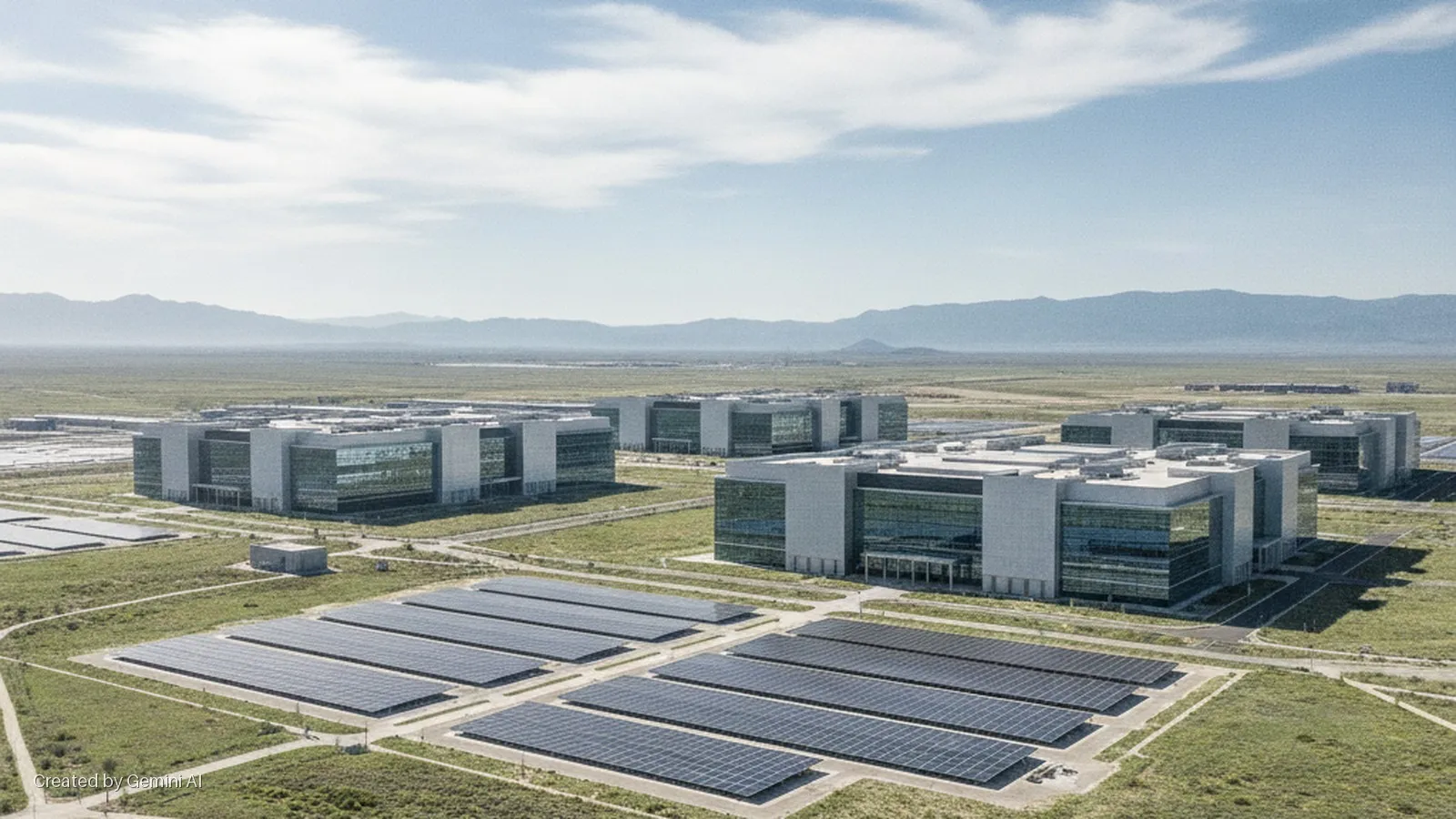
Google and distributed energy resource (DER) platform Voltus have announced a significant expansion of their virtual power plant (VPP) partnership in the PJM grid region, adding 1,070 megawatts (MW) to an initial 100 MW agreement signed in June 2026. The combined portfolio of 1.17 gigawatts (GW) represents what the companies describe as one of the largest distributed capacity deployments by a hyperscaler to date.
PJM is the largest competitive electricity market in the United States, serving 67 million customers across 13 states and the District of Columbia. Under the arrangement, Google funds the VPP while Voltus aggregates flexible capacity from local businesses and households. When the grid faces periods of strain, Voltus signals participating sites to draw on batteries, smart thermostats and industrial process adjustments to reduce consumption. Voltus then routes financial benefits, bill savings and direct payments, back to those participants.
The deal
Ellen Zuckerman, Google's head of energy market development for North and South America, said the tenfold expansion of the original commitment reflects the company's approach to "actively bring our own capacity to the grids that serve us". Dana Guernsey, chief executive of Voltus, said the partnership was designed to translate data centre growth into direct economic benefits for businesses and homes at gigawatt scale.
The release cited analysis from consultancy The Brattle Group projecting that better grid utilisation could save US consumers more than $100 billion over the next decade, though that figure covers the broader demand-response and DER market rather than this deal alone. Google and Voltus did not disclose the financial terms of the expanded agreement, the precise contract duration, or the revenue split between Voltus and the end participants.
Market context
The announcement sits within a broader wave of corporate clean-energy procurement being driven by hyperscaler data centre expansion. Microsoft, Amazon and Meta have each published multi-gigawatt procurement targets for the mid-2020s, and the demand-response and VPP segment is attracting significant venture and infrastructure capital as grid operators seek to defer costly transmission investment. Voltus competes with a range of DER aggregators and demand-response platforms, including AutoGrid, CPower and Enel X, as well as utility-owned programmes that vary by region.
The PJM market is notable because it operates a forward capacity market (the Reliability Pricing Model) that pays resources, including demand response, for committed availability. A gigawatt-scale BYOC portfolio would be eligible to bid into that market, providing Google with a route to offset capacity charges associated with its data centre load, while Voltus and its participants capture the auction revenues. That economics model is well established in PJM but remains less mature in other US grid regions, which may constrain how quickly the partners can replicate the structure elsewhere.
Regulatory and standards read-across
The Federal Energy Regulatory Commission's Order 2222, which mandates that DER aggregations be permitted to participate in wholesale markets, provides the regulatory foundation for VPP arrangements of this type. Implementation has proceeded at different speeds across US regional transmission organisations; PJM's compliance pathway is among the more advanced, making it a natural first market for large-scale deployments. The EU's equivalent mechanism, the demand-response provisions of the Electricity Market Reform package, is at an earlier stage, which may inform how Google and Voltus approach any potential European expansion.
For data centre operators, the deal also has a sustainability accounting dimension. Capacity delivered through a VPP that avoids the need to build peaking generation can be credited toward avoided emissions in some corporate reporting frameworks, though the precise treatment under the GHG Protocol's market-based accounting rules continues to evolve. Buyers and investors in Google's sustainability commitments will watch how the company accounts for the capacity contribution.