
Honeywell Aerospace TRM enters Equinix AI data centre in Ashburn
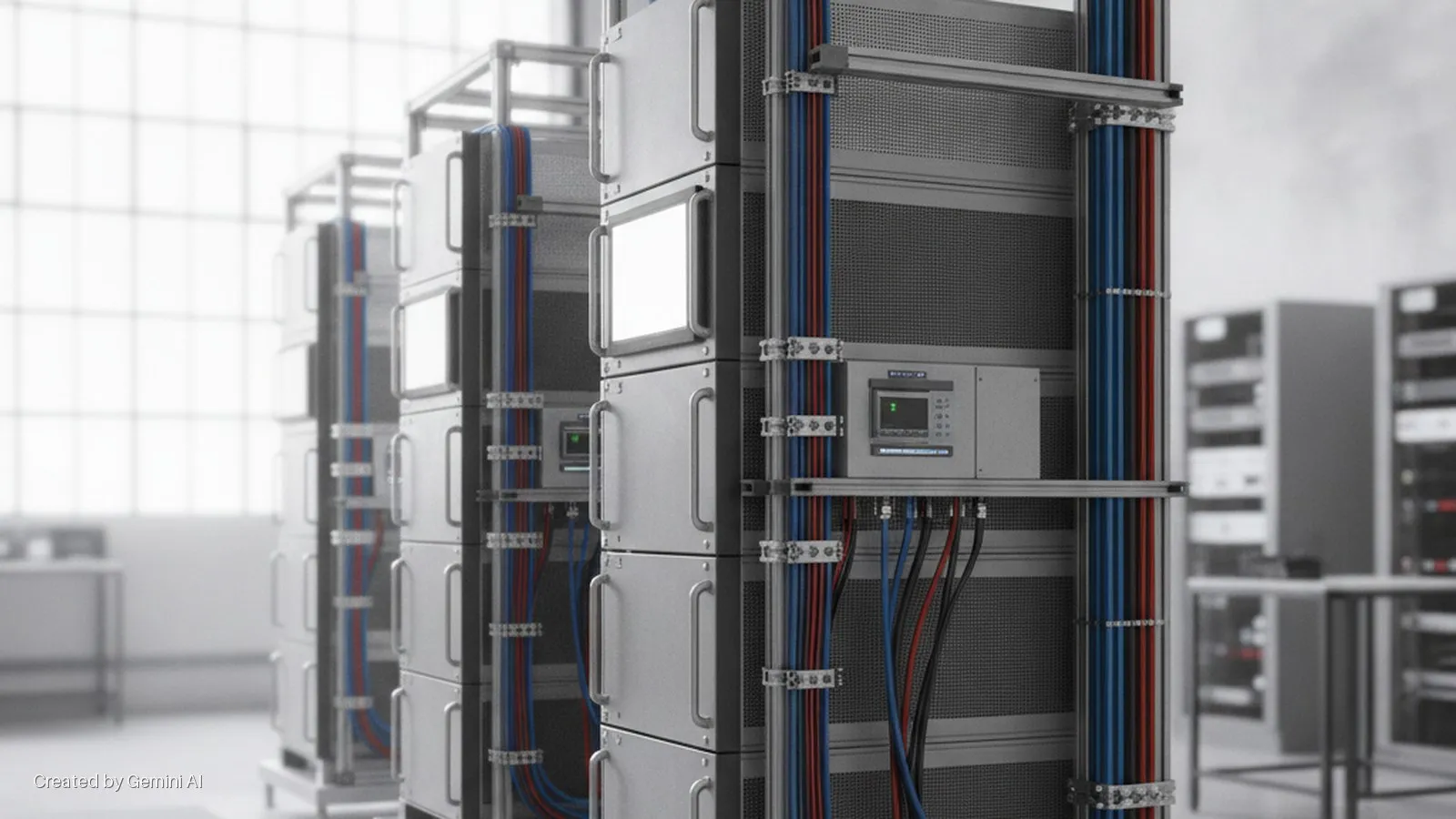
Honeywell Aerospace has announced that its Thermal Response Module (TRM) has been tested and installed at Equinix's Co-Innovation Facility (CIF) in Ashburn, Virginia. The deployment marks a formal step into the AI data centre cooling market for the NASDAQ-listed aerospace and defence group, which argues that the extreme thermal loads encountered in aviation platforms closely mirror the conditions now emerging in high-density GPU clusters.
The TRM is a drop-in thermal buffer designed to maintain stable coolant temperatures during power disturbances, sudden shifts in compute demand, or instability elsewhere in a liquid-cooling loop. Honeywell says the module uses proprietary phase-change materials to store and release thermal energy on demand, stabilising the cooling loop within seconds and capable of sustaining buffering for several minutes. The company claims it delivers 7.6 times more cooling capacity than a comparable chilled-water buffer tank while occupying a smaller physical footprint, a meaningful advantage in dense colocation environments where rack space commands a premium.
The unit integrates between the coolant distribution unit (CDU) and servers without requiring loop redesign and is agnostic to CDU vendor or architecture, which Honeywell positions as a key differentiator against bespoke cooling solutions that tie operators to a single supplier.
The Equinix collaboration
Pawel Wlodarczak, design innovation director at Equinix, said testing at Ashburn "demonstrated the technology's capability to manage rapid GPU cooling load fluctuations while requiring a smaller footprint in comparison to buffer tanks." Equinix operates its Co-Innovation Facility as a live testbed for infrastructure technologies ahead of wider deployment across its global campus network.
Rich DeGraff, president and chief executive of Honeywell Aerospace's Control Systems division, said the company had taken phase-change technology "developed to protect mission-critical aerospace and defence systems and applied it to a similar challenge in AI infrastructure." The module also carries onboard state-of-charge sensing, allowing operators to monitor thermal reserve in real time and avoid temperature excursions that risk GPU throttling or hardware damage.
Market context
The timing is well-chosen. Liquid cooling has been the fastest-growing segment of data centre thermal management, yet adoption remains relatively low in absolute terms: Omdia estimates that some form of liquid cooling is currently deployed in fewer than half of all data centres globally, with annual market growth projected at around 20% over the next five years. As AI training and inference workloads push rack power densities beyond the practical ceiling of air cooling, operators are under pressure to retrofit or build new facilities around direct-to-chip or immersion approaches.
The thermal-buffer niche within liquid cooling is becoming increasingly competitive. Established CDU vendors, specialist phase-change firms and hyperscaler-adjacent suppliers are all developing products for the same gap: the period between a cooling disruption and full system response, when GPUs are most vulnerable. Honeywell's aerospace heritage gives it credible engineering provenance in that space, though the commercial question is how the TRM's total cost of ownership compares with competing buffer-tank and thermal-storage approaches as operators scale from pilot to full-rack deployment.
Regulatory momentum is also relevant. Data centres are increasingly subject to energy-efficiency mandates under the EU Energy Efficiency Directive and emerging UK guidance, while the US Department of Energy has signalled interest in power-usage effectiveness standards. Technologies that can shift power from cooling overhead to productive compute, as Honeywell claims the TRM enables, align directly with that regulatory direction and may carry weight in operator procurement decisions beyond pure thermal performance.