
MHP brings AI content and Unreal Engine to Ducati's configurator
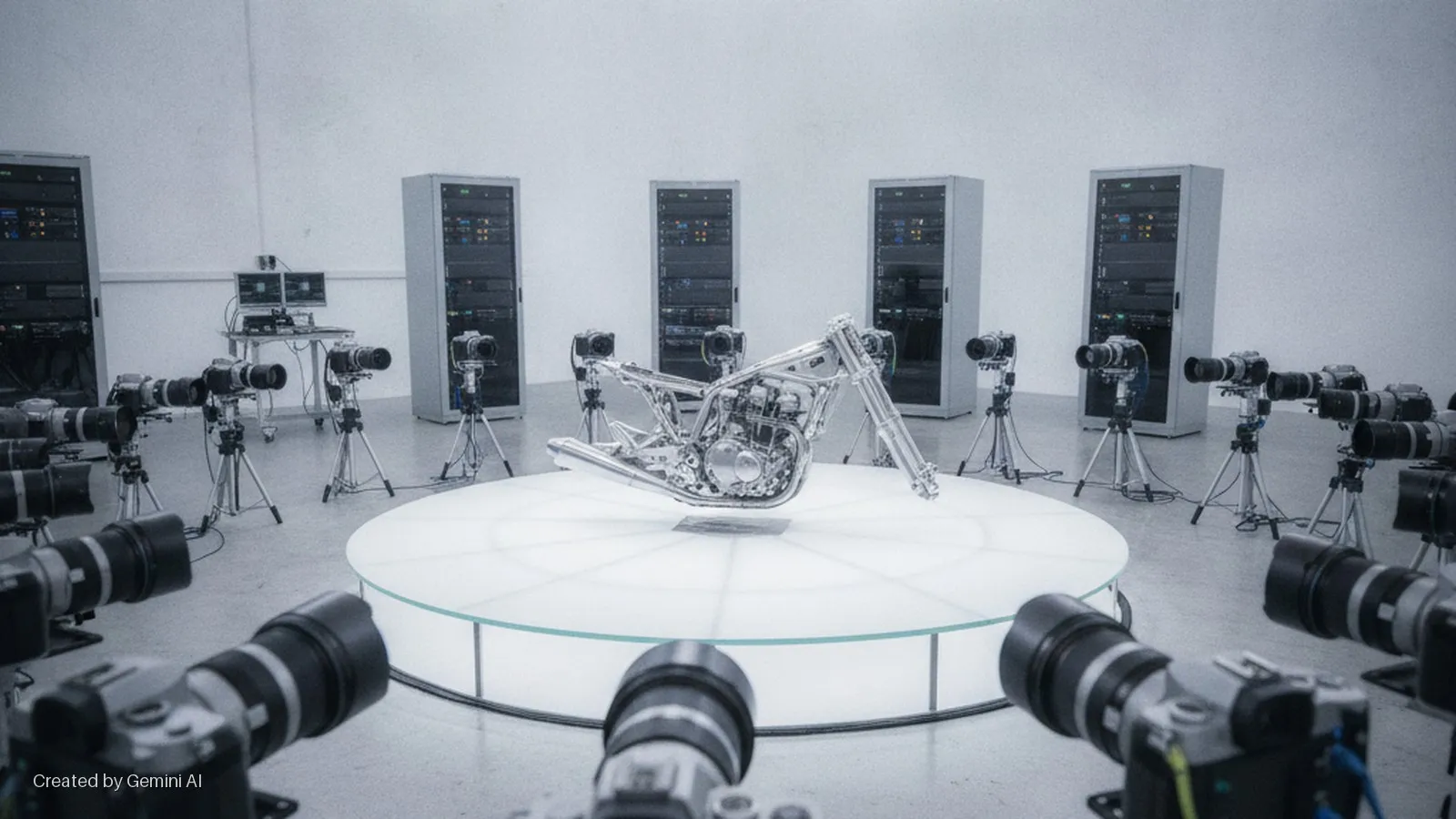
MHP Consulting has deployed its Elastic Content Platform (ECP) at Ducati, connecting the motorcycle manufacturer's online configuration tool directly to its assembly line in Borgo Panigale and replacing traditional photoshoot-based marketing assets with AI-generated imagery. The first model range to benefit is the Multistrada V4 series, which is now linked to Ducati's new "Ducati Factory Made" personalisation programme.
The integration means that when a customer configures a Multistrada V4 online, selecting options such as brake caliper colours, seat heights or additional headlights, those choices are transmitted as production data directly to the factory floor, where they are built into the individual motorcycle. MHP Group COO Markus Wambach described the goal as merging "configuration, ordering, and production into one continuous digital process."
AI imagery and the Elastic Content Platform
The visual layer of the platform replaces conventional six-figure photoshoots with digitally generated scenes. Ducati's existing CGI pipeline continues to supply the product models, ensuring accuracy to production specification, but the surrounding environments are now produced using generative AI tools running on the ECP Studio, which is built on Epic Games' Unreal Engine for real-time rendering and AWS Cloud for high-performance batch rendering. No physical sets, location logistics or traditional post-production are involved.
According to MHP, the approach compresses a typical agency lead time of twelve weeks, associated with photoshoot-only productions, to around two weeks, a reduction the company characterises as up to six times faster. Emma Schröder, associated partner in MHP's Customer and Service Platforms division, said the 2024 rollout of the full online configurator had already driven a significant increase in traffic to Ducati's digital channels, citing 4K photorealism and 360-degree viewing as key drivers of engagement.
MHP did not disclose the absolute cost saving in the release, nor did Ducati provide revenue or conversion data to support the engagement claims.
Market context
The use of real-time game engines for automotive and manufacturing visualisation is no longer a novelty, but the integration of that pipeline into live production scheduling represents a step forward for the category. MHP names Pagani, Aston Martin, Ineos, Lotus and Porsche as existing ECP customers, suggesting the platform has traction across the premium vehicle segment, where low production volumes and high personalisation rates make digital-first content economics more compelling than in mass-market manufacturing.
The broader market for AI-generated product imagery is growing quickly as generative models improve in photorealism and brand teams seek to reduce time-to-market for localised creative assets. Several enterprise marketing platforms and specialist visualisation vendors are pursuing similar approaches, applying AI-generated environments to existing CGI assets across automotive, consumer electronics and fashion categories. For manufacturing, the more distinctive proposition is the closed loop between configurator and factory, an architecture that sits adjacent to digital-twin and product-lifecycle-management tooling championed by Siemens, PTC and Dassault Systèmes.
Regulatory and standards read-across
Connecting a customer-facing configurator to a live production system raises data-flow considerations under GDPR, particularly where the configuration data constitutes a customer order linked to personally identifiable information. MHP has not stated in its release how that data boundary is managed or whether Ducati's implementation is covered by an existing data-processing agreement. As the EU AI Act's provisions for general-purpose AI systems phase in through 2026 and 2027, vendors supplying AI-generated imagery to commercial clients may face transparency obligations requiring disclosure to end users.
For Ducati, the near-term milestone is extending the "Ducati Factory Made" scheme beyond the Multistrada V4 range; whether and when other model lines join the programme will indicate the pace of adoption across the broader portfolio.