
nVent and AMD pair on liquid cooling for Helios rack-scale AI platform
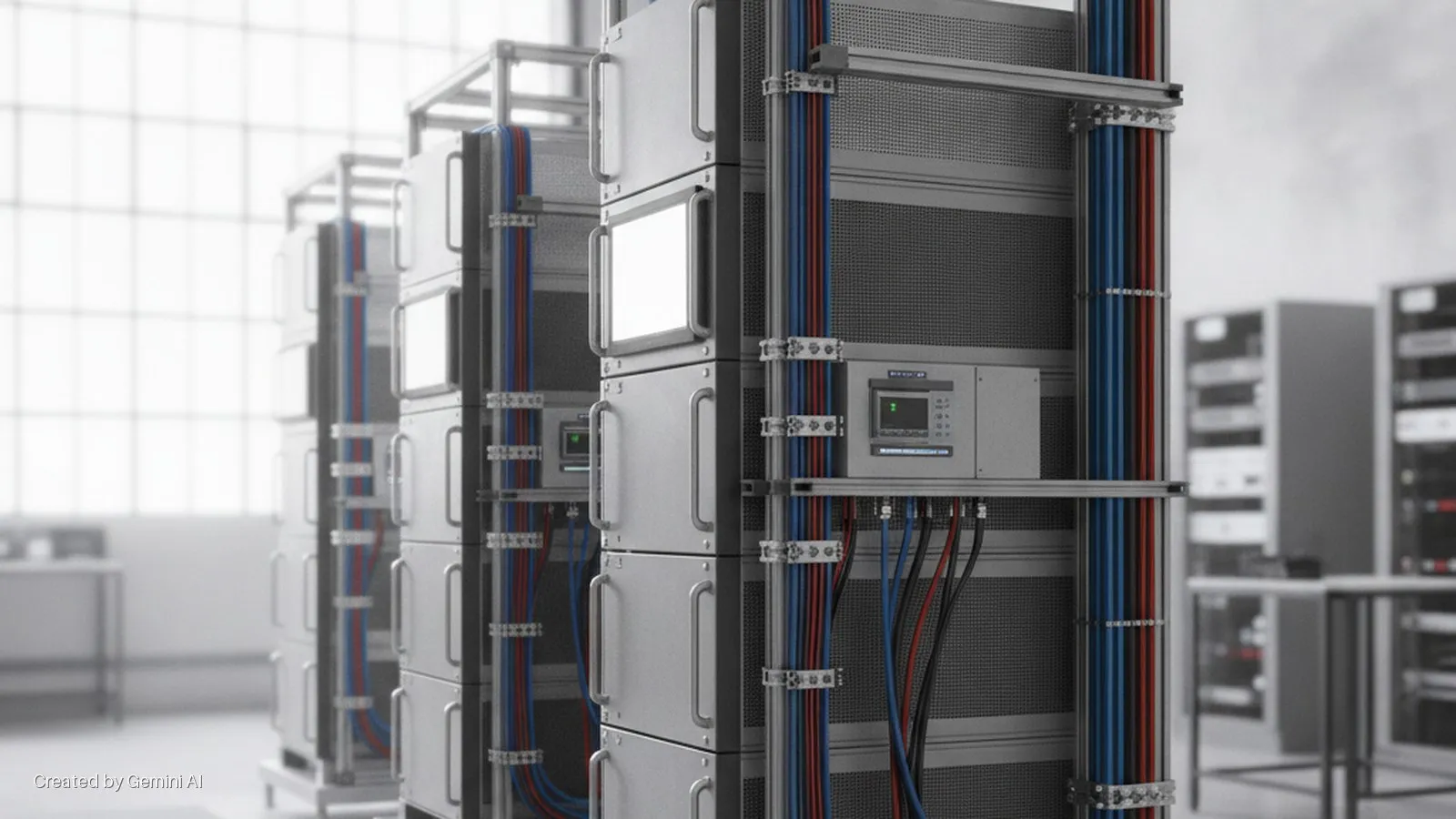
nVent (NYSE: NVT) and AMD have announced a collaboration to deliver rack-level cooling for the AMD Helios Rackscale solution, integrating nVent's rear door heat exchanger (RDHx) technology directly into AMD's fully stacked AI infrastructure platform. The partnership was unveiled at the OCP Global Summit in San Jose, California, where both companies are exhibiting jointly through 16 October 2026.
The AMD Helios platform combines AMD Instinct GPUs, EPYC CPUs, Pensando networking silicon and the ROCm open software stack into a single rack-scale architecture. By adding nVent's RDHx, operators gain an end-to-end system in which compute, networking, power and cooling are designed to operate as a unit rather than as separately sourced components.
The technology
nVent's RDHx is described by the company as an industry-first dual rear-door design, engineered specifically for the double-wide AMD Helios rack form factor. The unit captures residual heat that direct-to-chip liquid cooling leaves behind and returns conditioned air to the surrounding space, with the stated aim of keeping the rack effectively room-neutral in terms of ambient heat load. It integrates air temperature, humidity sensors and differential pressure fan speed control, and runs on DC power to match the power architecture of next-generation AI rack deployments.
Eric Osborn, vice president and general manager of Data Solutions, Cooling and Power at nVent, said the companies are "designing for the platforms our customers are building on," and described the close integration with AMD as central to ensuring the fit is right. Ravi Pendekanti, corporate vice president of AMD's Data Centre Solutions Business Group, framed the broader architecture shift: "The rack, not any single component within it, has now become the unit of deployment; and compute, networking, software, power and cooling must operate as one system."
At the OCP booth, the companies are showing the RDHx alongside manifolds, bus bars and power shelves configured as a live Helios deployment, giving operators their first physical view of the integrated system.
Market context
The announcement arrives as rack-level power densities for AI workloads continue to climb, pushing conventional air cooling well beyond its thermal limits. Many hyperscale and colocation operators are now specifying liquid cooling as a baseline requirement for new AI pod deployments rather than an optional upgrade, a shift that is drawing electrical infrastructure vendors into tighter co-engineering relationships with GPU platform providers.
nVent competes in this space alongside Vertiv, Schneider Electric and a growing cohort of specialist liquid-cooling firms including Asetek and Airedale. The decision to build around an open-source, OCP-aligned rack standard is a deliberate positioning choice: AMD Helios uses Open Rack Wide specifications rather than proprietary form factors, which in principle allows operators to mix qualified components from multiple vendors without full platform lock-in.
The OCP Global Summit is a natural venue for this announcement. The Open Compute Project has become the primary standards forum for hyperscale and enterprise data-centre infrastructure, and RDHx qualification against OCP rack specifications is likely to be a prerequisite for broader adoption across colocation and cloud-operator customer segments.
Regulatory and standards read-across
Data centre power efficiency is under increasing regulatory scrutiny in both the EU and the UK. The EU Energy Efficiency Directive, effective from 2023, introduced mandatory reporting for data centres above one megawatt and is expected to extend minimum Power Usage Effectiveness thresholds in forthcoming implementing acts. The UK government's data centre sustainability roadmap similarly emphasises waste-heat management as a key lever. A room-neutral rack design, if the performance claim holds at scale, would directly address both regulatory and operational efficiency pressures, making the thermal specification one of the more commercially significant details that neither company has yet published in full.
Independent benchmark data on room-neutrality performance and power efficiency at rated load has not been disclosed. Operators will be looking for those figures before committing procurement decisions at scale.