
Kratos breaks ground on $35m radar and hypersonics test facilities
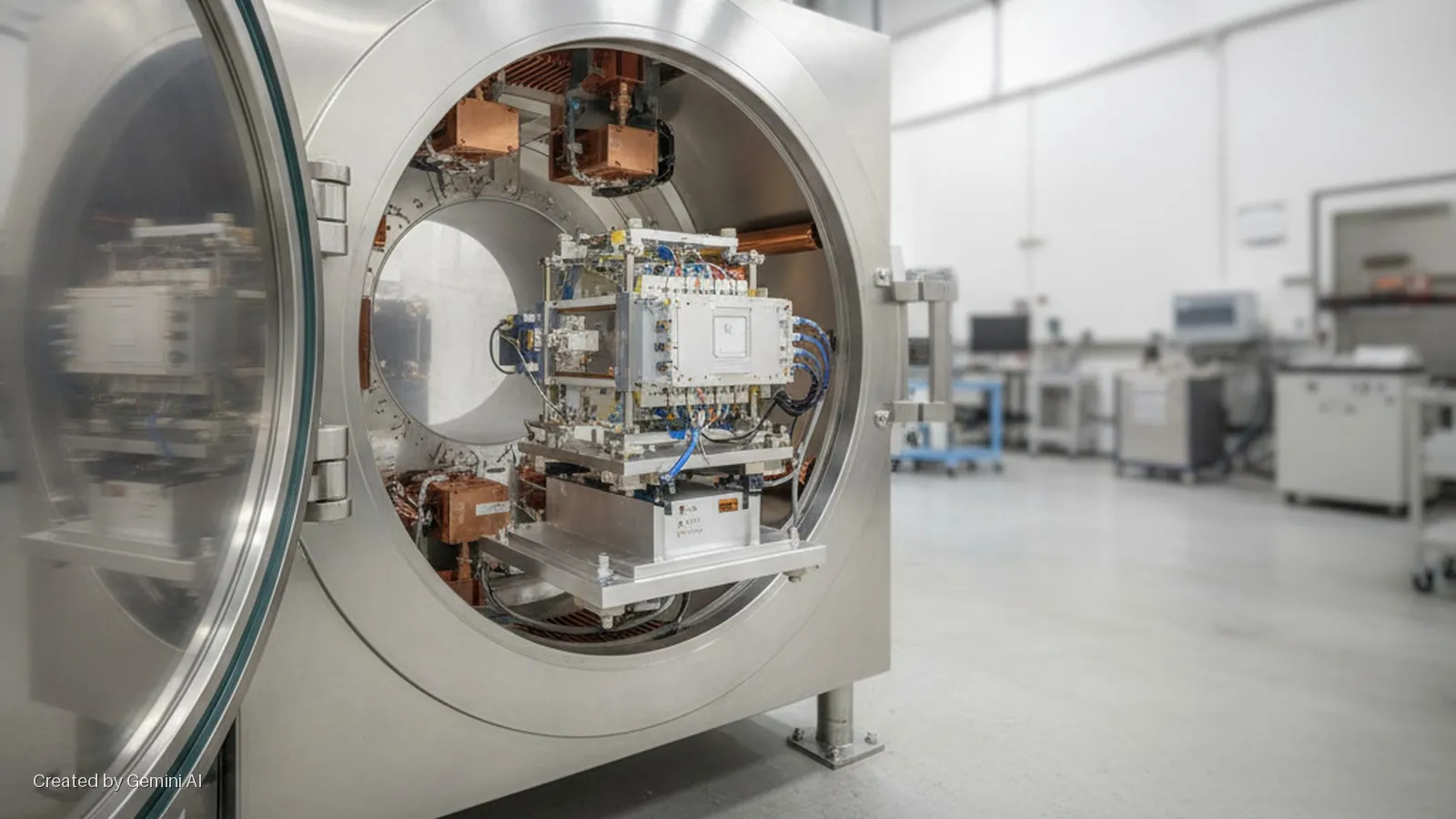
Kratos Defense and Security Solutions has broken ground on two new facilities in Odon, Indiana, that together represent a $35 million investment drawn from the US Department of War's Industrial Base Analysis and Sustainment (IBAS) programme alongside cost-sharing from the company itself. The sites will house distinct operations: a large-scale radar sustainment complex and a high-energy testing facility for hypersonic materials.
The NASDAQ-listed defence technology company (ticker: KTOS) held a joint ceremony at the Westgate Academy in Odon to mark the start of construction. Both facilities are expected to strengthen what the Pentagon broadly terms the "defence industrial base," a term covering the network of contractors and infrastructure that supports US military readiness.
The two facilities
The larger of the two, designated the Indiana Radar Integration Complex (IRIC), will span approximately 183,000 square feet and is designed to handle repair, testing, integration and sustainment of the US Navy's AN/SPY-1 phased-array radar. The AN/SPY-1 is a long-established shipborne system central to the Aegis combat system, and the Navy has faced chronic sustainment bottlenecks as the system ages. Kratos says IRIC will provide scalable infrastructure to support both legacy AN/SPY-1 variants and next-generation radar derivatives, with the stated aim of improving fleet readiness and surge capacity.
The second complex, branded Helios, combines a 20-25 MW arc jet capability with a 200-kW fibre laser system. Arc jets generate high-enthalpy flows that simulate the thermal environments experienced by hypersonic vehicles during flight, making them essential for qualifying thermal protection materials. Kratos positions Helios as bridging the gap between lower-fidelity laboratory screening and the large government-owned arc jet sites such as those operated by NASA and the Air Force Research Laboratory, which are frequently oversubscribed. The facility is also described as applicable to directed energy, counter-unmanned aircraft systems and force protection missions.
Dave Carter, President of Kratos Defense and Rocket Support Services, said the two facilities address "critical readiness bottlenecks" by combining radar sustainment and hypersonic material testing under a single strategic programme.
Market context and competitive landscape
The US hypersonics testing infrastructure has been a recurring concern in defence policy circles. Congressional reviews and Government Accountability Office assessments have noted that constrained ground-test capacity is a key bottleneck slowing the development of hypersonic strike and glide vehicles. A small number of specialist contractors, including some subsidiaries of the large prime integrators, operate limited arc jet and plasma wind-tunnel capacity, but commercially available facilities at the scale Kratos is describing are rare. This gives the Helios complex a degree of strategic value beyond Kratos's own programme pipeline.
On the radar sustainment side, the AN/SPY-1 fleet spans Arleigh Burke-class destroyers and Ticonderoga-class cruisers. With the Ticonderoga class being decommissioned, associated radar hardware requires controlled sustainment rather than continued upgrade, and the Navy has sought organic or contractor-maintained capacity outside the existing prime integrator supply chain.
Kratos has positioned itself in recent years as a lower-cost, faster-moving alternative to the large traditional prime contractors, a model its chief executive Eric DeMarco described in his remarks as being "first to market with proven, cost-effective capabilities." The company's strategy of internally funded development, combined with IBAS grant support in this case, allows it to offer government customers infrastructure access without requiring a bespoke programme of record.
The Indiana groundbreaking also reflects a broader trend of US states competing to host defence industrial investment, with Indiana's existing aerospace and defence manufacturing base making it a natural candidate for facilities requiring specialist labour. Both complexes are expected to create skilled engineering and technical roles in the region, though Kratos did not disclose employment targets or a projected completion date in its release.