
ASUS ROG G1000 gaming desktop lands in Canada at C$8,999
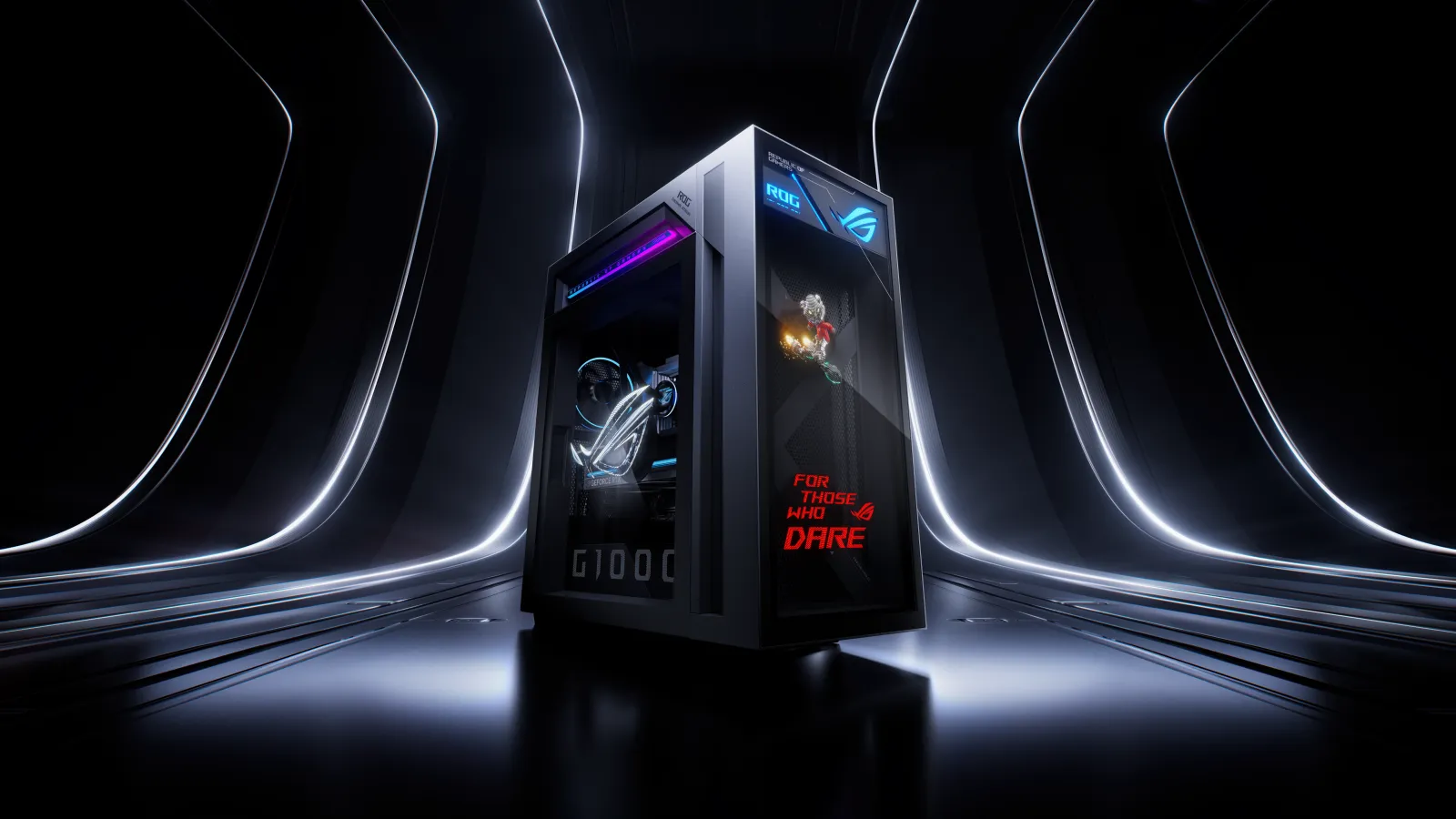
ASUS Republic of Gamers has made the ROG G1000 gaming desktop available in Canada through the ASUS Store, Best Buy, Canada Computers and Amazon, priced at C$8,999. The single Canadian configuration pairs AMD's Ryzen 9 9950X3D processor with an NVIDIA GeForce RTX 5080 ROG OC graphics card, 64GB of DDR5 memory and a 2TB PCIe 4.0 NVMe SSD, all housed in a 104L tower running Windows 11 Pro.
The launch is notable less for its component choices, which are broadly predictable for a flagship workstation-class desktop at this price point, than for two engineering choices ROG is positioning as differentiators: a reworked thermal architecture and a holographic display system integrated into the chassis itself.
Thermal Atrium cooling
The central engineering claim in the G1000 is the ROG Thermal Atrium, a separate chamber within the chassis that isolates the 420mm all-in-one liquid cooler and its three 140mm intake fans from the rest of the system. By drawing ambient air that has not passed over the GPU or power supply, ASUS says the CPU intake temperature is reduced by up to 16 degrees Celsius compared with conventional layouts. The company further describes a Tri-Zone architecture in which the GPU and PSU each maintain independent airflow paths, with the GPU pulling from front intakes and the PSU exhausting from beneath the chassis. The combined thermal dissipation capacity is stated at over 1,000W, which aligns with the system's 1,000W 80 PLUS Gold power supply and a specified peak draw of 2,000W.
These are vendor-reported figures without reference to third-party thermal testing, so independent reviewers will be key to validating the 16-degree claim under sustained workloads.
The AniMe Holo system, fitted to the side and front panels, projects customisable text, images and animations via full-colour holographic fans. The side panel hosts a 380mm holographic fan with 720 LEDs; two 215mm units sit on the front. The system supports up to 16.77 million colours and integrates with ASUS's Armoury Crate software. ROG specifies the holographic modules operate at 20.5 dBA when spinning, though it clarifies this figure covers the display system rather than the whole desktop.
Market context
The premium gaming desktop segment above C$5,000 is a small but persistently competitive niche, where ROG contends primarily with Alienware (Dell) and custom system integrators such as NZXT and iBUYPOWER. At C$8,999, the G1000 sits near the ceiling of pre-built consumer desktops and competes on industrial design and out-of-box thermal tuning as much as raw silicon, since buyers at this tier can source equivalent or superior component combinations through self-builds at lower cost.
The Ryzen 9 9950X3D with 3D V-Cache is AMD's current top-tier desktop processor for gaming workloads, and the RTX 5080 represents NVIDIA's second-highest consumer GPU in its current generation. The combination is well-matched for 4K gaming and prosumer creative tasks such as video encoding and 3D rendering, though buyers requiring maximum GPU performance may note that the RTX 5090 is not offered in this configuration.
Connectivity is comprehensive: WiFi 7, Bluetooth 5.4, 2.5Gb Ethernet, and a rear I/O that includes two USB4 Gen 3x2 Type-C ports at 40Gbps. Expandability is reasonable, with four DDR5 slots (expandable to 128GB), four M.2 connectors and six SATA ports.
ROG has not announced pricing or availability for markets outside Canada at this stage. The G1000 carries a one-year send-in warranty, which is conservative relative to the price bracket and may be a consideration for buyers comparing it against competitors offering longer or on-site cover.