
3D Systems opens 50,000 sq ft Colorado additive manufacturing hub
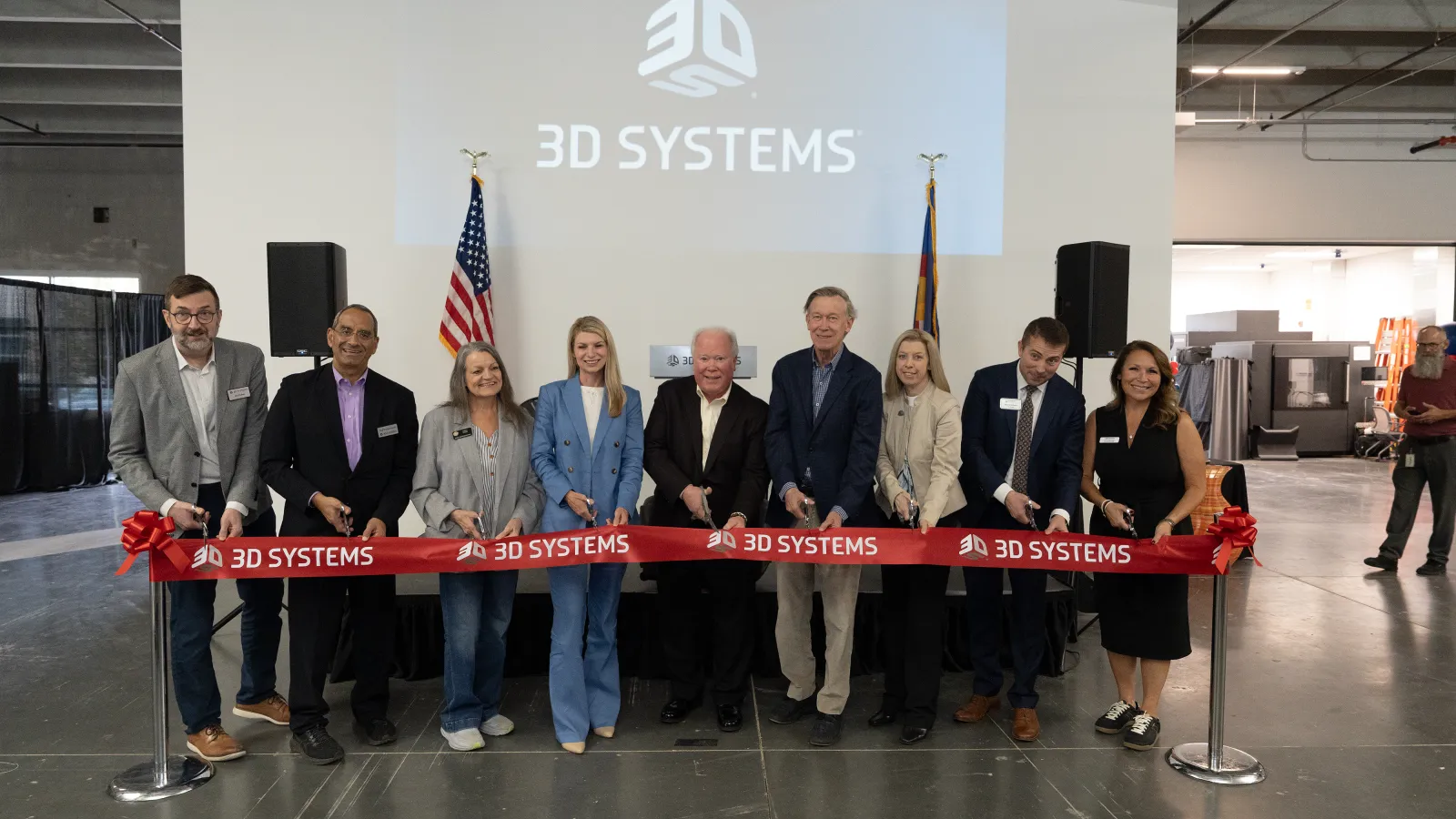
3D Systems (NYSE: DDD) has opened a new Industrial Technology Center at its Littleton, Colorado campus, adding approximately 50,000 square feet of manufacturing and office space. The facility brings the company's total advanced manufacturing footprint to around 270,000 square feet across its US and European sites, and is positioned to serve aerospace, defence, and semiconductor equipment customers seeking US-based additive manufacturing capacity.
The Littleton centre holds a stack of certifications relevant to regulated and mission-critical production: ISO 9001 and AS9100D quality management, ITAR registration, Joint Certification Programme (JCP) registration, and CMMC Level 2 compliance for controlled unclassified information. That combination is specifically designed to remove qualification friction for defence and aerospace primes, which must themselves maintain supply chain traceability and security obligations.
The strategic pitch
Reji Puthenveetil, Executive Vice President of Additive Solutions at 3D Systems, framed the expansion as a service play as much as a capacity one. "Customers today need more than manufacturing capacity," he said. "They need a trusted partner that can help them develop applications, qualify processes, and scale production with confidence."
Chief executive Jeffrey Graves described the centre as part of a multi-site domestic manufacturing ecosystem that, once fully built out, will span metal additive system development in California (under a US Air Force-sponsored programme), large-format printer manufacturing in South Carolina, and the new application development and certified parts production node in Colorado. The company said the Littleton campus also retains healthcare manufacturing operations, a legacy of the site's origins in regulated medical device production.
Market context
3D Systems is competing in an industrial additive manufacturing segment that has matured considerably since the post-pandemic reshoring wave drew fresh capital into domestic production. Rivals including EOS, Trumpf, and Velo3D are similarly targeting aerospace and defence with certified metal additive systems, while GE Additive and Nikon SLM Solutions carry the backing of large industrial groups. The emphasis on ITAR registration and CMMC compliance is a deliberate differentiator: defence programmes increasingly require suppliers to demonstrate cybersecurity maturity before contract award, and CMMC Level 2 certification represents a significant qualification hurdle for smaller additive shops.
The semiconductor equipment angle is newer territory for additive manufacturers. Chipmakers and their tool suppliers are under pressure to shorten lead times for bespoke precision components, and additive processes are finding a niche in low-volume, high-complexity parts where traditional machining is slow. US government interest in domestic semiconductor supply chain security, reinforced by the CHIPS and Science Act, adds a policy tailwind to this customer segment.
Workforce and local stakeholders
The opening drew attendance from Colorado state and federal representatives, including US Senator John Hickenlooper and US Representative Brittany Pettersen, signalling the facility's relevance to regional economic development as well as industrial policy. 3D Systems cited increased opportunities for engineers, technicians, and manufacturing professionals in the Colorado region, though it did not disclose a specific headcount target or hiring timeline.
The company's next visible milestones will be demonstrating named customer wins at the Littleton facility and publishing throughput or yield metrics to support the broad capability claims made at launch. Investors will also be watching for progress on the multi-phase Air Force programme in California, where contract deliverables and government acceptance would provide the clearest external validation of the ecosystem strategy.