
onsemi and Sungrow pair SiC modules with PowerTitan 3.0 storage platform
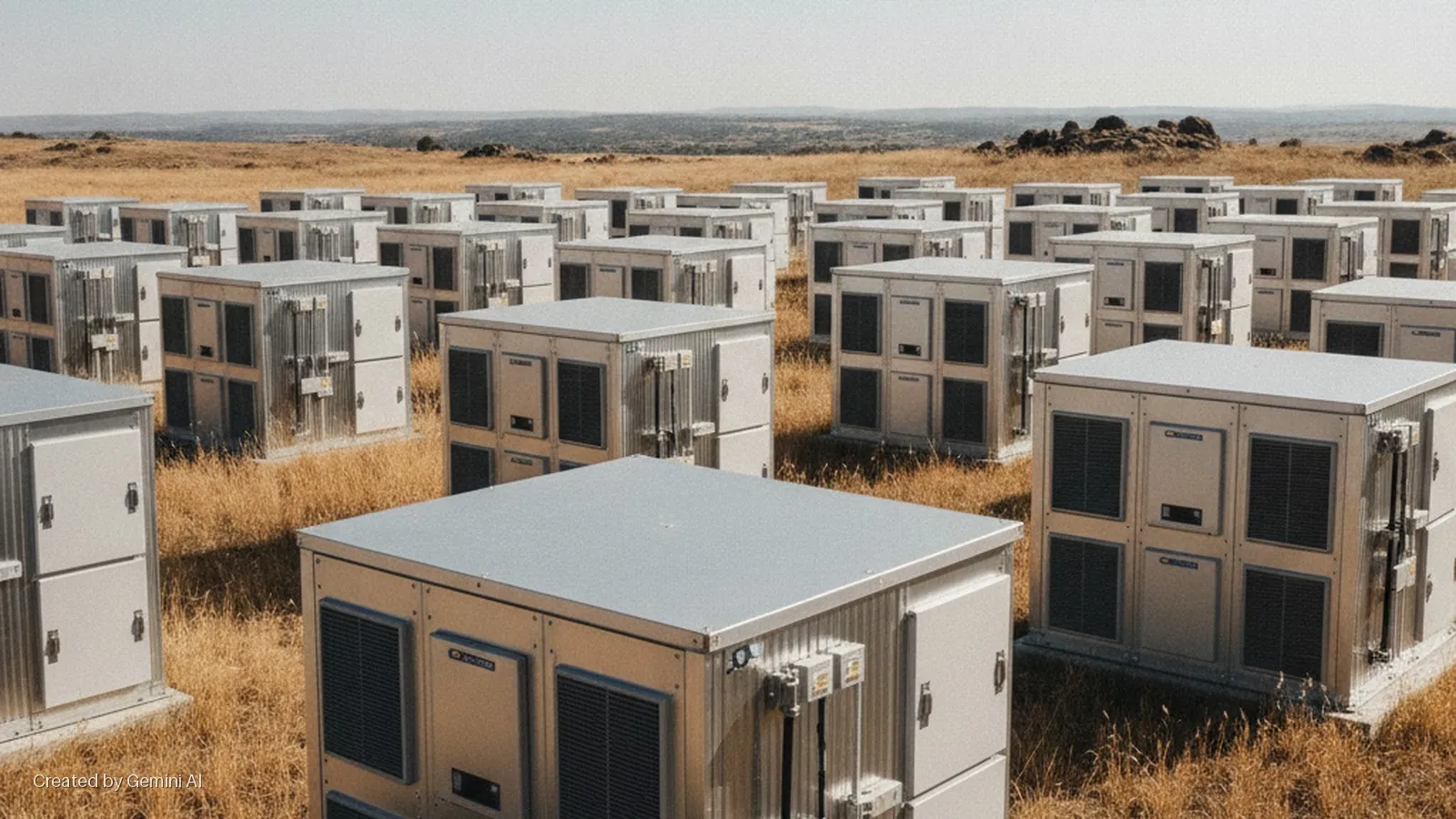
Sungrow has adopted onsemi's EliteSiC silicon carbide hybrid power module for its PowerTitan 3.0 battery energy storage platform, the two companies announced on 14 October 2026. The integration targets utility-scale deployments where incremental gains in power conversion efficiency translate directly into lower operating costs and more usable energy delivered to the grid.
The new architecture improves inverter-level efficiency by 0.4 percentage points relative to the previous-generation platform, with peak efficiency now exceeding 99.3%. Power conversion units in the platform are rated up to 450 kW. According to onsemi's own analysis, a 0.4% efficiency gain in a 100 MW installation could save more than 475 MWh of energy annually, a figure that scales considerably across a multi-gigawatt deployment base.
The technology
Onsemi's EliteSiC hybrid power integrated modules (PIMs) are optimised for three-level inverter architectures, which are increasingly favoured in high-power energy storage applications because they reduce switching losses and improve thermal headroom. The silicon carbide design supports higher power density, meaning operators can pack more storage capacity into the same physical footprint, and the improved thermal performance reduces stress on cooling infrastructure during sustained high-power discharge cycles.
Sungrow's General Manager of Energy Storage Conversion, Chen Peng, said the company expects to deliver 10 GWh of PowerTitan 3.0 capacity across Europe during 2026, framing the platform as part of a broader push toward a more flexible European grid. Sergio Fissore, Vice President and General Manager of onsemi's IPD Power Division, noted that at utility scale even small efficiency improvements carry meaningful impact on total cost of ownership.
Market context
The battery energy storage market is at an inflection point. Industry forecasts cited in the release project the market will more than double in size by 2030, driven by grid-scale renewable integration, electrification of transport and heating, and the surging power demands of AI data centres. That last driver is increasingly prominent in vendor positioning: operators of hyperscale and co-location facilities are among the largest new sources of electricity demand in many grids, and utilities are under pressure to smooth supply accordingly.
Silicon carbide is displacing legacy silicon IGBT technology in high-power inverter applications because of its superior switching characteristics at elevated voltages. Onsemi competes in the SiC power module space against Infineon Technologies, STMicroelectronics and Wolfspeed, all of which have announced capacity expansions in the past two years to meet BESS and EV-drivetrain demand. Sungrow occupies a strong position in the utility-scale inverter and storage converter market globally, particularly in Asia-Pacific and increasingly in Europe, where grid-scale storage procurement has accelerated under EU energy-security policy following the 2022 energy crisis.
The partnership underlines a broader industry shift toward long-term, co-development relationships between semiconductor vendors and energy system integrators. Rather than procuring components at arm's length, Sungrow and onsemi describe joint engineering and qualification work across platform definition and system optimisation. That model reduces integration risk and can lock in component suppliers across multiple product generations, an arrangement that benefits both parties as BESS architecture moves toward higher voltages and denser power electronics.
Regulatory read-across
European deployments of the PowerTitan 3.0 platform will be subject to the EU's evolving grid-connection and interoperability requirements, as well as the CE marking obligations for power electronics. The EU's revised Renewable Energy Directive and the accompanying grid-flexibility targets create procurement tailwinds for large-format BESS, but also introduce commissioning timelines and grid-code compliance steps that can affect revenue recognition on large infrastructure projects. Sungrow did not specify which European markets or utilities are lined up for the 10 GWh target volume.