
Neuron Industries raises $10m seed to AI-native factory controller
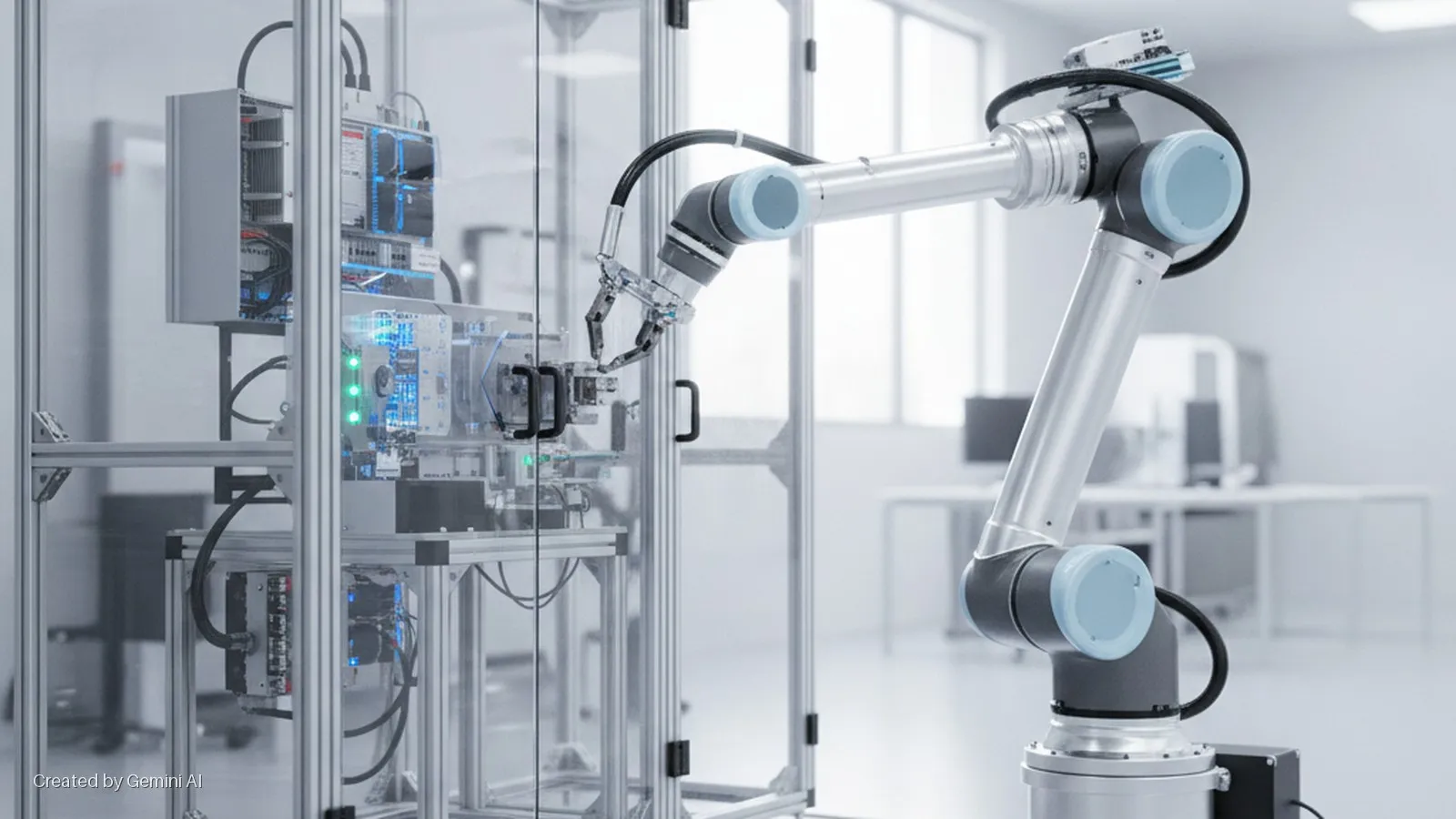
Neuron Industries, a Gardena, California-based startup building AI-native industrial control systems, has closed a $10 million oversubscribed seed round co-led by FCVC and Obvious Ventures. Y Combinator, Thin Line Capital, Zee Prime Capital, and Founder Factor also participated. The company was founded in May 2026 by Dennis Ren and Kenneth Rhee and graduated from YC's Summer 2026 cohort.
The funding will support development and commercial release of the Cortex AI Industrial Controller (AIC) and its companion Synapse development environment, both of which are targeted for a Q1 2027 launch. The company says domestic US production capacity for Cortex hardware will follow shortly after, a nod to the broader reindustrialisation narrative that has been drawing both policy attention and venture capital into advanced manufacturing.
What Cortex does
Cortex combines real-time machine control, a developer environment, an operator interface, and process-data collection in a single device. Engineers describe machine behaviour in plain English; the system generates readable control code that can be inspected, modified, and tested in simulation before deployment. The workflow is designed to lower the barrier for engineers who are not specialists in legacy programmable logic controller (PLC) languages such as IEC 61131-3 ladder logic or structured text.
Chief executive Dennis Ren argued the industrial automation sector has stagnated around vendor-locked toolchains and steep skills barriers: "Automation incumbents have left engineers to navigate vendor-specific programming tools, fragmented software, and steep learning curves." Chief technology officer Kenneth Rhee emphasised that AI-generated code remains under human oversight, with engineers able to inspect and modify outputs before any hardware deployment.
The company points to a completed customer deployment as evidence of production readiness. At CureWood Engineered Building Products, Neuron replaced a 1991 Siemens S5 controller on a finger-jointing line with 189 hardwired I/O points. The company says the migration required roughly three hours of human-agent engineering effort and eight hours of downtime, and claims the job was completed nearly ten times faster than a conventional integrator approach at a fraction of the cost. The line ran successfully on first power-up. Neuron says it also serves as the automation platform of record for more than a dozen manufacturing startups, including Lazarus Energy, Rise Reforming, Radify Metals, and Nox Metals.
Market context and competitive landscape
Industrial control has historically been dominated by a small number of incumbents: Siemens, Rockwell Automation, Schneider Electric, and Mitsubishi Electric together hold the bulk of the installed global PLC market. Their platforms carry significant switching costs and are deeply embedded in existing production lines, but they were not architected for AI-driven code generation or cloud-native development workflows. That legacy gap is where a wave of industrial software and hardware startups is positioning itself.
The structural tailwind is real. The Manufacturing Institute's estimate that US manufacturers will need to fill 2.8 million roles vacated by retiring workers by 2033 creates a genuine demand signal for tools that let less experienced engineers commission and operate complex equipment faster. That workforce pressure, combined with policy incentives for domestic manufacturing capacity under recent US industrial legislation, makes the timing credible for a new entrant.
The founding team's background adds relevant depth: Ren was the first electrical engineer at Freeform, an autonomous metal 3D-printing company, and Rhee previously built enterprise resource planning and manufacturing execution systems at WorkIPO after a software infrastructure role at Amazon. Mo Islam, a partner at Obvious Ventures who co-led the round, noted he had previously worked alongside the founders at Freeform.
Investors will be watching for Cortex's Q1 2027 commercial release, early customer revenue figures, and whether the company can demonstrate repeatability of the CureWood integration result across varied equipment types and industries.