
OPT and Stratum sign LOI for offshore renewable data centre trial
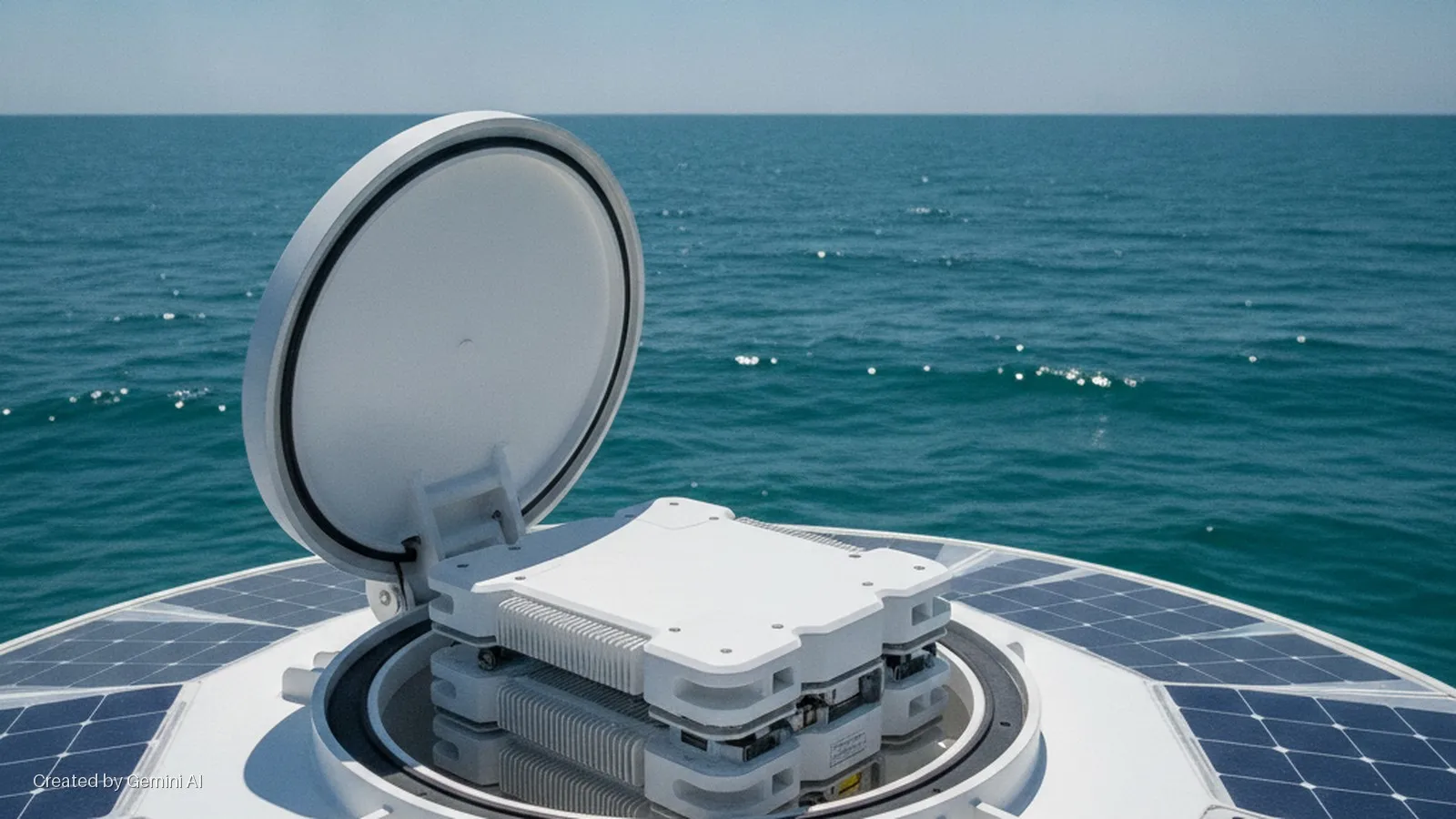
Ocean Power Technologies (NYSE American: OPTT) and Stratum Holdings (NASDAQ: SRTM) have signed a non-binding letter of intent to jointly demonstrate offshore data centre infrastructure powered entirely by onboard renewable energy. Under the proposed arrangement, OPT would license elements of its PowerBuoy patent portfolio to Stratum and provide prototype hardware, while Stratum would contribute GPU assets, including its latest NVIDIA B300 units, along with integration expertise. Stratum would also pay OPT a monthly retainer once definitive agreements are signed.
The two companies are careful to stress that no definitive deal is in place, and the LOI can be terminated by either party. The proposed collaboration is framed as a feasibility study, with initial activity focused on system integration, performance validation and data collection rather than commercial deployment.
The proposition
The technical case the partnership is exploring rests on two hypotheses. First, that edge AI inference workloads can be sustained by the power output of a wave-energy buoy system combined with wind and solar generation, without any cable connection to the shore grid. Second, that situating compute hardware in cooler ocean environments could reduce the share of energy consumed by cooling, which accounts for a significant fraction of total power draw in conventional land-based facilities. Both remain unproven at this stage, and the companies acknowledge that the demonstration programme exists precisely to test these assumptions.
OPT holds more than 60 issued patents relating to the PowerBuoy platform globally, covering buoy architecture, energy conversion, power take-off, control systems and communications. The company's existing commercial focus spans defence, offshore energy monitoring and scientific sensing. Stratum, by contrast, is actively repositioning from legacy real estate operations into AI infrastructure, primarily through GPU leasing.
Market context
Offshore and edge computing are attracting growing interest as hyperscale land-based data centres face mounting pressure on power availability, grid connection timelines and water use for cooling. Several research programmes and early-stage ventures are exploring modular, self-powered compute nodes for maritime and remote environments, though no vendor has yet demonstrated sustained AI inference workloads operating at scale from renewable-only offshore platforms.
The broader GPU compute market is dominated by hyperscalers and large colocation operators, but demand from AI inference at the network edge is creating a secondary market for smaller, purpose-built deployments. Stratum's pivot into this space reflects a pattern seen across several smaller NASDAQ-listed companies seeking to position as AI infrastructure plays; whether the offshore angle yields a defensible competitive advantage depends heavily on what the demonstration programme actually proves.
Regulatory considerations are non-trivial. Offshore structures in US and international waters require permits from bodies including the US Army Corps of Engineers and, for international deployments, flag-state and coastal-state authorities. Environmental impact assessments for marine deployments add lead time that could affect any commercial timeline.
Outlook
Tracy Pagliara, acting president and chief executive of OPT, described the collaboration as demonstrating "a practical path toward self-powered edge AI infrastructure that operates independently of shore-based power." Nicholas Adler, chief executive of Stratum, said the partnership would explore how "local processing can reduce bandwidth requirements and leverage the natural cooling advantages of the marine environment."
If the programme yields positive results, both companies have cited maritime domain awareness, offshore energy monitoring and scientific sensing as candidate commercial applications. Near-term milestones to watch are the signing of definitive agreements, confirmation of a demonstration site, and the first published performance data from an integrated deployment.