
Terrestar joins Equatys to build sovereign-shell satellite network
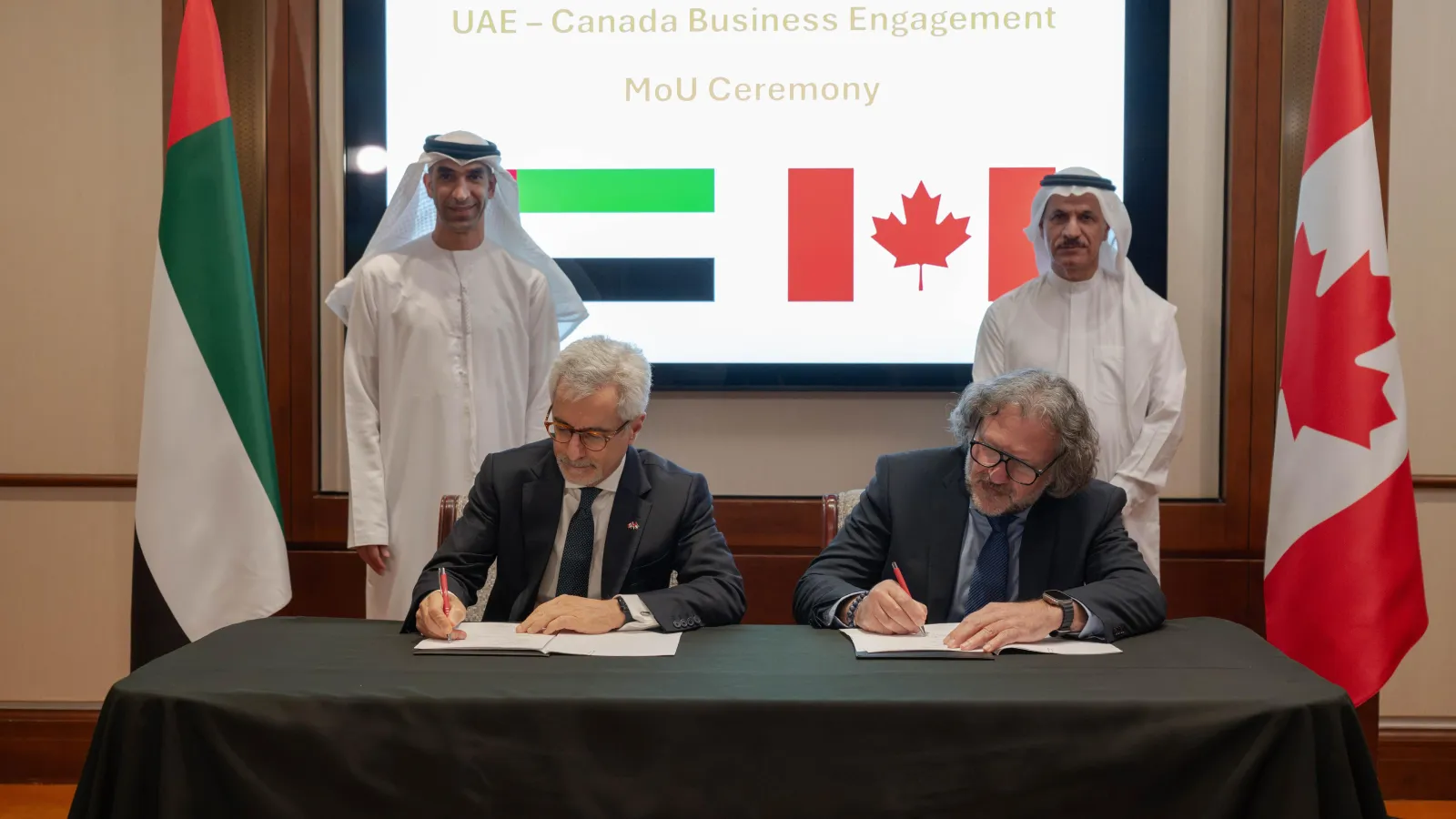
Space42, Viasat and Terrestar Solutions have signed a memorandum of understanding to develop a standards-based interoperability framework between Terrestar's planned Canadian low-Earth orbit constellation, CaStar, and Equatys, the shared direct-to-device satellite infrastructure platform co-founded by Space42 and Viasat in September 2026. The agreement was signed in Ottawa on the sidelines of an official diplomatic visit by the Crown Prince of Abu Dhabi to Canada.
The MoU does not constitute a binding commercial agreement, but it sets out a collaboration model in which each operator retains full ownership of its own space and ground assets, spectrum authorisations and customer relationships. Interoperability between systems would be achieved through a common, open interface layer aligned with 3GPP non-terrestrial network specifications and GSMA roaming and interconnection frameworks, avoiding proprietary integration between constellations.
The "sovereign shell" model
Equatys is being structured on what its founders describe as a "sovereign shell" approach: a global shared infrastructure platform into which nationally controlled constellations can plug while remaining domestically operated. Under the proposed framework, Canadian traffic routed through CaStar would stay within Canadian ground gateways and be subject to Canadian regulatory and lawful-access requirements, while the constellation interworks with Equatys at a global level.
Jacques Leduc, President and Chief Executive of Terrestar Solutions, said the collaboration reflects a broader industry direction: "The future of mobile satellite connectivity won't be built by countries or constellations acting alone. It will be built through open standards-based networks that combine national sovereignty with global reach, positioning us to compete at scale."
Equatys is backed by up to USD 1 billion in combined equity commitments from Space42, listed on the Abu Dhabi Securities Exchange, and Viasat, listed on Nasdaq. The platform is modelled on a tower-company structure, designed to offer infrastructure access to mobile satellite service licensees rather than competing directly with them for end customers.
Market context
The direct-to-device satellite market is rapidly becoming one of the most contested segments of the global connectivity landscape. SpaceX's Starlink D2D service, developed in partnership with T-Mobile, has set an aggressive commercial pace, while AST SpaceMobile, Lynk Global and a clutch of well-funded startups are pursuing their own smartphone-connectivity plays. The key differentiator Equatys is staking its model on is open, multi-operator interoperability rather than a single vertically integrated constellation.
For Terrestar, the strategic logic is clear: CaStar will be a Canadian national system with 40 MHz of S-band spectrum and a domestic remit, but it needs global scale economics to be viable. Plugging into a shared infrastructure platform reduces the capital and operating expenditure burden of building bilateral roaming arrangements with every partner system individually.
Regulatory considerations will be significant. Any transatlantic or UAE-Canada data-sharing arrangement will need to navigate Canadian data-sovereignty rules, US export-control requirements covering Viasat's technology, and spectrum coordination at the International Telecommunication Union. The explicit alignment with 3GPP NTN standards is a deliberate hedge: it positions the framework as standards-conformant rather than a proprietary arrangement that might draw regulatory scrutiny.
The MoU describes an extensible framework intended to accommodate additional constellation operators, mobile network operators and device OEMs over time. Terrestar already operates the Strigo mobile satellite service over the existing EchoStar T1 geostationary satellite; CaStar would bring a LEO layer, moving toward the lower-latency, cellular-like experience that D2D smartphone users will require. Both companies said commercial terms and definitive agreements remain to be negotiated.