
Interact Software launches MCP server for enterprise intranet AI
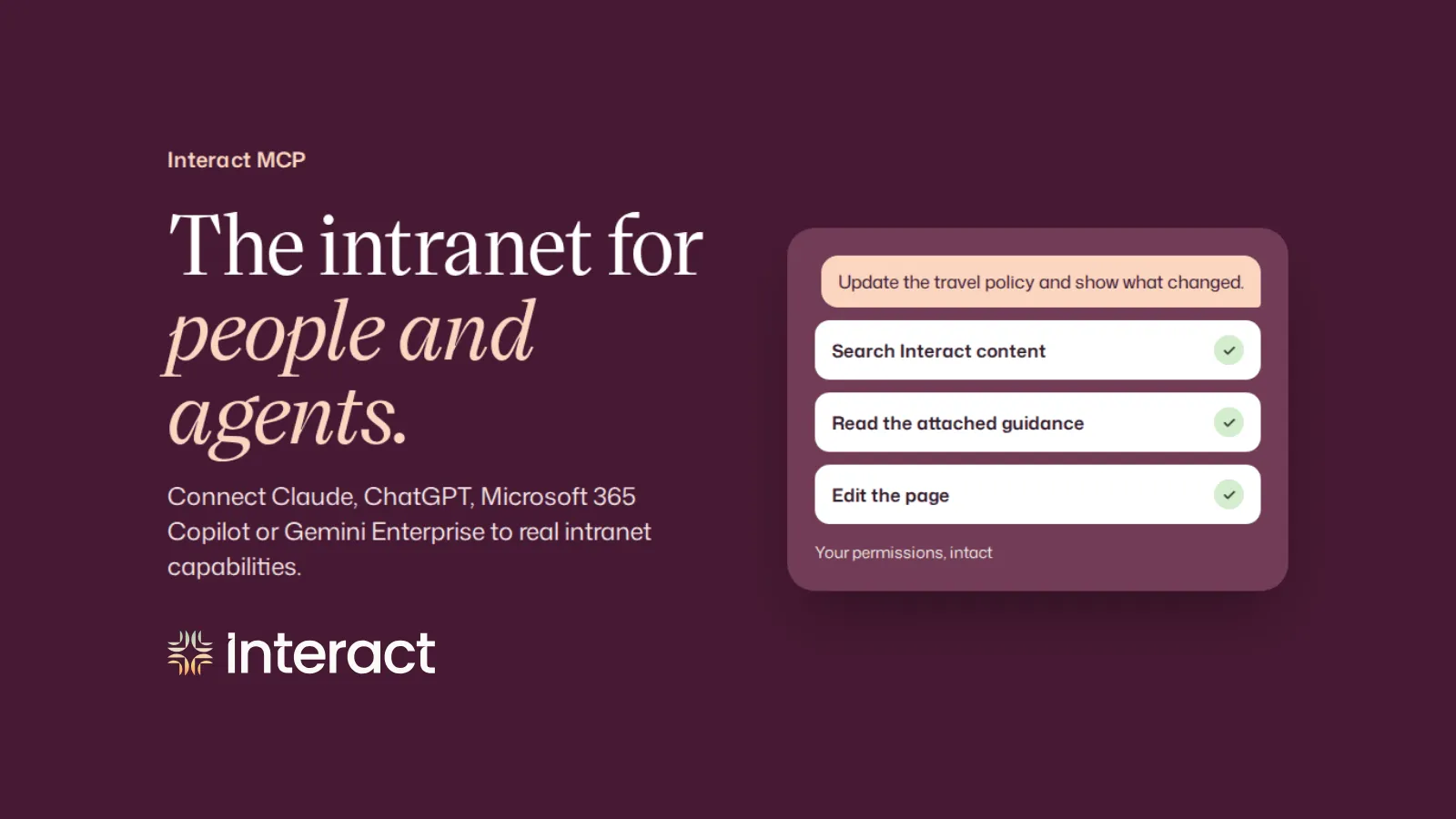
Interact Software has announced Interact MCP, a Model Context Protocol server that connects compatible enterprise AI assistants with the company's intranet platform. The integration exposes what the company describes as 700 discrete capabilities across 26 intranet categories, spanning content management, internal communications, HR workflows and engagement analytics.
The launch is targeted squarely at enterprises already deploying AI assistants, giving those tools read and write access to workplace knowledge held inside the Interact platform. Supported assistants include Claude, ChatGPT, Microsoft 365 Copilot and Gemini Enterprise. Permissions remain tied to the employee's existing access controls, and all actions pass through Interact's validation and version history. ChatGPT write actions are currently in beta; full availability for all connectors is expected before the end of 2026.
What the integration enables
At its core, Interact MCP bridges the gap between conversational AI interfaces and the structured knowledge repositories enterprises maintain. Rather than an AI assistant returning a freeform answer drawn from a general-purpose model, the integration allows it to retrieve a specific internal policy document, draft a communications page or query engagement analytics, all while respecting the requesting employee's role-based permissions.
Tom Walters, VP of Product at Interact Software, said: "With Interact MCP, approved assistants can help people find answers, update content and act across the intranet using the same tools that power Cue and Conductor. Employees gain more ways to get work done, while organisations retain control over access and changes."
Interact MCP sits alongside the company's two existing products: Cue, a personalised employee-facing discovery layer, and Conductor, a workflow tool for communications, HR and IT teams. The MCP server surfaces the same underlying capabilities to external agents rather than duplicating them. Interact's existing integrations with Workday and SAP mean the connection can also run in reverse, pulling data from those systems into Interact workflows via Conductor. The server is bundled with Cue or Conductor subscriptions at no additional connector fee.
Market context
The Model Context Protocol, originally developed by Anthropic and now attracting broad industry adoption, has become a practical standard for giving AI agents structured, permissioned access to enterprise systems. It is emerging as a lightweight alternative to bespoke API integrations, and a growing number of enterprise software vendors are shipping MCP endpoints to remain compatible with the AI assistants their customers are already purchasing.
Interact operates in a crowded intranet and employee-experience market alongside vendors including Microsoft SharePoint and Viva Engage, Staffbase and LumApps, each of which is also extending AI capabilities inside its own platform. The distinguishing factor Interact is leaning on is protocol-level openness: rather than forcing employees into a proprietary assistant, Interact MCP lets organisations connect whichever AI tool they have already standardised on.
For enterprise buyers, the governance dimension is increasingly important. Regulators and risk teams across Europe are tightening expectations around AI-generated content in the workplace, particularly as the EU AI Act's obligations for general-purpose AI systems phase in from mid-2025. Interact's emphasis on permission inheritance, attribution logging and human review within Conductor addresses those concerns directly, even if the release does not reference the regulatory framework by name.
Forward look
With full availability expected before the year's end and named customers including Levi's, Domino's and Subway already on the platform, Interact's near-term challenge is demonstrating measurable productivity outcomes rather than capability breadth. The "700 capabilities" figure is a configuration-layer count rather than a validated benchmark, and enterprise buyers evaluating MCP-enabled intranets will likely press for use-case-specific evidence of time saved or task-completion rates before committing to deeper integrations.