
Volkswagen Group picks NXP S32K5 MCUs for zonal SDV architecture
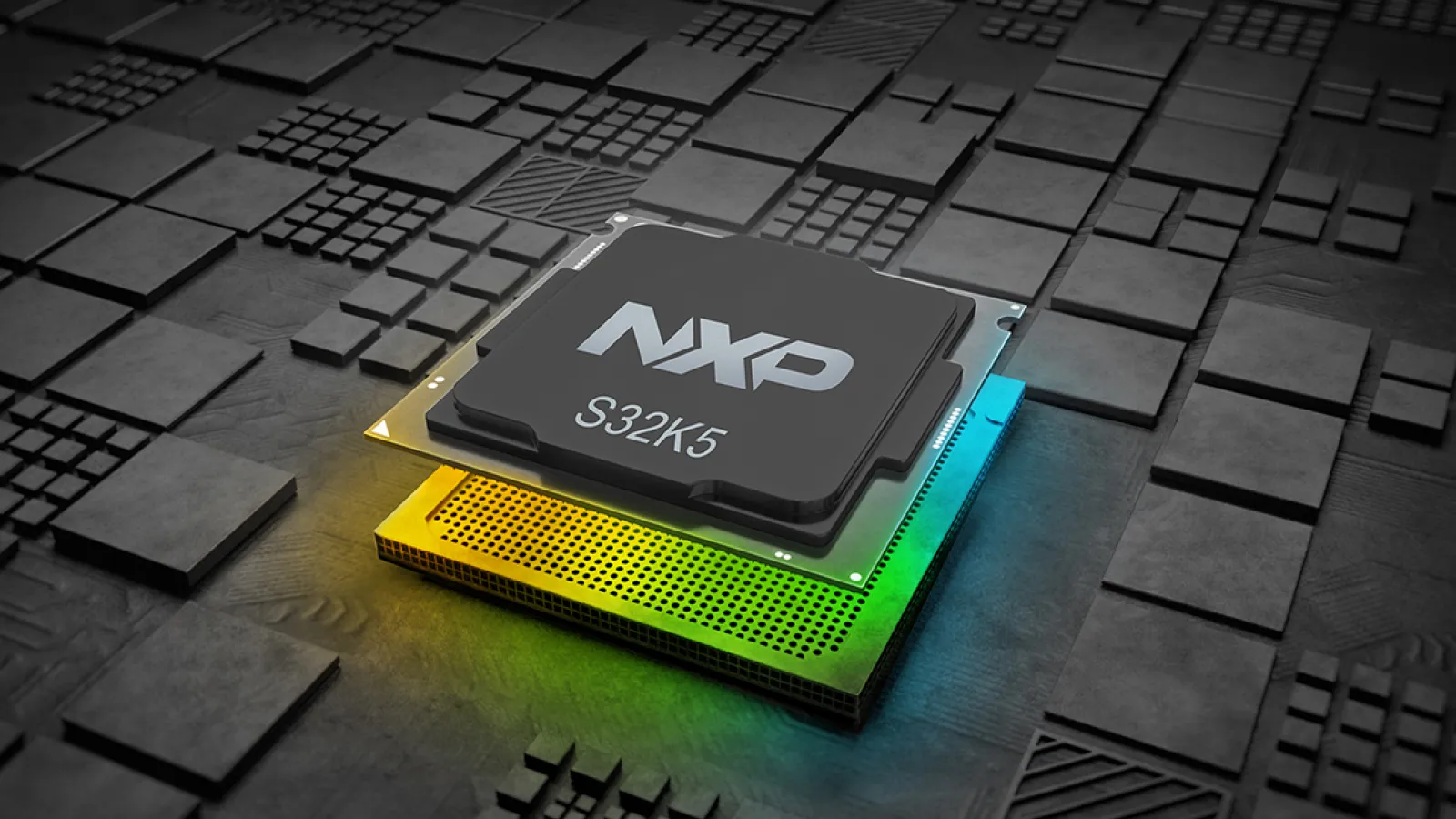
Volkswagen Group has named NXP Semiconductors as a strategic technology partner, selecting the company's S32K5 family of microcontrollers as the core processor for its next-generation zonal software-defined vehicle (SDV) architecture. The first vehicle using the architecture is targeted for launch in 2027, the two companies announced at the International Suppliers Fair (IZB) in Wolfsburg.
The partnership formalises a key component decision within the RV Tech joint venture, the engineering entity formed by Volkswagen Group and US electric-vehicle maker Rivian. RV Tech is developing a shared zonal architecture intended to underpin vehicles across both companies' brands, with the S32K5 serving as the standardised compute layer for each zone's controller.
What the S32K5 does in a zonal vehicle
Zonal architectures replace the traditional model of one electronic control unit (ECU) per vehicle function with a smaller number of powerful zone controllers, each managing a physical region of the car. NXP's S32K5 MCUs sit at the centre of this approach, connecting sensors and actuators and handling functions including lighting, body controls, chassis, comfort and safety systems. High-performance central processors handle AI-intensive workloads such as automated driving and advanced infotainment on top of the real-time data the zonal controllers feed them.
Karsten Schnake, Member of the Extended Executive Committee at Volkswagen Group responsible for Procurement, said the group had spent several years building a direct-engagement model with semiconductor suppliers: "Defining our technology needs early, leveraging our scale across brands and creating greater long-term planning certainty for both sides." Rafael Sotomayor, President and CEO at NXP Semiconductors, added that the partnership would bring "scalable real-time compute, trusted edge intelligence and continuous software innovation" to the next generation of intelligent vehicles.
Market and supply-chain context
The SDV transition has reshaped how automotive OEMs engage with the semiconductor industry. Supply shocks during 2020 to 2022 exposed the risk of relying on multi-tier distribution chains and prompted the largest vehicle groups to pursue direct, long-term chip agreements. Volkswagen Group's move mirrors strategies already deployed by Mercedes-Benz, Stellantis and Toyota, all of which have announced direct semiconductor partnerships over the past two years.
NXP is one of the largest dedicated automotive semiconductor suppliers globally, reporting revenue of $12.27 billion in 2025, with automotive accounting for the majority of that figure. Its nearest peers in the automotive MCU space include Infineon Technologies, Renesas Electronics and Texas Instruments, all of which are competing for similar anchor-customer design wins as OEMs lock in their SDV component stacks.
The standardisation of a single MCU family across multiple brands and the shared RV Tech platform gives both NXP and Volkswagen Group long-horizon visibility on volumes, which is a meaningful advantage at a time when advanced automotive chips require multi-year development cycles and significant fab capacity commitments. Over-the-air software update capability, highlighted by NXP's CTO Lars Reger as a core S32K5 feature, is increasingly a regulatory expectation in the EU under the UNECE WP.29 cybersecurity and software-update regulations, which took effect for new vehicle types in 2022 and apply to all new vehicles sold in member states from 2024.
For Volkswagen Group, which has faced well-publicised challenges integrating software across its brands under the Cariad software unit, a harmonised MCU layer across the fleet represents a meaningful step towards reducing the engineering fragmentation that has delayed several flagship digital features. The 2027 first-vehicle target will be the first real test of whether the RV Tech architecture can deliver on that promise at production scale.